





ARTS & CRAFTS: Kashmir’s Namda rugs lose ground in the modern age
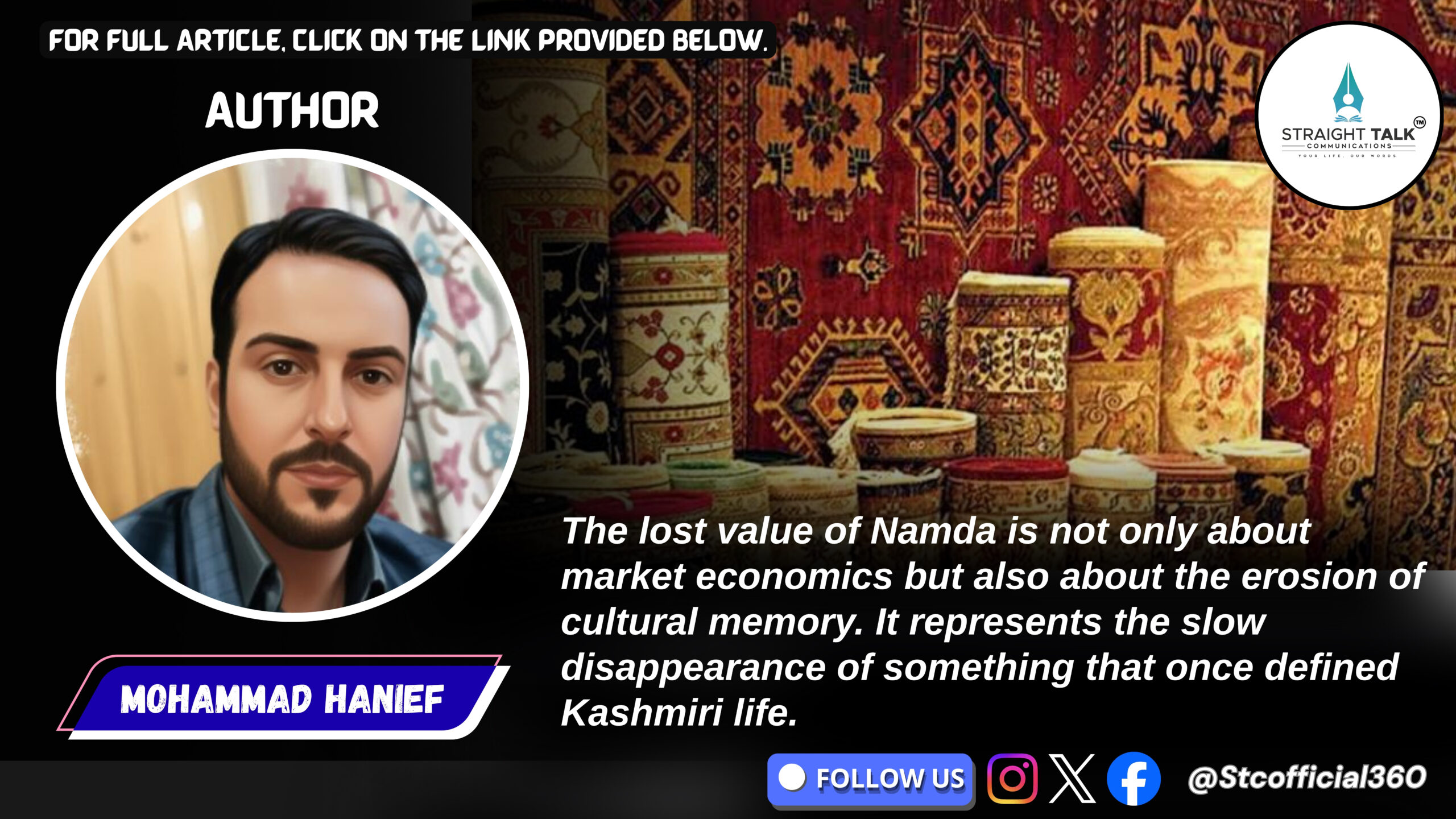
The lost value of Namda is not only about market economics but also about the erosion of cultural memory. It represents the slow disappearance of something that once defined Kashmiri life.
Mohammad Hanief
Kashmir has always been admired as a land of exquisite art and timeless tradition. The Valley’s rich culture is reflected not only in its poetry, music, and architecture but also in the handicrafts that have made it famous across the world. Among these, Namda, the traditional felted rug, once held a special place. Known for its warmth and beauty, Namda was more than just a piece of furnishing; it was part of Kashmiri life, an object that combined utility with artistry. Yet today, this craft that once adorned every home is slipping into obscurity, overshadowed by the demands of modern life and a market that no longer values it the way it once did.
The story of Namda stretches back centuries, with its roots traced to Central Asia and its refinement under the patronage of Mughal rulers. The very word is believed to have originated from the Turkish “Namad,” meaning felt. Unlike woven carpets that require looms and fine yarns, Namda is produced through the unique process of felting. Wool of relatively coarse quality is layered, moistened, pressed, and beaten until it binds together into a dense mat. What transforms this mat into a piece of art is the embroidery that is added afterward. Fine Aari work, with its delicate curves and floral patterns, breathes life into the plain surface. This blend of felted strength and embroidered beauty gave Namda its enduring place in Kashmiri households.
For generations, Namda was seen as a household necessity, especially during the harsh Kashmiri winters. Its thick woollen layers provided insulation against the bitter cold, offering comfort in homes that often relied on simple wooden and mud structures for shelter. Unlike the more expensive carpets, Namdas were affordable and accessible to ordinary families. They were spread in living rooms and guest spaces, used in schools and shrines, and carried into ceremonies and rituals. Every Kashmiri household, whether humble or prosperous, had a collection of Namdas. They reflected not just functionality but also an aesthetic that mirrored the natural beauty of the Valley—its chinars, blossoms, and flowing gardens expressed in intricate designs.
But with the passage of time, the place of Namda in Kashmiri life began to erode. Changing lifestyles brought with them a preference for cheaper, machine-made alternatives. Synthetic rugs and industrial mats, produced quickly and sold at low prices, flooded the markets. They were easier to maintain, lighter to handle, and more widely available. Namda, with its labor-intensive production and relatively higher cost, struggled to compete. The younger generation, increasingly influenced by modern tastes, no longer saw Namda as an essential household item but as an outdated artifact belonging to the past.
The decline of demand has naturally affected the artisans. Once, Namda-making employed thousands of families in Srinagar and surrounding areas, providing a steady source of livelihood. Today, only a handful of artisans remain, continuing the craft more out of tradition than economic benefit. The art of felting and embroidery requires long hours of effort, yet the returns are meagre. Wool prices have gone up, while the finished Namda fetches little in the market. Many artisans, unable to sustain their families through this work, have abandoned it altogether. Younger generations are rarely willing to learn the skills, preferring more stable or lucrative occupations. As a result, the knowledge and techniques that once passed seamlessly from parent to child are now at risk of disappearing altogether.
The loss of Namda is not only an economic setback but also a cultural wound. Crafts like these are not merely products for sale; they are living expressions of a people’s identity and history. Namda carried with it the warmth of Kashmiri life, both literally and metaphorically. It was present in weddings and other family gatherings, woven into memories of comfort and hospitality. To see it vanish from homes and markets is to see a piece of cultural heritage fade into silence.
There have been efforts in recent years to reverse this decline. Government schemes under Skill India and other initiatives have sought to train new artisans and provide support to existing ones. Non-governmental organizations and design institutes have attempted to breathe new life into the craft by experimenting with fresh colors, patterns, and product lines. Namda has been adapted into wall hangings, cushion covers, and table runners to appeal to modern tastes. Some exhibitions and fairs have showcased Namda as part of Kashmir’s unique cultural offerings, drawing attention from tourists and craft lovers.
Yet these revival attempts have remained limited in scope. The support has been sporadic, and the global visibility of Namda remains weak compared to other Kashmiri crafts like Pashmina or carpets. Unlike these better-promoted products, Namda has not received consistent branding or international marketing. Without a structured strategy that connects artisans to markets, offers subsidies for raw materials, and provides fair trade opportunities, the craft continues to languish.
Ironically, the very features that pushed Namda out of the market could serve as its strengths in the modern world. In an age where consumers are increasingly conscious of sustainability, Namda stands out as an eco-friendly, handmade product. It relies on natural wool and requires minimal machinery, making it environmentally sound in a way synthetic rugs can never be. If properly promoted, Namda could find a niche market among those who value sustainability, authenticity, and cultural heritage. Other countries with felt-making traditions, such as Turkey and Iran, have successfully adapted their crafts to contemporary demands while retaining their cultural essence. Kashmir too has the potential to follow this path, positioning Namda as a symbol of sustainable luxury.
Preserving Namda requires more than scattered projects; it demands a comprehensive vision. Training centers could encourage young artisans to learn and innovate while earning fair wages. Export houses could connect Kashmiri Namda to international markets where handmade, eco-conscious products are in demand. Tourism authorities could integrate Namda workshops into cultural tours, allowing visitors to witness the craft firsthand. Educational institutions could include Namda-making in their design curricula, ensuring that the skill is passed on systematically rather than left to fade in obscurity.
Above all, it is essential for Kashmiris themselves to recognize the value of this heritage. Crafts like Namda are not just about income or decoration; they embody stories, skills, and traditions that define the Valley’s cultural soul. To let them die out is to let history slip away. By supporting artisans, purchasing Namda products, and promoting their use in homes and public spaces, the community can contribute to the revival of this craft.
The lost value of Namda is not only about market economics but also about the erosion of cultural memory. It represents the slow disappearance of something that once defined Kashmiri life. Yet it is not too late. With renewed appreciation, policy support, and imaginative innovation, Namda can find its place again—not only in Kashmiri homes but on the global stage as a product that combines tradition, beauty, and sustainability. The fading rug of Kashmir need not remain a relic of the past; it can still be woven into the fabric of the future.