



DATELINE: The Unheard Call of Iqbal – Awakening a Sleeping Soul
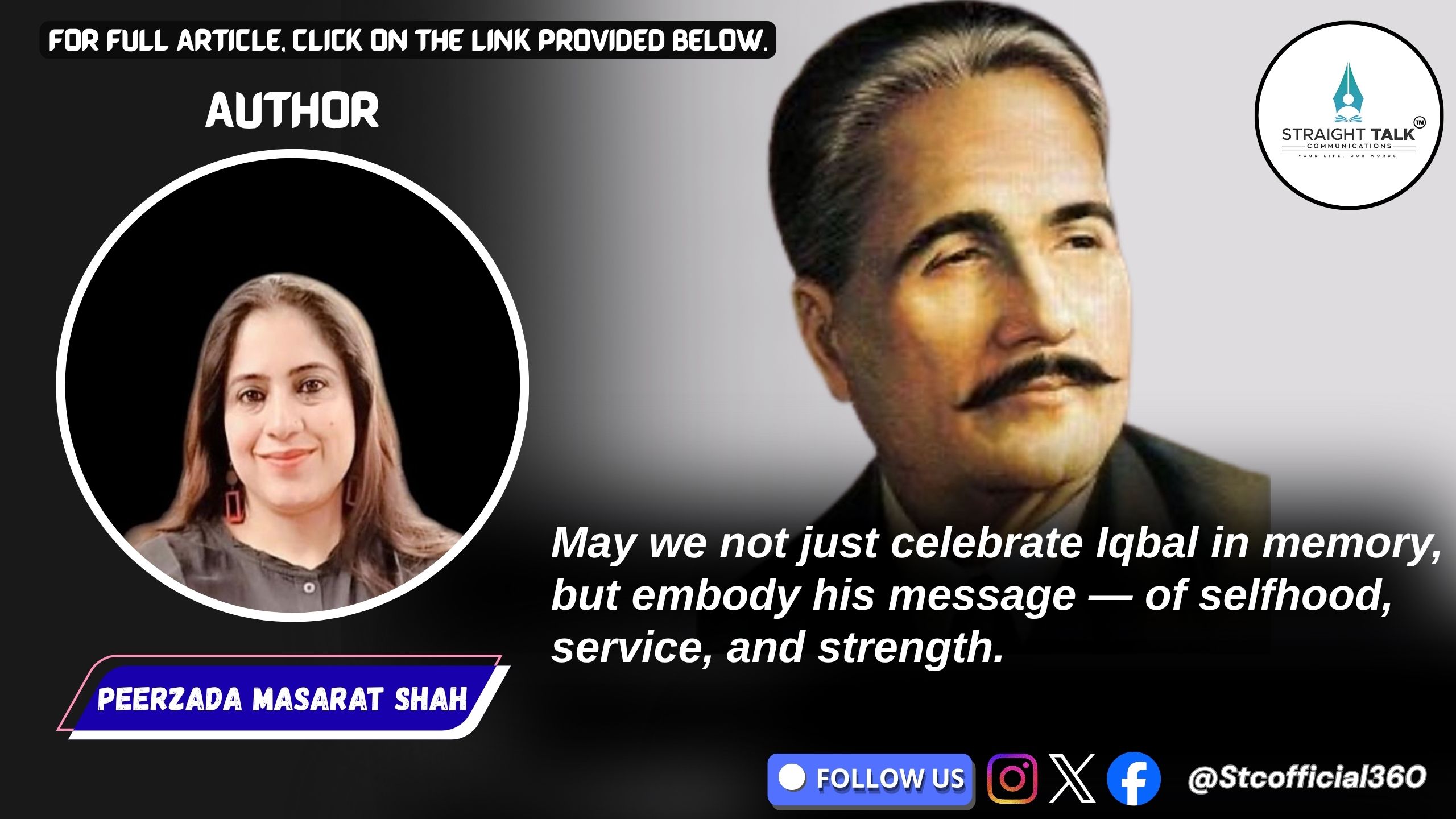
May we not just celebrate Iqbal in memory, but embody his message — of selfhood, service, and strength.
Peerzada Masarat Shah
“اٹھا میں مدرسہ و خانقاہ سے غم ناک
نہ زندگی نہ محبت ،نہ معرفت نہ نگاہ”
These lines from Allama Muhammad Iqbal echo a cry that feels just as piercing today as it did nearly a century ago. Iqbal’s lament was not for himself — it was for a generation that had lost its spark, its purpose, its sight. The poet who once dreamed of eagles soaring above the storm now saw wings clipped by complacency and souls dimmed by confusion.
Every year, on Iqbal Day, we remember the poet-philosopher who redefined the idea of selfhood — not as arrogance, but as awakening. Iqbal (1877–1938) was not content with writing verses; he wrote destinies. His poetry was a flame meant to ignite slumbering minds, a call to rise above mediocrity and rediscover the divine strength within.
Iqbal’s Message — A Mirror to the Soul
Iqbal believed that nations crumble not when they lose wars, but when they lose vision. In his eyes, the decay of faith and purpose was far more dangerous than any external defeat. He saw a world of educated men but empty hearts — where intellect triumphed, yet morality fell silent.
“یہی زمانہ حاضر کی کائنات ہے کیا
دماغ روشن و دل، تیرہ و نگہ بے باک”
He questioned the world that boasted of enlightenment yet walked in moral darkness. To Iqbal, progress without spirituality was like a lamp without oil — bright for a moment, then fading into emptiness.
He urged his people to awaken, to reclaim their lost dignity through ilm (knowledge), amal (action), and iman (faith). His was not a call to revolt but to renewal — a revolution within. His idea of khudi — the awakened self — was a spiritual compass guiding humanity toward self-respect, creativity, and courage.
The Relevance of Iqbal in a Divided Age
In our modern world, we live faster, but think shallower. We speak louder, but listen less. We chase success, yet rarely seek meaning. The confusion Iqbal once lamented has only grown deeper — a world overflowing with information but starved of wisdom.
His verse reminds us that nations are not built by slogans, but by character. That freedom without discipline, and faith without understanding, are fragile illusions.
He envisioned a society guided by moral strength — self-reliant, just, and compassionate. A society where every individual, before questioning others, dares to question the self.
“Khudi ko kar buland itna ke har taqdeer se pehle,
Khuda bande se khud pooche — bata, teri raza kya hai.”
(“Raise yourself to such heights that before destiny is written,
God Himself asks — what is it that you desire?”)
These immortal lines are not a call to arrogance, but to awareness — the kind that lifts humans from helplessness to responsibility.
A World in Search of Meaning
Iqbal’s pain was the pain of seeing humanity lose its essence — when knowledge became shallow and hearts turned cold. His poetry still calls to every generation that feels trapped between progress and emptiness.
“اہل دانش عام ہیں، کمیاب ہیں اہلِ نظر
کیا تعجب ہے کہ خالی رہ گیا تیرا ایاغ”
He mourned that thinkers had become plenty, but true seers — those who could look beyond the obvious — were rare. The world, he said, had intellect, but lacked insight.
The Eternal Call of Awakening
As we commemorate Iqbal today, let it not be a ritual of remembrance, but a renewal of purpose. Let us look beyond reciting his verses and begin living them. Let us build character before power, depth before fame, and understanding before judgment.
Iqbal’s call was, and remains, a call of awakening — a whisper to every heart still capable of wonder. It reminds us that in the noise of the world, the quiet voice within still knows the way.
May we not just celebrate Iqbal in memory, but embody his message — of selfhood, service, and strength.
(Straight Talk Communications Exclusive)