




The Invisible Layers of Conversation
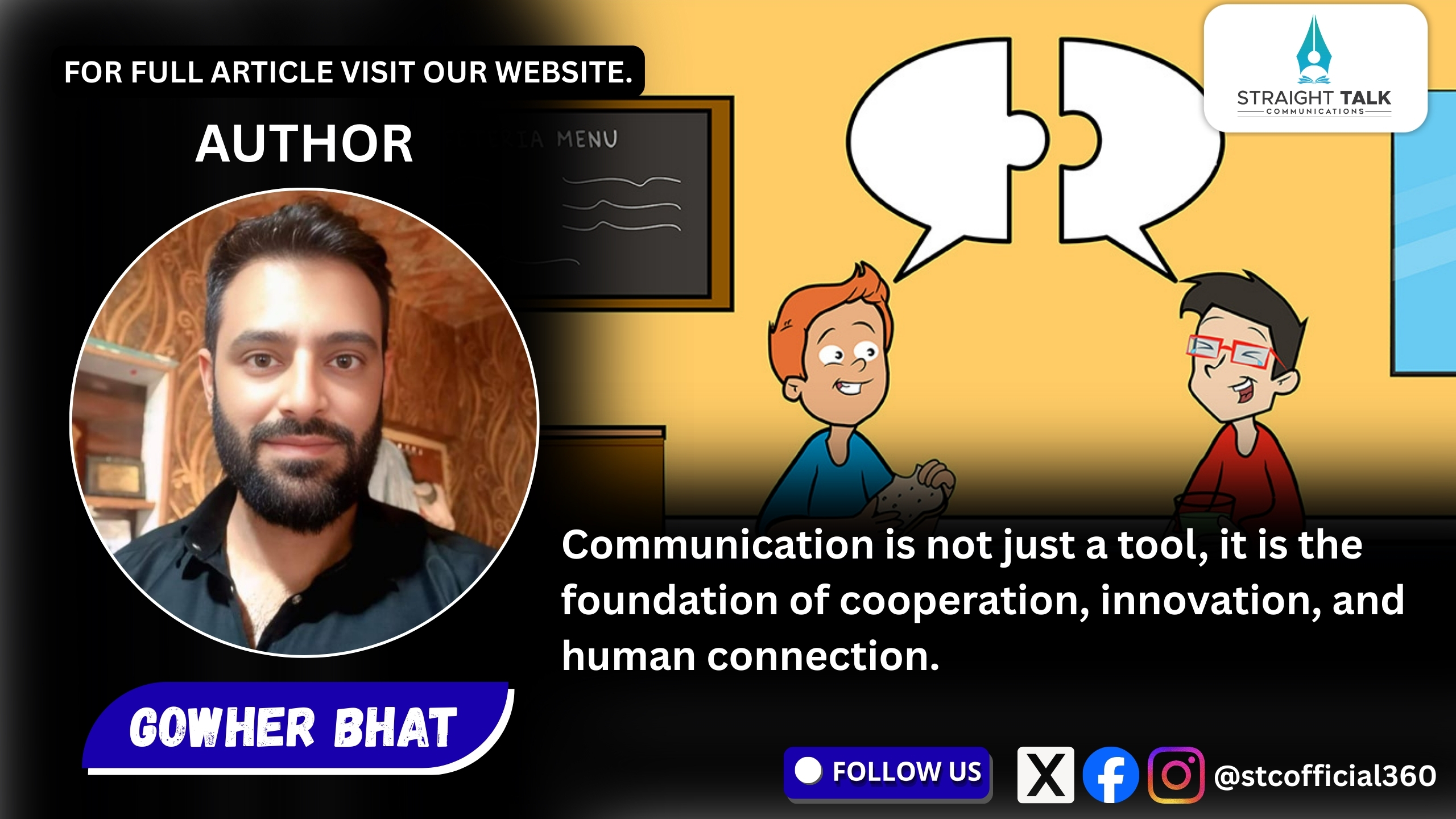
Communication is not just a tool, it is the foundation of cooperation, innovation, and human connection.
Gowher Bhat
Communication often seems simple, speak, listen, understand, but in reality it is far more complex and layered than it appears. Every conversation carries hidden nuances shaped by culture, context, emotion, and power. Even small misunderstandings can lead to confusion or conflict. What looks like a straightforward exchange of words is actually a delicate balance of tone, body language, timing, and shared assumptions. Communication is both an art and a science that we navigate constantly.
One powerful insight into this hidden complexity comes from Harvard psychologist Steven Pinker, who famously coined the term “the curse of knowledge.” He describes it as a cognitive bias in which someone who knows something finds it nearly impossible to imagine what it is like for others not to know it. Because of this, we often assume others understand what seems obvious to us, skipping explanations, leaning on jargon, and skipping steps. Pinker warns that this assumption is one of the most common communication mistakes. He recommends testing your message by sharing it with others and asking whether it really conveys what you intend, a process of revision and simplification that restores clarity.
In professional settings, this hidden complexity is not just theoretical, it has concrete costs. A recent study by Grammarly, in partnership with The Harris Poll, found that poor communication costs U.S. businesses up to USD 1.2 trillion annually. On average, each employee loses around USD 12,500 per year due to misunderstandings and the time taken to resolve them. Teams reportedly spend over 7 hours a week navigating communication breakdowns. For Dr. Dorian Stone, head of Grammarly Business, the message is clear. Communication should not be treated as a background process, it is central to productivity.
According to Dr. Diane Hamilton, a communication expert, many misunderstandings come from simple assumptions. She argues that most people nod along in conversation believing they have understood, even when they haven’t fully grasped the speaker’s meaning. Her solution is deceptively simple and powerful, rephrase what you hear. By paraphrasing a speaker’s words in your own language, you invite them to confirm, correct, or clarify. Hamilton says this habit can dramatically reduce miscommunication in both workplaces and everyday life, building trust and clarity.
In organizations where written communication dominates, like via email, messaging apps, or digital platforms, the risks of misunderstanding become more acute. These media strip away the richness of non-verbal cues, tone, facial expression, posture, and timing. A brief instruction in text can feel harsh or critical depending on how it lands. Over time, these small misreadings build tension, erode trust, and sap productivity.
The stakes are even higher in environments like healthcare, where communication failures can lead to serious consequences. In India, for instance, emergency department clinicians regularly communicate across multiple languages. On average, they use almost four languages in their daily work. Surveys reveal that over 70 percent of these professionals frequently speak in non-English languages with colleagues, and more than 50 percent say they have experienced at least one critical incident in which miscommunication may have played a role in medical errors. Factors like hierarchy, time pressure, and varying health literacy make these conversations even more fragile. A seasoned Indian emergency physician, Dr. Ruchi Sharma, points out that junior staff are often reluctant to raise doubts or ask for clarification, especially under stress, and this hesitation can compromise patient safety.
Beyond language, another facet of complexity arises from aggression in communication. A systematic review and meta-analysis of 34 studies across Indian organizations found that around 41 percent of employees report violent communication, including coercive or shaming language. Verbal aggression was more widespread, 36 percent, than non-verbal, 20 percent, and men reported higher exposure, 44 percent, compared to women, 28 percent. These findings, published in a peer-reviewed journal, underscore how hostile communication corrodes trust, discourages honest expression, and fuels a culture where people stop speaking openly.
Dr. Manish Gupta, a psychologist who studies organizational behavior, observes that when hostile communication becomes normalized, people stop asking questions or raising concerns. He stresses the importance of cultivating respectful, empathetic communication and promoting non-violent dialogue within organizations.
So why do so many conversations fail, even when people try hard to get things right? One big reason is overreliance on digital tools. Email and chat may be convenient, but without tone, facial cues, or real-time feedback, meaning can become distorted. Another reason is the diversity of cultural and linguistic backgrounds. In many settings, particularly in India, professionals navigate multiple languages and deeply embedded power structures. Stress, fatigue, and long hours exacerbate these challenges, creating fertile ground for misunderstanding.
The consequences of such breakdowns are broad and serious. In business, they erode efficiency, dampen morale, and drive turnover. In healthcare, they can compromise patient safety, lead to errors, and damage trust. Within institutions, hostile or unclear communication stops collaboration and stifles innovation. On a societal level, persistent miscommunication fuels frustration, fragmentation, and mistrust.
Addressing these problems requires deliberate, sustained effort. Experts emphasize that communication should be treated not as a series of isolated exchanges, but as a shared, living process. Training is essential. Professionals must learn strategies for clarity, listening, emotional intelligence, and structured feedback. Communication should be woven into the fabric of organizational culture, not left to chance.
Creating psychological safety is central to this transformation. People need to feel they can say, I don’t understand, or Could you clarify that, without it being seen as weakness. When organizations encourage vulnerability and open dialogue, misunderstandings can be caught early and corrected before they escalate.
Choosing the right mode of communication is equally important. Not everything should be handled via email or chat. Sometimes a phone call, video conversation, or face-to-face meeting is more effective. By setting norms, for example, when to call, when to message, when to meet, teams can reduce confusion and align more clearly.
Feedback loops are vital. Encouraging people to paraphrase what they heard, to reflect back, or to ask clarifying questions ensures that meaning is understood as intended. This aligns well with the principles of non-violent communication, a framework built on empathy, respect, and active listening. Over time, this approach can transform organizational culture, softening aggression and building deeper trust.
System design also matters. Institutions can proactively build protocols that account for linguistic diversity and hierarchical barriers. In healthcare, hospitals can develop structured handover systems, invest in translation services, and offer language training. In business, embracing real-time messaging tools can help, provided there are clear, agreed-upon norms on how to use them effectively.
Ultimately, communication is about more than just words. It encompasses tone, timing, body language, shared frames of reference, and the humility to repair when things go off-track. In regions like Kashmir, where linguistic richness, social structures, and rapid modernization coexist, understanding these invisible layers becomes especially vital. As institutions evolve and people engage more across local and global spaces, the ability to communicate thoughtfully can become a deep well of strength.
When we treat communication as a living, evolving process, not a static skill, we open up possibilities for deeper connection, stronger relationships, and more resilient communities. Ignoring its complexity risks confusion, mistrust, and missed opportunities. Embracing it, with empathy and intentionality, allows us to connect across differences with clarity, purpose, and humanity. Communication is not just a tool, it is the foundation of cooperation, innovation, and human connection.
(STRAIGHT TALK COMMUNICATIONS EXCLUSIVE. The author is a published author of both fiction and non-fiction, a columnist, freelance journalist, book reviewer and educator from Kashmir.)