



An act of humanity rekindled J&K’s timeless tradition of communal harmony

As long as people like Kuldeep Sharma, the businessman from Pampore, and Mohd Iqbal Shah exist, the legacy of communal harmony in Jammu & Kashmir will remain unbroken.
Ahmad Ayaz
For centuries, Jammu & Kashmir has been celebrated as a land of breathtaking landscapes, rich culture, and deep spiritual heritage. But beyond the scenic lakes, mountains, and meadows lies an even more precious inheritance — a centuries-old tradition of communal harmony, compassion, and coexistence. It is a place where religions have blended into daily life with an ease rare to find elsewhere; where festivals, grief, joy, and human struggles have always been shared across caste, creed, and community.
At a time when divisions seem sharper in many parts of the world, a recent incident from Jammu reaffirmed that the human heart, when moved by compassion, transcends all boundaries. The noble gesture made by Kuldeep Sharma, a resident of Jammu, towards Arfaz Daing, a journalist whose house was demolished, brought back the spotlight on a powerful truth: humanity is the biggest religion in Jammu & Kashmir. What followed — the spontaneous reaction from people across the Valley who came forward to appreciate Sharma’s gesture — was not just a chain of goodwill, but a reminder of what Kashmir and Jammu truly stand for.
This moving episode did not occur in isolation. It is deeply rooted in the broad historical, cultural, and emotional landscape of J&K, where interfaith ties and mutual respect have endured despite political turbulence and social challenges. The episode’s significance lies not just in the act itself, but in what it represents: the soul of a region that refuses to let hatred overshadow harmony.
THE INCIDENT THAT TOUCHED HEARTS ACROSS THE REGION
The demolition of journalist Arfaz Daing’s house in Jammu left his family devastated and homeless. As the visuals circulated, they evoked widespread sympathy. However, what came next transformed a moment of sorrow into a story of hope and humanity.
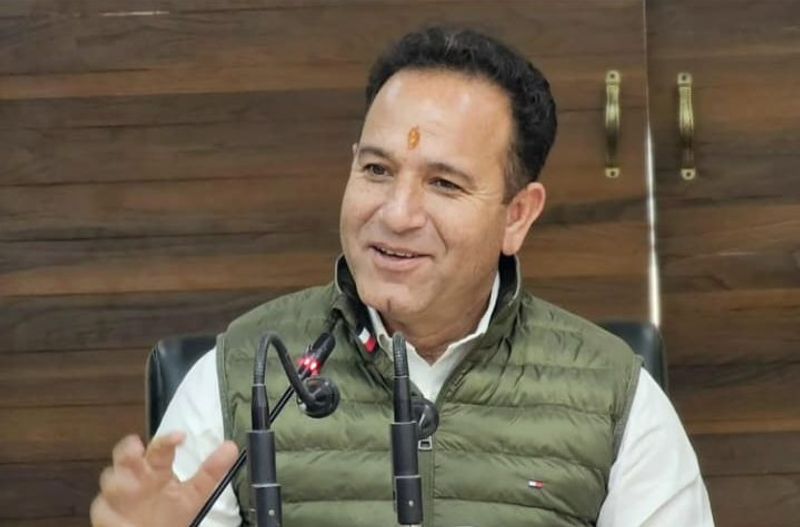
Kuldeep Sharma, deeply moved by the situation, decided not just to empathize — but to act.
He gifted a five-marla plot from his own land to Daing. The land was formally registered in the journalist’s name, making the gesture not symbolic but concrete, life-altering, and permanent.
Sharma emphasised that his decision stemmed from humanity, not religion; from compassion, not calculation. He said the bond between communities in Jammu & Kashmir is deeper than any division people may attempt to sow. His act became a quiet but powerful message: unity does not need speeches — it only needs a pure heart.
But the story didn’t end there.
A businessman from Pampore, deeply inspired by Sharma’s noble act, offered to gift him one kanal (20 marlas) of high-value land in appreciation. Shortly after, Mohd Iqbal Shah from Shopian offered another 10 marlas to Sharma.
Suddenly, this chain of goodwill transformed into a symbol of what J&K has always been at its core — a living testament to brotherhood.
A TRADITION OLDER THAN CONFLICT: J&K’s LEGACY OF COMMUNAL HARMONY
The people of Jammu & Kashmir have, for centuries, lived together in a spirit of Kashiriyat, Insaniyat, and Jamhooriyat. The region’s syncretic culture — often referred to as the “Kashmiriyat ethos” — embodies respect for all religions, mutual aid, and the belief that human values are supreme.
- The Saints Who Shaped Kashmir’s Communal Soul
The teachings of sufis and rishis — from Sheikh Noor-ud-Din Noorani to Lal Ded — form the spiritual foundation of the land. Their message was simple:
“Love is the bridge between all beings.”
Kashmiri Pandits and Kashmiri Muslims alike revered these saints. Shrines and temples often saw visitors from both communities. Even today, in remote villages, elderly people fondly recall how families of different faiths shared their festivals, harvests, meals, and daily lives.
- The Culture of Shared Celebrations
Whether it was Eid, Shivratri, Navroz, Diwali, or the Urs of a local saint, people celebrated together. The social customs of Kashmir — such as daad, paend, or trami — were never limited to one faith. The kangri, pheran, wazwan, kehwa, and many wedding traditions evolved through centuries of cultural exchange.
The same spirit exists in Jammu: Dogras, Sikhs, Muslims, Pandits, Rajputs, Gujjars, and Paharis have lived together peacefully for generations. In rural belts, neighbours still gather to help one another during marriages, funerals, and farming seasons — regardless of religion.
- How Crisis Often Unites the People
Historically, whenever J&K faced tragedy — be it a flood, earthquake, political upheaval, or economic hardship — ordinary people rose above religious identity to help one another.
During the 2014 floods, Muslim youth saved Pandit families in many areas first; Sikhs from Jammu sent langars to Srinagar; Hindus opened their homes to displaced families.
This is the J&K the world rarely sees — but the J&K that has always existed.
THE SHARMA–DAING STORY: WHY IT RESONATED SO DEEPLY
The act by Kuldeep Sharma was not something expected from a government scheme or policy. It was a simple act of conscience — something J&K’s people have been guided by for generations.
- A House Demolished, But Humanity Built
By gifting land to a Muslim journalist, Sharma demonstrated that the emotional and human connection between communities in J&K remains unbroken. His act healed a wound for one family but inspired millions.
- The Valley Responds With Gratitude
The generous offers from Pampore and Shopian were more than land gifts — they were heartfelt acknowledgments.
They were Kashmir’s way of saying: “Your humanity touched us — here is our love in return.”
- A Message Stronger Than Hate
At a time when certain narratives try to portray J&K as divided, this incident proved the opposite: the people refuse to let hatred define them.
COMMUNAL HARMONY IN DAILY LIFE — QUIET BUT STRONG
While the Sharma–Daing story made headlines, countless acts of communal brotherhood take place daily in Jammu & Kashmir without attention:
In rural Jammu, Muslim neighbours help Hindu families organise weddings, decorations, and farm work.
In Kashmir, Herath (Shivratri) of Kashmiri Pandits continues to be celebrated with help from Muslim neighbours.
On Eid, Hindu and Sikh families often visit Muslim friends for meals and greetings.
During Muharram, many Hindus and Sikhs help with arrangements and langars.
Temples like Kheer Bhawani in Ganderbal are protected and cared for by local Muslims during disturbances.
These quiet acts sustain the deeper unity of J&K.
WHY COMMUNAL HARMONY MATTERS MORE TODAY THAN EVER
- Because J&K’s Strength Lies in Its Diversity
The social fabric of the region — woven from Pandit, Muslim, Sikh, Dogra, Gujjar, Pahari, Bakerwal, and Ladakhi communities — is its strongest asset.
A harmonious J&K is peaceful, culturally vibrant, and economically resilient.
- Because Hate Can Destroy, But Humanity Builds
A single hateful message can spread online within minutes. But a single act of compassion can last generations.
The Sharma–Daing story went viral because it felt authentic and true to J&K’s identity.
- Because Younger Generations Need Hopeful Examples
Amid political and social turbulence, the youth of J&K deserve stories that show who they truly are — empathetic, united, and humane.
This story does exactly that.
A STORY THAT SHOULD SHAPE THE FUTURE
Jammu & Kashmir stands at an important juncture. Governance challenges and political transitions continue, but amid all this, the emotional bond between its people remains strong.
The gestures by Kuldeep Sharma and the responses from Pampore and Shopian prove that communal harmony is not just a memory — it is a living reality.
This story teaches us three powerful lessons:
- Humanity must always rise above identity.
- One person’s kindness can inspire an entire society.
- J&K’s communal harmony is deeply rooted and resilient.
CONCLUSION: THE SOUL OF JAMMU & KASHMIR STILL SHINES BRIGHT
The story of a Hindu man gifting land to a Muslim journalist, followed by Kashmiri Muslims gifting land back to him in gratitude, is not an isolated incident. It reflects the collective conscience of Jammu & Kashmir — a region where people instinctively help one another, where friendship Continues WITH MY across faiths, and where compassion triumphs over conflict.
Such moments remind us that the essence of this land lies not in disputes but in togetherness; not in hostility but in humanity.
The mountains and valleys of J&K are not just beautiful in nature — they are beautiful in spirit.
As long as people like Kuldeep Sharma, the businessman from Pampore, and Mohd Iqbal Shah exist, the legacy of communal harmony in Jammu & Kashmir will remain unbroken — shining as a beacon of hope for the entire nation.
(STRAIGHT TALK COMMUNICATIONS EXCLUSIVE. The author is a political analyst, national TV debater, and columnist. Ideas expressed are personal and can be reached at ahmadayaz08@gmail.com.)