

Sajad Lone conducts post mortem of J&K Budget; calls it typical bureaucratic budget, missing distinctive political imprint

STC NEWS DESK
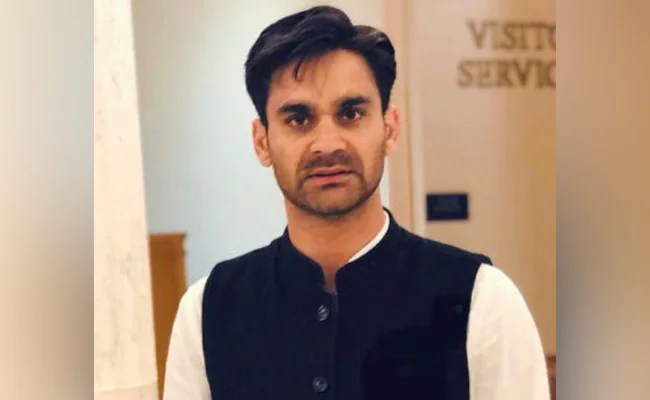
SRINAGAR, FEBRUARY 10 (STC): Jammu and Kashmir budget is a typical bureaucratic budget lacking the distinctive political imprint that usually accompanies an elected government’s fiscal proposals, said J&K Peoples Conference President and MLA Sajad Lone in his address today in the Assembly.
“When politicians come, when there is an elected government, there is a mark of politics on the budget. That mark is not visible,” Lone said, questioning why the ruling party’s manifesto promises had not translated into concrete budgetary allocations.
Lone pointed to weak execution of previous budgetary assurances, highlighting a significant gap of 13,000 crores between budget estimates and revised estimates. He observed that capital investment had decreased substantially, remarking, “In the whole world, people have a problem with money; here, it seems there is a problem with spending. We don’t seem to have the capacity to spend money.”
The budget’s composition troubled Lone, with 70% allocated to revenue expenditure and only 30% to capital expenditure. “This means that long-term assets will not be built, and this reflects a weak internal revenue base,” he explained.
He detailed the territory’s financial dependence, noting that of the total receipts of 1,27,000 crores, only 31,800 came from internal tax and non-tax sources while central assistance amounted to approximately 42,000 crores, centrally sponsored schemes 13,000 crores, and borrowing 14,000 crores. “So this limits our fiscal autonomy. When all the money is coming from outside,” Lone said.
The legislator reserved his sharpest criticism for what he termed the “great rebate grab” surrounding the six cylinder announcement. He methodically broke down the mathematics, explaining that the manifesto had promised 12 cylinders for economically weaker sections.
“The exact words in your manifesto are 12 cylinders for economically weaker sections. So, no, ‘thank you’ will not last long. I think you will have to change it,” he said.
Lone noted there are 2 lakh AAY families and 14 lakh BPL, now called priority households. “So since when did the poor BPL become economically strong? I didn’t understand this. They are also economically weak,” he questioned.
He calculated that the manifesto promise would have cost 1,680 crores annually or 8,500 crores over five years, but the government was delivering only 120 to 130 crores annually. “So against a promise of 8,500 crores for five years, what you are paying is 360 crores. Sir, this is pure mathematics, no theory, no history. If I am wrong, I would love to be corrected,” Lone added.
JKPC President described the funding mechanism as taking from one set of poor to pay another. “Where did this money come from? The money came from reducing the rebate on diesel, which is normally used in public vehicles, in public transport. That will bring in about 250 crores from there. So you took 150 from the pocket of the poor, gave 150 or 120 to other poor people, and 130 still stayed with the government,” he explained, calling it “a new kind of justice.”
He lamented that no government had ever levied taxes on the top 5% of earners in Jammu and Kashmir.
Similarly, the promise of free education up to graduation was diluted, with 14 lakh families excluded from the benefit. “So it’s a very diluted version of what you promised. Sir, CM Sahab, if you think that instead of 100 you are happy with 5, then fine,” Lone remarked.
On employment, Lone challenged the claim of 7,500 jobs created last year, estimating that hardly 2,000 went to Kashmir. He defended his past work on the 3% reservation bill, stating, “I am proud of it. I passed the 3% reservation bill in this very hall.”
He clarified that when he spoke of 60% of the population including Pahari brothers, Gujjar brothers, and Kashmiri Pandit brothers having only 25% of jobs, this included all these communities.
Click Here To Follow Our WhatsApp Channel
“When I say district and divisional recruitment, I mean it for Pahari and Gujjar brothers living in Kashmir Valley. If you think they want to compete in the general category, it would be better if you ask them,” Lone explained.
The outsourcing of 24,000 jobs drew particularly fierce criticism. “Sir, you didn’t do this, to be very honest with you. This was done by the ‘Babus.’ The system of Babus is centralized, outsourced. May God outsource their jobs too, those who outsourced these jobs, then they would know what it’s like to outsource a poor person’s job,” Lone said.
He questioned why the current administration continued this policy, asking, “If you were against everything in the Governor’s rule for the last five years, then why are you doing the same today?”
Lone warned that outsourcing cannot work in places without Western-style social security nets. “Where it works in the West, there is a social security net. The government even provides money for children’s diapers and milk. This is a societal disaster,” he said.
He traced a troubling progression from permanent jobs to contractual positions to outsourcing, questioning how private companies could be trusted with quality recruitment when government institutions themselves had suffered major scandals.
“Government is about learning curves. It is ‘hire and fire’; they can keep anyone, how will the government run?” he asked.
“Where you said you would create 1 lakh jobs, forgive me, you converted 24,000 government jobs into private ones. So, sir, don’t give us 1 lakh, but at least don’t make them private. Stop converting government jobs into private ones. This is an economic disaster and a societal disaster. It will wreak havoc in society,” Lone warned.
While not expecting the Chief Minister to produce funds overnight, Lone emphasized that budgets should set an economic tone. “One thing that should attract investors—let’s go to J&K, it’s the next investment destination. Sir, we are one of the most regulated economies in the country. It’s like the Soviet Union. NOC culture,” he said.
He explained that these permissions had become channels for corruption. “The problem is that our CM Sahab, with due respect, has never applied for a permission. He doesn’t know that this NOC is money. Even if all the papers are there, you still have to give; if not, you have to give four times more,” Lone stated.
He noted that this centralization intensified over the last five years as bureaucrats sought to maintain control. “They have done IAS and they think they are the most intelligent, nothing will happen without them. Ask us first.”
Lone urged the government to review and dilute orders from the past six years that centralized NOCs. He questioned government involvement in homestays, asking, “Why do you have to see? What does the government have to do with homestays? Is the government a housekeeper? Is the government going to see if the room is clean or not? Market forces will decide that if the homestay is good, the person will come again.”
Despite acknowledging some positive developments like e-office implementation, he maintained that the tendency toward centralization and high regulation would deter investors. “We are a highly over-regulated economy; that was my assessment that they would fix it, but it didn’t happen,” he said.
The legislator identified tourism and horticulture as potential gold mines if properly recognized. He also made a plea to correct economic misstatements made in the house, noting, “When you want to check a traditional economic theory of whether a country is backward or developed, you look at how many people are in agriculture. The more there are, the more backward it is. The fewer there are, the more it is a high-income country.”
Throughout his speech, Lone maintained that Jammu and Kashmir desperately needs reform. “I would appeal to all of you that we desperately need to deregulate and decentralize our economy, because otherwise, no investors would be coming here,” he further added.
(Straight Talk Communications I Inputs from KNS)