


Salam: The Day Kashmir’s Heart Spoke Beyond Faith..

It is a living example of that synthesis, where religious observance generated a communal celebration rather than a boundary.
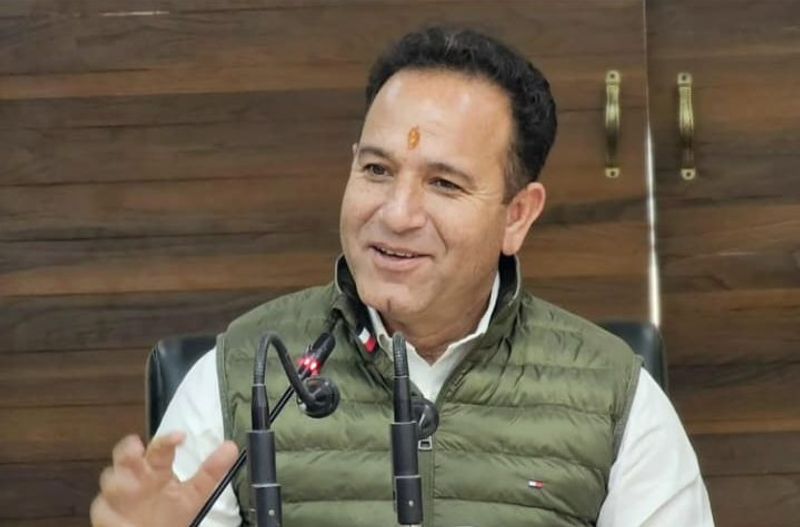
Sanjay Pandita
There are festivals that belong to faith, and there are festivals that transcend it to become the shared inheritance of a people. Among Kashmiri Pandits, the day of Salam following Herath—Shivratri—once belonged to that rare category where devotion quietly dissolved into a lived culture of coexistence. It was not merely a ritual exchange of greetings; it was a day when the social fabric of Kashmir revealed its most humane design, woven from threads of mutual dependence, affection, and an unspoken understanding that identity could be plural without being fractured.
On that morning, the solemnity of the preceding night’s worship softened into a gentle expectancy. Homes that had resonated with mantras and the fragrance of incense opened their doors not only to relatives and neighbors but also to those who formed the invisible backbone of everyday life. Salam became a procession of relationships rather than a parade of rituals. It was as though the spiritual energy invoked during Herath sought expression in acts of sharing, gratitude, and recognition of the interwoven destinies of communities.
One of the most anticipated visitors was the tailor, often a Muslim artisan whose fingers carried generations of inherited skill. He would arrive with small embroidered purses—delicate, colorful, and painstakingly crafted. These were not commercial transactions but offerings shaped by affection and tradition. The purse symbolized prosperity and goodwill for the year ahead, its intricate patterns echoing the aesthetic sensibility for which Kashmiri craftsmanship has long been celebrated. When he presented the gift, the head of the Pandit household would receive it with warmth, offering in return cooked delicacies from the festive kitchen and a token of money—not as payment, but as a gesture of love. In that exchange, giver and receiver were indistinguishable; both enacted a ritual of dignity.
Soon after came the milkman, carrying a bowl of fresh curd. In a land where winter still lingered in the air during Shivratri, curd represented nourishment, purity, and the quiet abundance of pastoral life. He too would be welcomed inside, seated, and served tea or kahwa along with festive dishes. The curd he brought would be accepted with gratitude, but the hospitality he received transformed the interaction into something deeper than a customary visit. It reaffirmed that economic roles had not erased human intimacy.
Then arrived the potter—the kumhar—with earthen vessels, sometimes specially shaped or decorated for the occasion. Clay, drawn from the same soil that sustained both communities, carried symbolic resonance. These vessels were reminders of shared geography and shared survival. When the potter placed them before the family, it was as though the earth itself had come bearing witness to a tradition older than memory. He too would leave with gifts of food, money, and blessings, carrying back to his own home the taste of a festival that was not his by religion but was his by belonging.
There were also singers—folk artists who moved from house to house, their voices carrying echoes of centuries-old melodies. They sang verses that invoked blessings, prosperity, and sometimes playful humor, blurring the line between sacred and secular. Music on Salam was not performance; it was participation. When they finished, the family would reward them generously and invite them to share tea and a meal. In those moments, art became a bridge across belief systems, reminding everyone that beauty recognizes no boundaries.
What made these visits extraordinary was their naturalness. No one announced them as examples of communal harmony; they were simply the way things had always been. The festival belonged to the Pandits, yet its celebration extended to Muslims who participated not as outsiders but as co-inhabitants of a shared cultural universe. Salam thus became a secular affirmation emerging from a religious core—a rare phenomenon in which faith generated fellowship rather than separation.
Anthropologists might describe this as a system of reciprocal exchange, but such terminology fails to capture the emotional texture of the day. The offerings were modest in material value yet immense in symbolic meaning. Each visit reaffirmed an unwritten covenant: that communities survive not through political arrangements but through everyday acts of kindness that accumulate into trust over generations.
Children observed these interactions with curiosity and delight. For them, Salam was a day of gifts, laughter, and the novelty of strangers who felt like extended family. They watched their elders converse with visitors in a mixture of Kashmiri, Urdu, and affectionate gestures that needed no translation. Without formal instruction, they absorbed lessons in civility and pluralism. By evening, pockets filled with walnuts, coins, and sweets, they sensed that the festival’s true gift was not what they received but what they witnessed.
The kitchen played its own role in this social drama. Traditional dishes—fish, dum aloo, nadru preparations, rice, and festive breads—were prepared in abundance, not merely for the family but for anyone who might arrive. Food became the language through which gratitude was expressed. Offering non-vegetarian dishes to visitors who might not share the same dietary customs was not seen as a contradiction but as a gesture of openness. Hospitality, in this context, meant anticipating the comfort of the guest rather than asserting the identity of the host.
Scholars of Kashmiri culture have often noted that the Valley nurtured a distinctive ethos shaped by centuries of interaction between Shaiva philosophy and Sufi spirituality. While political histories recorded conflicts and transitions, the social history of ordinary people told a quieter story of coexistence. Salam stood as a living example of that synthesis, where religious observance generated a communal celebration rather than a boundary.
With the upheavals of the late twentieth century and the migration of Kashmiri Pandits from the Valley, this intricate web of relationships was disrupted. Displacement scattered families across distant cities, severing the daily contact that had sustained such traditions. In exile, Salam continued, but its character inevitably changed. Tailors no longer arrived unannounced with embroidered purses; milkmen did not step into courtyards with bowls of curd; potters and singers remained memories rather than participants. The ritual survived in adapted form—through phone calls, organized gatherings, and symbolic exchanges—but the spontaneous interdependence of communities became difficult to replicate.
For many who remember the old days, Salam now carries a double resonance: joy for what endures and longing for what has been lost. When elders recount those visits, their voices often soften, as though they are describing not merely a festival but an entire way of life that once seemed indestructible. They speak of a time when identity did not require constant assertion because belonging was self-evident.
Yet even in memory, the significance of Salam remains undiminished. It reminds displaced communities that their heritage includes not only rituals and prayers but also an ethic of openness. In a world increasingly marked by suspicion and polarization, the recollection of such shared celebrations offers a counter-narrative—a testament to the possibility of harmony grounded in everyday interactions rather than grand declarations.
Younger generations, born outside the Valley, encounter Salam as both inheritance and discovery. Cultural organizations and families attempt to recreate aspects of the tradition, inviting friends from diverse backgrounds to participate, narrating stories of how it was once observed. While the context has changed, the underlying message remains relevant: that festivals can serve as bridges rather than walls.
The secular essence of Salam does not diminish its religious origin; rather, it fulfills it. By extending the joy of a sacred event to neighbors of different faiths, the community embodied the philosophical insight that divinity manifests through compassion. In this sense, Salam was not merely a social custom but a lived theology of coexistence.
To describe this bonding as unique to Kashmir is not an exaggeration but an acknowledgment of a historical reality shaped by geography, culture, and shared hardship. Mountain valleys often cultivate interdependence because survival itself depends on cooperation. Over centuries, that necessity evolved into a refined culture of courtesy and mutual respect. Salam was one of its most visible expressions, a ritualized reminder that community is not defined by sameness but by shared humanity.
Today, when Salam is exchanged across distances—through messages, calls, or modest gatherings—it still carries echoes of those earlier mornings when doors remained open and strangers entered as friends. The embroidered purse, the bowl of curd, the earthen vessel, the song at the threshold—these have become symbols of a past that continues to illuminate the present. They testify that culture, even when displaced, retains the power to inspire.
Ultimately, the importance of Salam lies in what it reveals about the human capacity for connection. It shows how a festival rooted in one faith can become a celebration of collective identity, how gestures of giving can dissolve boundaries, and how memory can preserve values that circumstances threaten to erase. For Kashmiri Pandits and for anyone who reflects on that tradition, Salam endures as a gentle but profound lesson: that peace is not merely declared; it is practiced in the simple act of welcoming one another.
In remembering and narrating these traditions, one does more than recall the past; one safeguards a vision of society in which diversity is not a problem to be solved but a richness to be cherished. Salam, in its quiet dignity, continues to whisper that such a vision once existed—not in abstraction, but in the lived reality of a valley where faith and fellowship walked side by side.
(STRAIGHT TALK EXCLUSIVE. The writer can be reached at
sanjaypanditasp@gmail.com)