



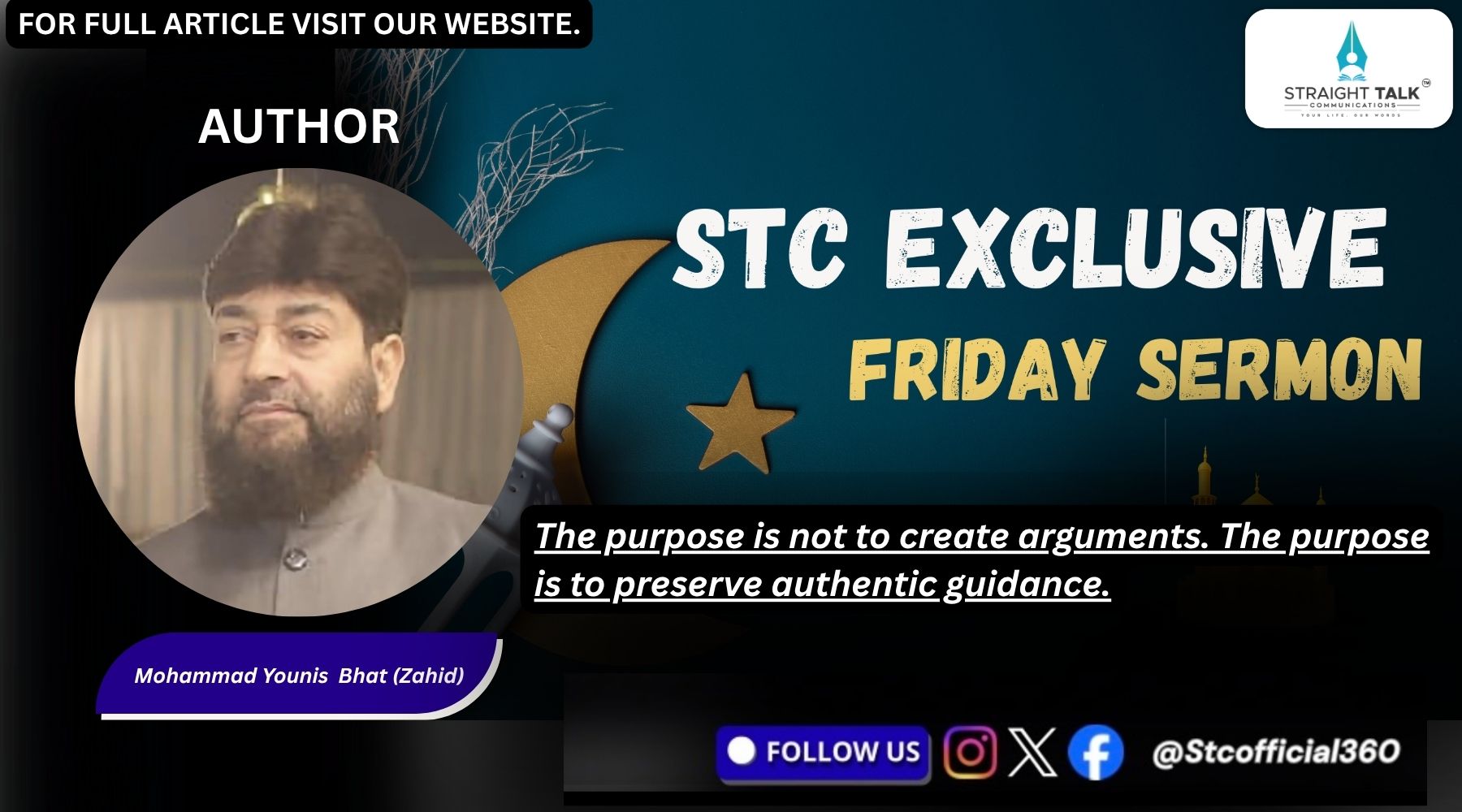
FRIDAY SERMON: The Islamic Ruling on Music
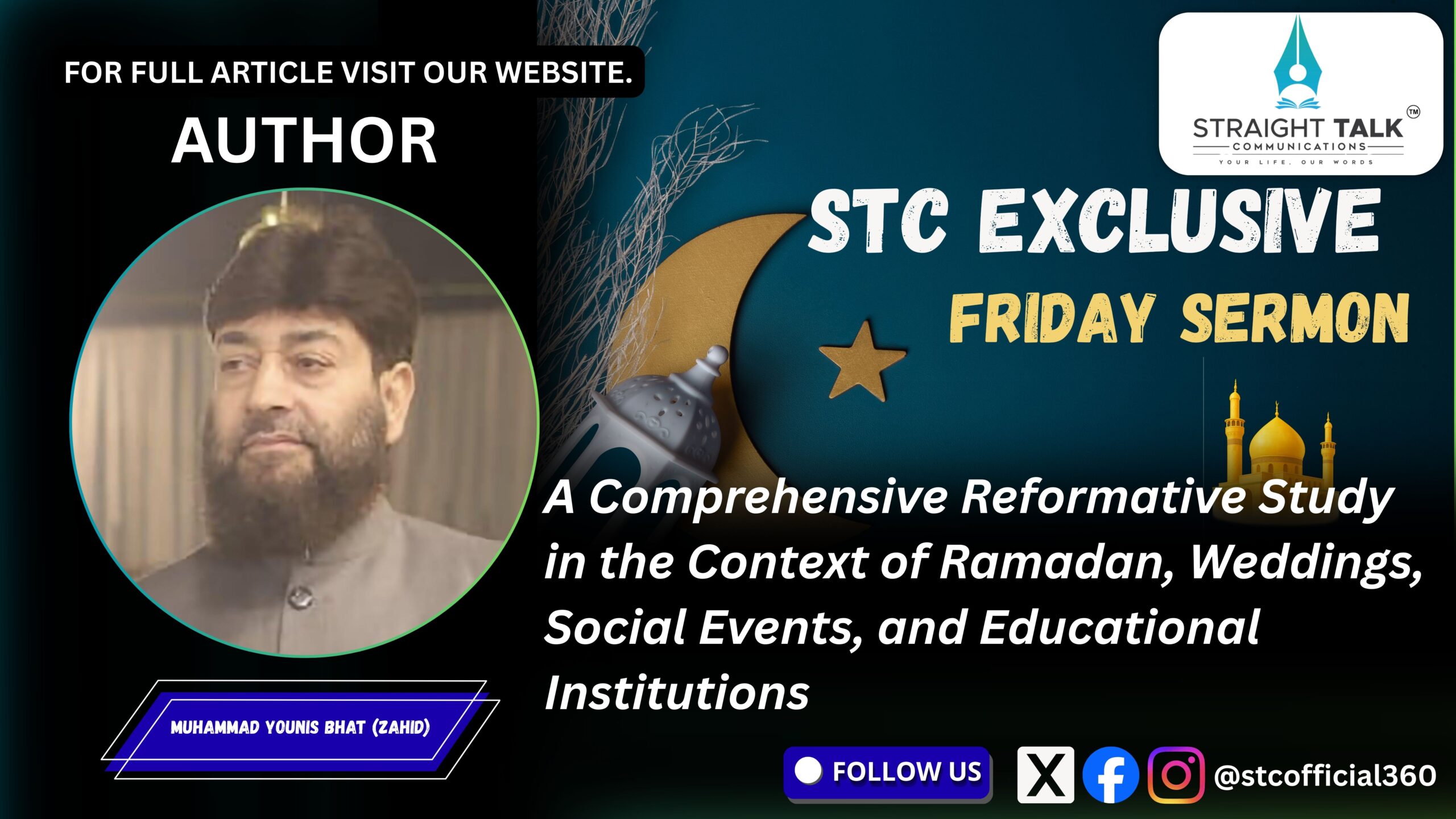
A Comprehensive Reformative Study in the Context of Ramadan, Weddings, Social Events, and Educational Institutions
Muhammad Younis Bhat (Zahid)
Islam is a complete and balanced way of life. It regulates personal conduct, family structure, social gatherings, emotional expression, and spiritual growth with wisdom and moderation. Islam does not deny natural human emotions such as happiness and grief, nor does it allow them to become uncontrolled. Rather, it sets boundaries to preserve dignity, modesty, and spirituality.
In today’s world, music, dancing, and entertainment have become central to almost every celebration and public gathering. Whether during Ramadan, weddings, school and college functions, social events, Shops, markets, and vehicles, music is treated as an essential component of joy.
This article is not written to condemn individuals, but to awaken conscience, encourage reflection, and promote reform in light of Islamic teachings.
Definition of Music in Islamic Perspective
Linguistically, music refers to organized sounds, melodies, and rhythms produced by instruments or human voices for entertainment or emotional stimulation.
From a Shariah perspective, music falls under lahw wa la‘ib (vain amusement) when it:
Distracts from the remembrance of Allah
Stimulates immoral or sensual desires
Promotes immodesty and unlawful mixing
Leads to heedlessness and spiritual negligence
Such forms of music contradict the spirit of Islamic teachings.
Music in the Light of the Qur’an
Allah Almighty says:
“And among the people are those who purchase idle talk to mislead others from the path of Allah.”
(Surah Luqman 31:6)
Companion Abdullah ibn Mas‘ud (RA) swore that “idle talk” in this verse refers to singing and music.
This verse highlights that any activity which diverts a person from the path of Allah is blameworthy.
Music in the Light of Hadith
The Prophet ﷺ said:
“There will be people from my Ummah who will consider lawful: adultery, silk (for men), alcohol, and musical instruments.”
(Sahih al-Bukhari)
This hadith clearly indicates that musical instruments used as habitual entertainment contradict the moral discipline expected in Islam.
Ramadan: A Month of Spiritual Discipline
Ramadan is not merely abstaining from food and drink. It is:
Fasting of the eyes
Fasting of the tongue
Fasting of the ears
Fasting of the heart
The Prophet ﷺ said:
“When one of you is fasting, he should not engage in obscene speech or raise his voice.”
(Bukhari)
Listening to loud music in cars, shops, or homes during Ramadan weakens the spiritual essence of fasting.
Music in Vehicles and the Proper Alternative
It is important to note that playing Qur’an recitation in vehicles also requires caution because:
Passengers may be engaged in conversation
Attention is not given to the recitation
It may lead to unintentional disrespect
Therefore, more appropriate alternatives in vehicles include:
Nasheed (Islamic poetry without instruments)
Religious lectures
Moral and motivational talks by scholars
If even this is not possible, silence is far better than music.
Music in Shops and Markets
Markets are public spaces visited by:
Elderly individuals
Youth
Women
Children
Playing music in shops creates:
Spiritual discomfort
Moral corruption
Collective sin
It becomes a silent invitation toward heedlessness.
Weddings and Music: A Serious Social Concern
Marriage in Islam is an act of worship and a Sunnah. However, modern weddings have become:
All-night music events
Mixed gatherings of non-mahram men and women
Dance floors
Displays of extravagance and immodesty
Such practices are:
Against Islamic modesty
Spiritually harmful
Socially destructive
Islam permits expressing happiness at weddings, but within clear limits:
No obscenity
No unlawful mixing
No immodesty
No extravagance
What is commonly practiced today often exceeds these limits.
Lamentation and Mourning Practices
At times of grief:
Tears are natural
Sadness is human
Patience is obligatory
However, wailing, loud lamentation, and musical mourning ceremonies
are prohibited.
The Prophet ﷺ said:
“He is not from us who slaps his cheeks, tears his clothes, and calls with the calls of ignorance.”
(Bukhari)
A Growing Concern: Entertainment in Educational Institutions
In many schools and colleges, events such as Annual Days, Teachers’ Day and cultural programs often include:
Music performances
Dance shows
Display of young girls on stage
This trend is deeply concerning because it involves:
Lack of modesty
Unlawful mixing
Public display of daughters and sisters
Educational institutions are respectfully urged:
Not to promote dance and music as achievements
Not to use young girls to highlight institutional reputation
To protect dignity over publicity
True success lies in moral excellence, not stage performance.
Commercialization of Religion
A new and subtle issue has emerged:
Children, especially young girls, reciting Qur’an beautifully
Broadcasted on TV and social media
For views, followers, and financial gain
While it may appear religious, it can involve:
Public display of voices
Turning the Qur’an into a commercial product
Prioritizing fame over sincerity
Religion is an act of worship, not a branding tool.
Spiritual and Social Benefits of Avoiding Music
Abandoning music brings:
- Inner peace
- Greater focus in prayer
- Increased acceptance of supplications
- Blessings in family life
- Better upbringing of children
- Modesty in society
- Strengthened relationship with Allah
The Correct Approach to Reform
Reform cannot be imposed harshly. It must be gentle, wise and demonstrated through personal example.
When ashopkeeper turns off music, a driver replaces songs with beneficial talks and a family simplifies their wedding, society gradually transforms.
Final Message
This discussion is not only for Ramadan. It is not only for weddings. It is for the entire year and for a lifetime. We do not guide hearts — Allah guides hearts. Our duty is to make sincere effort.
If one wedding becomes modest, one school removes dance performances and one shop turns off music, then this effort has succeeded.
Supplication
O Allah,
Protect our ears from temptation,
Our hearts from heedlessness,
And our society from immodesty.
Grant us the ability to celebrate within Your limits.
Make our lives pleasing to You.
Ameen
And Allah knows best.
(STRAIGHT TALK COMMUNICATIONS EXCLUSIVE. makahmadina11@gmail.com)
The author has rightly distinguished music in Islam, highly commendable
Regards
S.Zaffar