


Beyond Medicines: The Need for Empathy in Healthcare
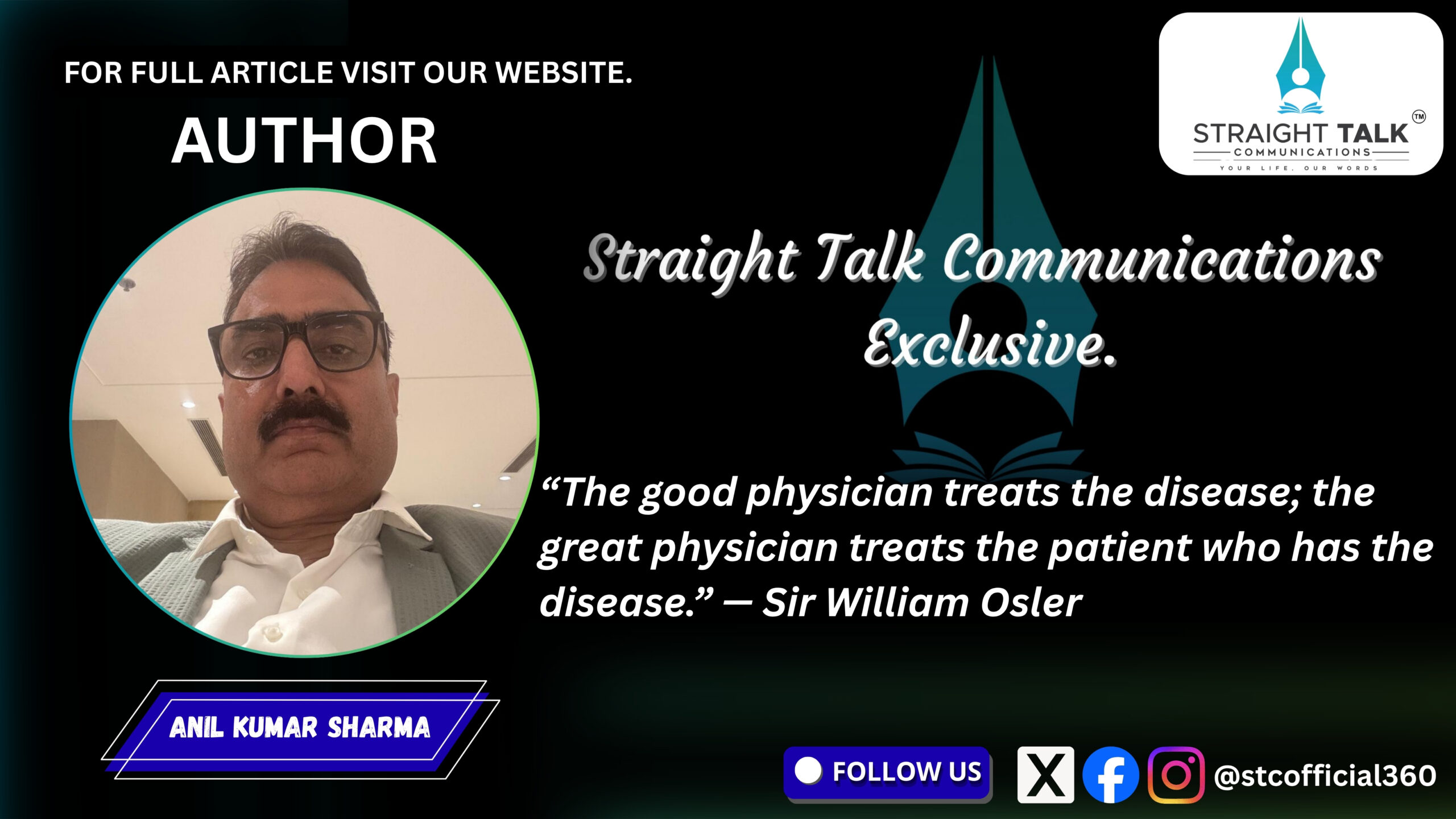
“The good physician treats the disease; the great physician treats the patient who has the disease.” — Sir William Osler
Anil Kumar Sharma
Recently, I was in Delhi at one of the country’s premier healthcare institutions to attend to my brother, who had been admitted there. It is a world-renowned specialised hospital with outstanding infrastructure, advanced medical facilities, and an excellent reputation for treatment outcomes. Like thousands of other families, we too reached there with hope and trust in the system.
When my brother was admitted, he was still able to walk on his own and underwent all medical investigations in a stable condition. However, his reports revealed serious health complications. The doctors advised immediate admission to a private ward. From that very day, his health began deteriorating rapidly. Within a short span of time, he had to be shifted first to the HDU and later to the ICU.
As expected, our entire family was under tremendous emotional stress and desperation. In such moments, family members continuously seek reassurance, clarity, and honest communication from healthcare professionals. Whenever we approached the doctors or medical staff to understand his actual condition, we found responses that carried sympathy, but lacked empathy. There is a vast difference between the two.
Sympathy often sounds like a formal expression of concern, while empathy reflects genuine understanding of the emotional trauma a patient’s family is undergoing. We moved from one doctor to another, from one desk to another, only to get vague replies or visible irritation at our repeated questions. Perhaps for medical professionals these situations are routine, but for families, every update is emotionally life-changing.
When we found that nobody was seriously adhering to our repeated requests for proper communication and clarity, we finally contacted officials in the Ministry of Health and even dropped an email to the PMO. Suddenly, we witnessed movement within the system. Doctors and officials approached us, explained his actual medical position, and informed us about the course of treatment being undertaken.
This experience made me realise something very important. Sensitivity and communication should not begin only after influence, escalation, or intervention from higher offices. Such humane response mechanisms should already exist within the healthcare system itself. Every patient and every family, irrespective of background or reach, deserves dignity, clarity, and empathetic communication during moments of crisis.
This experience is not merely about one hospital or one family. It is my larger observation about the growing emotional disconnect in modern professional spaces, especially healthcare. Today, hospitals possess world-class machines, sophisticated infrastructure, and highly qualified specialists, yet somewhere the human touch is gradually fading.
Patients do not only come to hospitals with diseases; they arrive with fear, uncertainty, financial stress, and emotional vulnerability. Their attendants spend sleepless nights outside wards carrying silent prayers and invisible anxiety. In such circumstances, a few empathetic words from a doctor or nurse can become as healing as medicine itself.
Healthcare professionals undoubtedly work under immense pressure. Long hours, critical emergencies, administrative burdens, and emotional exhaustion are realities they face every day. Society deeply respects their dedication and sacrifice. But professionalism should not create emotional distance. Technical expertise saves lives, but empathy preserves human dignity.
Empathy does not mean giving false hope. It simply means communicating with patience, listening with sensitivity, and understanding the emotional condition of those standing helplessly outside ICU doors. Sometimes families are not searching for miracles; they only want honesty delivered with humanity.
What is needed today is the presence of specialised communication and counselling professionals in hospitals, supported by dedicated meeting rooms and responsive helplines, to address the real concerns of patients and their families.
In critical situations, attendants are not merely looking for medical terminology or routine updates; they seek clarity, emotional support, guidance, and humane communication. A structured system where trained professionals regularly interact with families, explain the patient’s condition with patience, and address their anxieties can significantly reduce emotional distress and confusion.
Dedicated counselling spaces within hospitals can help families discuss sensitive medical situations with dignity and privacy instead of running helplessly from one department to another. Similarly, active helplines manned by empathetic professionals can become an important bridge between doctors and attendants, especially during emergencies and ICU admissions.
Modern healthcare cannot remain limited to machines, reports, and procedures alone. Alongside medical excellence, hospitals must also institutionalise emotional care and compassionate communication as an essential part of treatment.
Healthcare is not merely about treating illness; it is about caring for human beings during the most vulnerable moments of their lives. Medicines may cure the body, but empathy comforts the mind and strengthens hope.
What people need from professionals, especially in healthcare, is not mere sympathy from a distance, but empathy that makes them feel understood, respected, and emotionally supported. Because in the end, humanity remains the most powerful form of healing.
Well said,
“The good physician treats the disease; the great physician treats the patient who has the disease.” — Sir William Osler
(STRAIGHT TALK COMMUNICATIONS EXCLUSIVE. The author is a Columnist | Former Banker | Social Commentator. Email: anil.kumar.sharma9419@gmail.com)