




Ashoka Emblem at Hazratbal: A Wound to Faith and Sensitivity
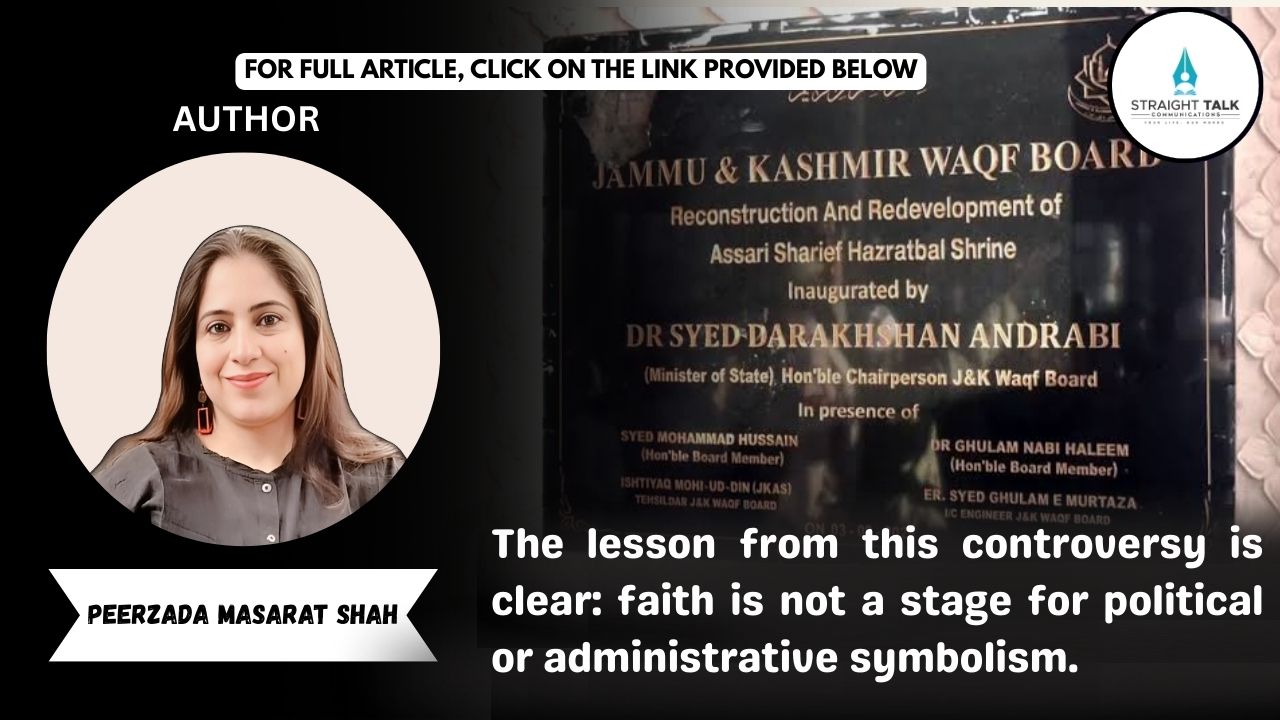
The lesson from this controversy is clear: faith is not a stage for political or administrative symbolism.
Peerzada Masarat Shah
The recent installation of the Ashoka emblem on the foundation stone of the reconstruction project at the Hazratbal Dargah in Srinagar has triggered deep anguish and outrage among Kashmiri Muslims. What the administration perhaps saw as a symbolic gesture of state authority has been received by devotees as nothing less than a direct intrusion into the sanctity of one of Islam’s holiest sites in Kashmir.
Hazratbal is no ordinary shrine. It is the spiritual heart of Kashmir, the custodian of the most revered relic of Prophet Muhammad ﷺ. For centuries, its white dome has stood as a beacon of faith, humility, and the singular principle of Tawheed—the Oneness of Allah. It is precisely this foundation that renders any worldly emblem, insignia, or sculpted figure alien and unacceptable within its walls. For believers, placing the Ashoka emblem here is not just a matter of poor judgment; it is seen as an outright violation of Islamic principles.
Tawheed and the Prohibition of Sculpted Symbols
In Islam, the oneness of God is not simply a belief; it is the cornerstone of faith. Any form of idol, sculpture, or symbolic veneration of worldly authority is strictly prohibited. Prophet Muhammad ﷺ himself warned against adorning mosques or places of worship with unnecessary embellishments that might distract from the remembrance of Allah. This principle explains why the emblem, however revered as a national symbol, feels offensive when imposed inside Hazratbal.
The Ashoka emblem, deeply rooted in India’s history and associated with Emperor Ashoka’s Buddhist legacy, carries symbolic weight in secular governance. But when transposed into a sacred Islamic space, it collides head-on with the uncompromising spirit of Tawheed. For devotees, the act is not about disrespecting the national emblem but about defending the sanctity of their most sacred site from what they perceive as a sculpted intrusion.
A Question of Sensitivity, Not Nationalism
Supporters of the installation argue that the emblem is a national symbol and should be above controversy. But this is not a debate about nationalism versus faith. The issue is one of religious sanctity. A mosque, shrine, or dargah cannot serve as a platform for the display of state insignia—no matter how noble the intent. To install such an emblem at Hazratbal is to blur the line between worldly authority and divine worship, a line that Islam commands must remain distinct.
This insensitivity has cut deep among devotees, leaving them to question why their sentiments were not respected. It reflects a troubling lack of consultation with scholars, clerics, and the community before making a decision of such magnitude. Faith is not a space for administrative experimentation.
The Silence of Leaders and Clerics
Perhaps even more painful than the emblem itself has been the silence of those expected to safeguard Hazratbal’s sanctity. Many clerics, usually quick to issue sermons on lesser matters, have maintained a troubling quietude. Their hesitation to confront authority has been interpreted by the people as hypocrisy—a betrayal of trust.
Political leaders, too, have chosen selective outrage. While they are often vocal on controversies that serve their agendas, their muted response here has only deepened the alienation of the community. The sense of betrayal is palpable: when the most sacred Islamic symbol in Kashmir is perceived as under attack, silence from leaders—religious or political—feels like complicity.
The Waqf Board’s Responsibility
The Waqf Board, under whose leadership the emblem was inaugurated, bears the greatest responsibility. Sacred institutions are not personal fiefdoms but collective trusts. Decisions that affect millions of devotees cannot be taken without consultation. The absence of dialogue with scholars and the community reveals not only a lapse in sensitivity but also a dangerous disregard for the faith and emotions of those who revere Hazratbal.
Legal and Symbolic Missteps
Adding to the controversy is the fact that even the use of the national emblem is regulated under the State Emblem of India (Prohibition of Improper Use) Act, 2005. Private or unauthorized use requires explicit approval of the central government. Unauthorized display—even in commercial or symbolic settings—can invite financial penalties and even imprisonment. The law is meant to protect the emblem from misuse, misrepresentation, or inappropriate placement. Ironically, in this case, the emblem itself has become the cause of perceived sacrilege, underscoring the necessity of greater discretion.
What Is at Stake
At its heart, the issue is simple yet profound: Hazratbal is a sanctuary of devotion, not a canvas for administrative displays. To adorn it with emblems or insignia—however noble they may appear elsewhere—is to diminish its spiritual identity. For Kashmiri Muslims, Hazratbal represents not just a shrine but a living connection to their faith, history, and identity. To tamper with that sanctity is to wound the collective soul of a people.
Faith cannot be diluted by symbols of power. What devotees demand is neither confrontation with the state nor rejection of national identity, but a recognition that religious spaces must remain free of worldly symbols. They seek only respect for their beliefs and the assurance that Hazratbal will remain what it has always been: a place of humility, faith, and the remembrance of Allah.
The Way Forward
Corrective steps must be taken immediately. The emblem should be reviewed and, if necessary, removed in consultation with scholars and community elders. Transparency and sensitivity must guide future decisions involving sacred spaces. Only then can trust be restored.
The lesson from this controversy is clear: faith is not a stage for political or administrative symbolism. Hazratbal’s sanctity belongs not to institutions or authorities, but to the millions who bow their heads in prayer within its walls. That sanctity must remain untouched—for to compromise it is to compromise the very soul of Kashmiri faith and identity.