





Darbar Move: Kashmir’s Burden, Jammu’s Bounty, Bureaucrats’ Break
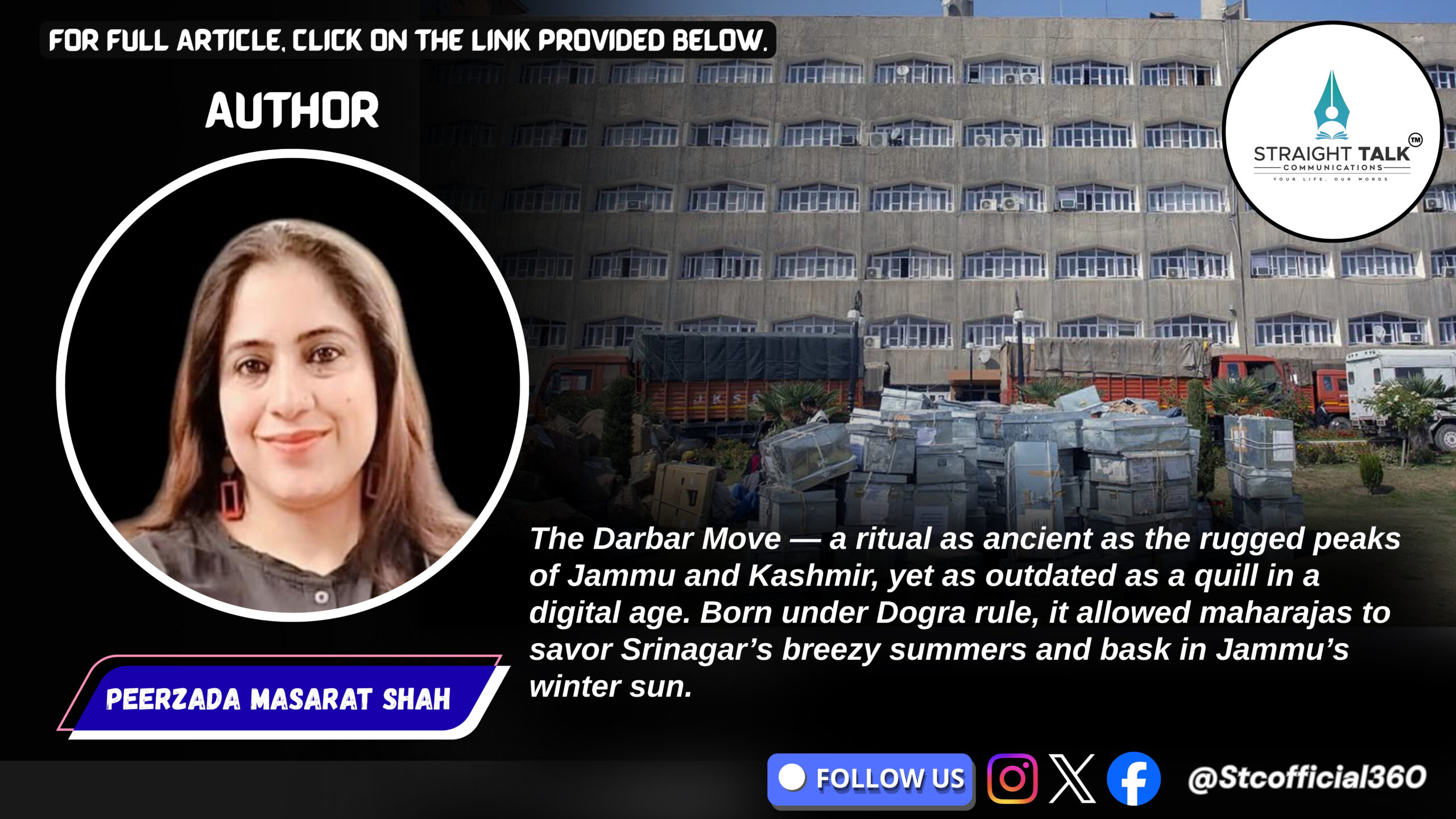
Peerzada Masarat Shah
The Darbar Move — a ritual as ancient as the rugged peaks of Jammu and Kashmir, yet as outdated as a quill in a digital age. Born under Dogra rule, it allowed maharajas to savor Srinagar’s breezy summers and bask in Jammu’s winter sun. Convenient for royalty, no doubt, but for today’s citizens? A logistical quagmire. Fast forward to 2025, and this tradition lumbers on, not for necessity, but for nostalgia and bureaucratic ease.
At its heart, the Darbar Move prioritizes comfort over governance. Post-1947, democratic leaders and bureaucrats inherited this colonial habit, turning it into a biannual spectacle. Every six months, thousands of files, furniture, and officials migrate between Srinagar and Jammu, supposedly to ensure administrative flow. In truth, it’s a seasonal exodus that serves a select few while leaving most in limbo. Take, for example, a Srinagar teacher needing a pension update in January. She must travel 300 kilometers to Jammu, shelling out for bus fares, a cramped hotel room, and meals, all while missing classes and family time. Meanwhile, Jammu’s markets buzz with activity—Kashmiri families rent rooms, buy groceries, and dine at local dhabas, pumping money into the city’s economy.
The irony stings. Jammu rarely returns the favor. How many Jammuites flock to Srinagar’s Dal Lake in summer to escape the plains’ scorching heat? Few, if any, own property in the valley or boost its economy. The Darbar Move, then, is a one-sided gift to Jammu’s shopkeepers and hoteliers, funded by the sweat and savings of Kashmiris. Srinagar’s residents, meanwhile, shiver through winter, both from the cold and the absence of their government.
Bureaucrats, however, revel in the ritual. For them, it’s an extended holiday masquerading as duty. Picture a senior official, comfortably settled in Jammu’s government quarters, sipping tea while approving files that could’ve been signed digitally from Srinagar. Local businesses in Srinagar see no trickle-down from this exodus—unlike Jammu’s bustling markets, the valley’s shops stay quiet. Yet, taxpayers foot a bill of crores annually for trucks hauling office chairs, file cabinets, and allowances for officials’ “relocation.” In 2024, estimates pegged the move’s cost at over ₹100 crore—enough to equip dozens of rural schools or upgrade crumbling hospitals.
Technology makes this ritual absurd. Digital governance, from e-portals like JK-GRAMS to Zoom meetings, has slashed the need for citizens to chase officials in person. Files are now PDFs, not dusty bundles, and approvals often require just a click. A farmer in Anantnag can submit land documents online, yet the Darbar Move demands he travel to Jammu if a clerk’s signature is needed. The tradition endures, a stubborn relic propped up by a sentimental nod to history.
The political subtext is glaring. Politicians tout the move as a “boost to Jammu’s economy,” and they’re not wrong—hotels like Asia One Earth in Jammu report a 30% revenue spike during the winter move. But this comes at the expense of Kashmiris, who are treated as collateral damage. Citizens navigating snowy passes to submit a form are expendable, while ministers enjoy Jammu’s mild winters, toasting to tradition. “Kashmiris spend, Jammu earns, bureaucrats relax,” a Srinagar taxi driver quipped, capturing the lopsided deal.
Administratively, the move is pointless. Relocating offices adds nothing to efficiency. Employees bunk in government housing, files are increasingly digital, and public interactions are minimal. What’s left is a ceremonial game of musical chairs, where officials swap desks while citizens freeze. A 2023 government report admitted that 70% of secretariat tasks could be handled remotely, yet the ritual persists, costing time, money, and trust.
In essence, the Darbar Move is a sanctioned inconvenience for Kashmiris, a jackpot for Jammu’s economy, and a scenic getaway for officials. It’s governance draped in tradition, paid for by the public, yet serving those in power rather than those in need. Why should offices shuttle when citizens cannot? In an era of digital administration, dragging files and furniture across mountains is not just unnecessary—it’s ludicrous. If the goal is to honor history, build a museum, not a burden on public funds.
Until change comes, the Darbar Move will roll on: Kashmiri families will trudge south in winter, Jammu will cash in on the influx, bureaucrats will savor their seasonal retreats, and Srinagar will languish, waiting six months for its government to return. Some traditions, it seems, outlast common sense.
(Disclaimer: The views are of the author and not that of Straight Talk Communications)