



DATELINE: When Heroes End Up in Files and Sanctity Becomes a Question
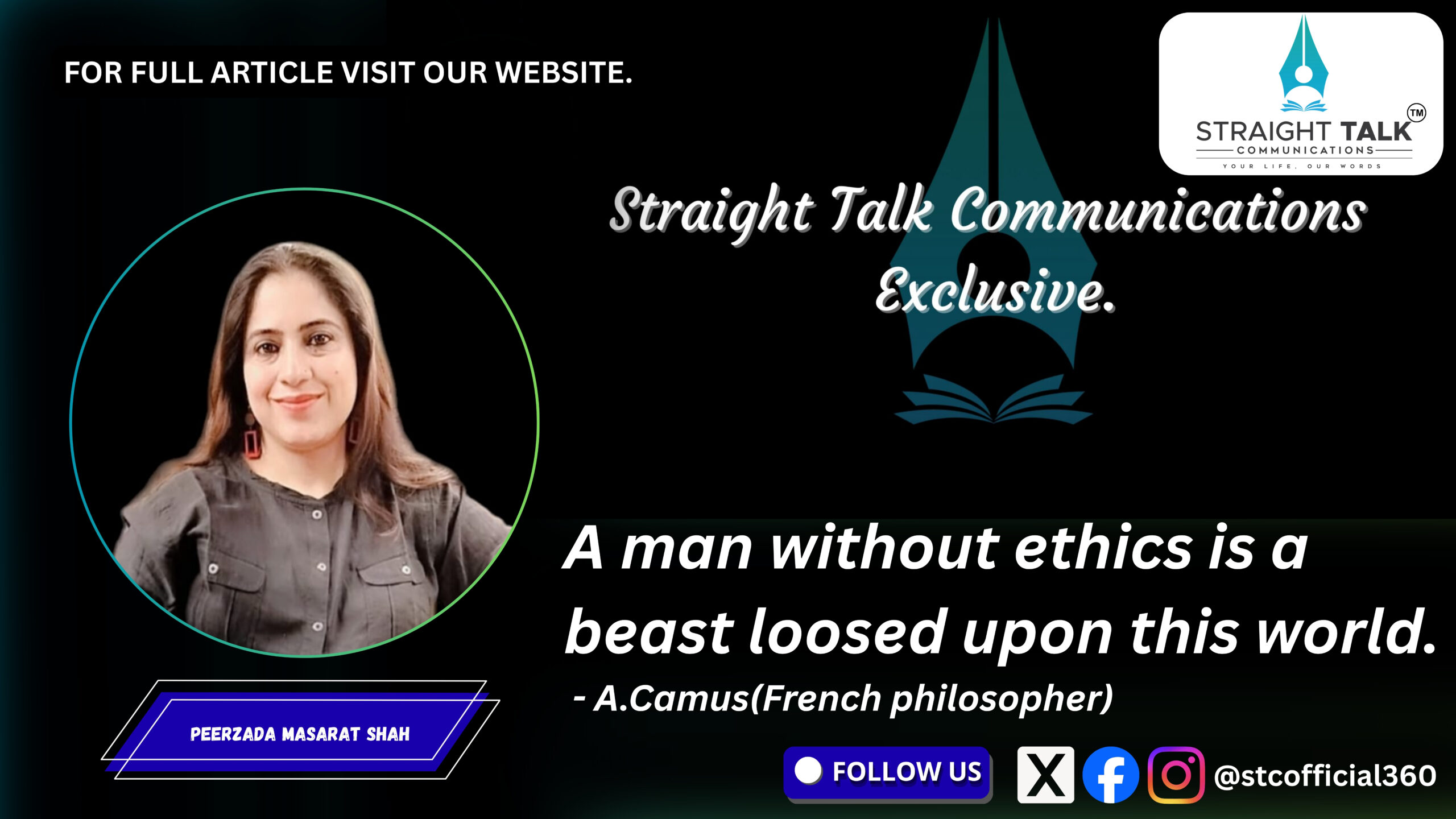
A man without ethics is a beast loosed upon this world.
– A.Camus(French philosopher)
Peerzada Masarat Shah
One of the strangest tragedies of our time is that the very personalities we have praised for years through eulogies, references, and intellectual reverence suddenly surface in files that smell not of ethics, but of rot. The Epstein files have delivered a sharp blow to this illusion of sanctity. Figures whom even educated and conscious sections of society long considered intellectual beacons have now become question marks. In response, a familiar defense emerged: “Oh, these things must have happened when he was still fine.” As if morality depends on physical ability, and conscience becomes absolved once confined to a wheelchair.
When photographs appeared, the matter grew even more disturbing. A half-dead body, immersed in alcohol and surrounded by underage youth—this was not just an image, but a symbol. A symbol that made it clear the problem was never physical disability, but moral decay. The truth is simple: one whose nature is steeped in the forbidden does not abandon it even on their deathbed. The issue here is not just an individual, but a collective mindset that, while constructing “heroes,” chooses to see only the bright side and deliberately ignores the darkness.
Our naivety lies in separating thought from character. If someone utters a few scientific or intellectual statements, we hastily issue them a moral exemption certificate. This contradiction leads us to a place where deniers of God, enemies of faith, and criminals against humanity become “respectable”—simply because they are powerful, famous, or “useful” to us. Those who trample Jerusalem, justify genocide, and wrap oppression in philosophical language—how can they be credible? This is an open contradiction, yet we are afraid to even frame it as a question.
This issue is not limited to the West. If curtains were lifted here, how many stories would spill out? In politics, every file is a saga. A former actress once tried to leak complete data, and everyone knows how that ended—silence, followed by death. Speaking the truth has always been dangerous, especially where power is considered more sacred than truth itself. Saying “the West has declined” is easy, but admitting that we are standing on the same slope is far more difficult.
The remark by Riazatullah Farooqi further exposed this hypocrisy: in gatherings where only the tongue denying God was believed to function, the meaning of “movement” turned out to be far broader. The sarcasm is bitter, but the question is valid: are we truly capable of bearing the truth? Or do we only like the kind of truth that keeps our idols intact?
It is worth deep reflection why the Muslim of our era appears so confused and inverted. We blur the line between right and wrong, then wonder why we have lost direction. The Book of Allah lays down a clear principle: whoever resembles a people will be raised with them. This is not merely a warning, but a moral law. If we elevate the architects of oppression as heroes, history will not consider us innocent.
So pause before building bridges of praise. When presenting heroes to future generations, present the truth as well—the complete truth. So that the distinction between right and wrong survives, and the shell of sanctity does not blind us. Because blind devotion is far more dangerous than the truth itself.
(STRAIGHT TALK COMMUNICATIONS EXCLUSIVE)0