




DATELINE: When Parliament Debates Poetry Instead of People’s Problems
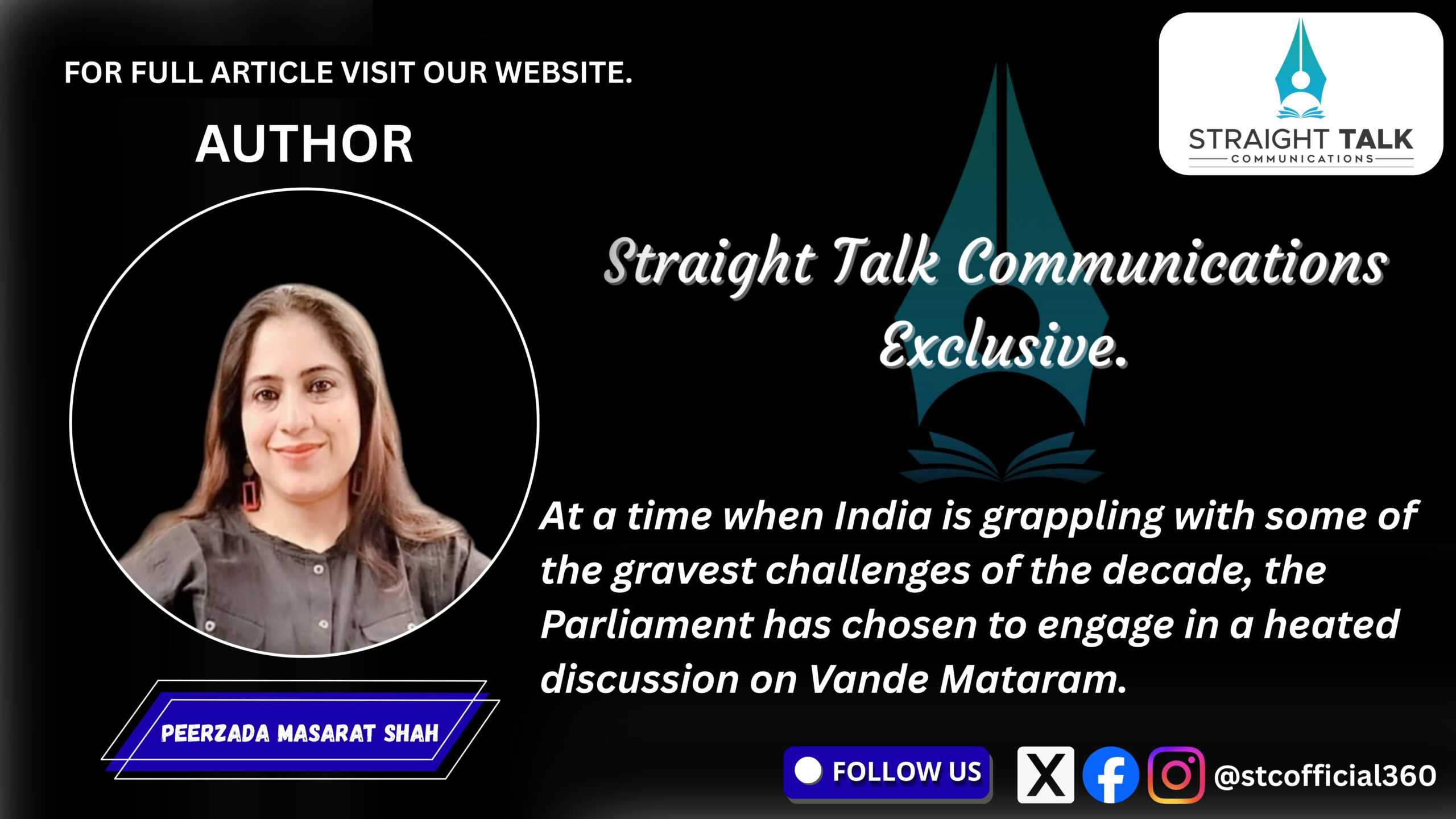
Peerzada Masarat Shah
At a time when India is grappling with some of the gravest challenges of the decade, the Parliament has chosen to engage in a heated discussion on Vande Mataram. The question many citizens are asking is simple: Has Parliament become a forum for literature, historical revisionism, or a stage for competitive patriotism?
This sudden political enthusiasm over a 150-year-old song raises deeper concerns about national priorities. While debates on heritage and nationalism have their own place, the timing and intensity of this discourse appear less like democratic deliberation and more like a convenient diversion from pressing ground-level crises.
A Country Under Stress—Yet Distracted
India today stands at a crossroads of internal instability and external threats. Terrorist incidents continue to shake the nation. China has not only laid claim to an entire Indian state but also intruded into sensitive border areas, challenging our sovereignty. The law-and-order situation in several regions is deteriorating, while environmental decline has reached alarming levels.
The air in major cities is practically poisonous—a silent killer forcing millions to inhale toxicity daily. Nature itself seems to be warning us through landslides, floods, heatwaves, and droughts. These disasters highlight what experts have long cautioned: mindless development invites irreversible destruction.
Yet, in the midst of all this, our honourable representatives are dedicating Parliament’s precious hours to fiery arguments over a song written in the 19th century.
Is the Debate About Patriotism—or Politics?
The passionate theatrics inside the House might suggest that patriotism is under threat. But the real question is: Who benefits from this spectacle?
If most Members of Parliament were asked to recite the full Vande Mataram, or even explain its original Bengali context, would even 10% manage to do so? The irony is striking. Those who struggle to interpret or pronounce the poem now present themselves as the ultimate arbiters of nationalism.
Instead of addressing unemployment, instead of discussing inflation, instead of solving the crisis of paper leaks that have shattered the dreams of lakhs of youth, the government and opposition seem locked in a competition of who can appear more patriotic on television screens.
The Issues We Should Be Talking About
The country is facing economic fragility that requires urgent attention. Unemployment remains painfully high, especially among the youth. Prices of essential commodities continue to pinch the common citizen. Paper leak scandals have eroded the credibility of the education system, crushing the hopes of students who prepare for years.
Why is the House silent on:
Rising unemployment?
Skyrocketing inflation?
Tampering with reservations?
The status, security, and empowerment of women?
Agricultural distress?
Declining press freedom and internet restrictions?
Each of these deserves serious legislative scrutiny. Each affects millions of lives daily. Yet none receives the energy, outrage, or passion that a symbolic debate on Vande Mataram suddenly attracts.
The Politics of Distraction
The truth is uncomfortable but unavoidable: the Modi government benefits from shifting the national conversation away from real problems and toward emotive issues. The more Parliament debates culture, identity, and symbols, the less it is forced to confront data, accountability, or economic performance.
Cultural nationalism becomes an easy tool — a firecracker that dazzles and distracts while unemployment and inflation burn quietly but relentlessly.
Conclusion: Patriotism Isn’t Performative
Patriotism is not proven by shouting slogans or debating poems. It is expressed through governance, responsibility, and the courage to confront difficult realities.
India does not need more performative patriotism in Parliament. It needs policy, transparency, empathy, and action.
Until then, the nation can only watch as its leaders argue passionately over what is least urgent, while the most urgent issues remain buried under rhetoric.
(Straight Talk Communications Exclusively)