




FRIDAY SERMON: Every Intoxication is Forbidden
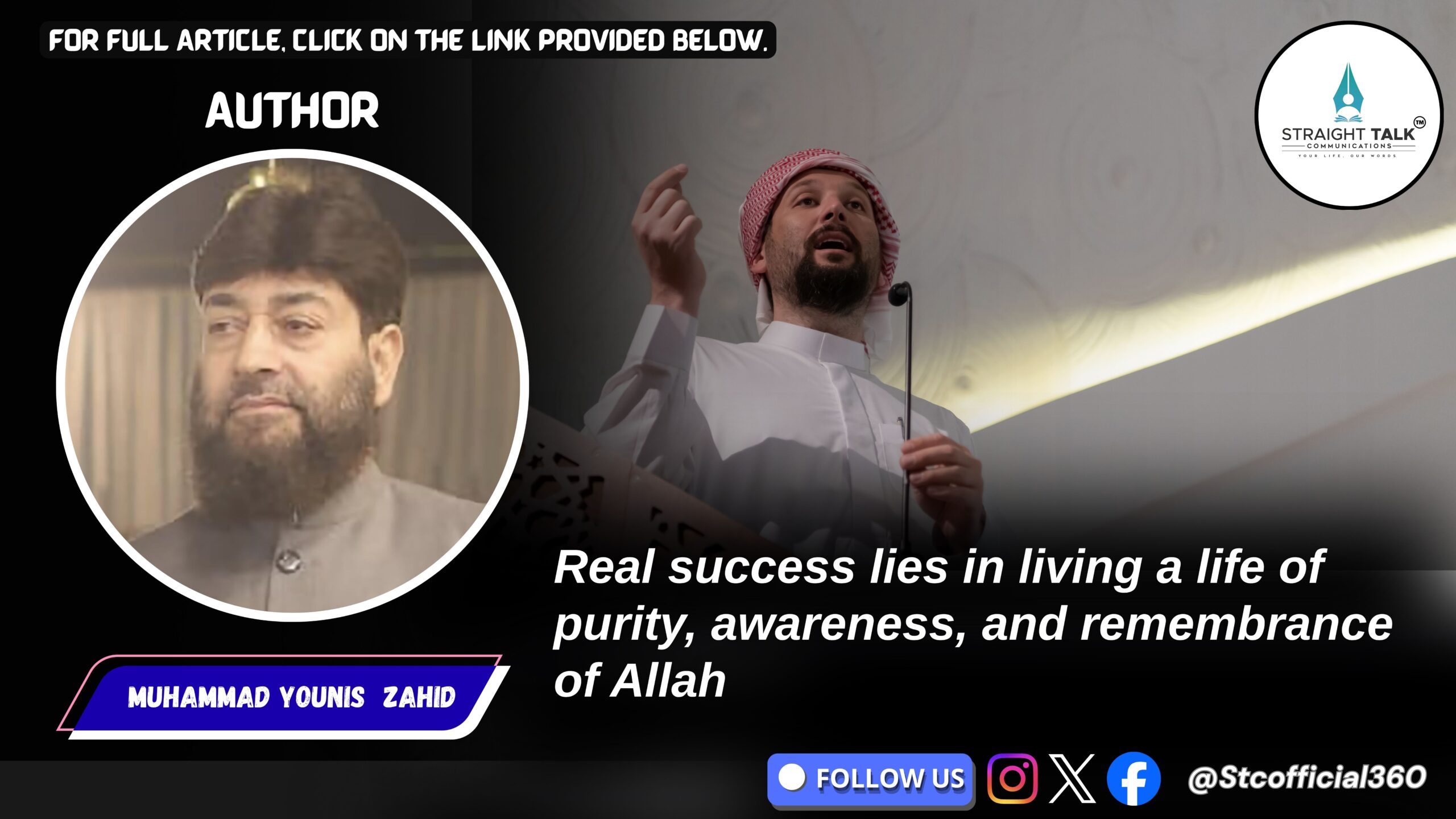
Real success lies in living a life of purity, awareness, and remembrance of Allah.
Muhammad Younis Zahid
Intoxication, in any form, is one of the greatest evils that destroy not only an individual’s health but also the moral and social fabric of society. Islam, being a complete code of life, strictly prohibits all forms of intoxication. The Qur’an clearly declares intoxicants as the handiwork of Satan, designed to create hatred and prevent the remembrance of Allah. The message is universal and absolute — every intoxication is forbidden.
The Holy Prophet Muhammad (ﷺ) clearly said:
“Kullu Muskirin Haraam” — Every intoxicant is forbidden.
This concise statement from the Prophet (ﷺ) leaves no room for doubt or argument; all forms of intoxication are absolutely prohibited in Islam.
- Personal Perspective:
From a personal point of view, intoxicants severely damage both physical and mental health. Alcohol, drugs, and other addictive substances destroy the body that Allah has entrusted to every human being. Our body is an Amanah (trust) from Allah, and we are responsible for maintaining its purity and health. Intoxicants weaken the nervous system, affect the brain, damage internal organs such as the liver and lungs, and lead to mental instability. Therefore, consuming anything that harms one’s health is a violation of this divine trust.
- Spiritual Perspective:
Intoxicants also have a devastating impact on one’s spiritual life. A person under their influence loses the ability to pray, remember Allah, or recite the Qur’an properly. The Qur’an warns believers in Surah Al-Ma’idah (5:90):
“Al-Khamr wal-Maysir Rijsum min ‘Amalish Shaytan.”
“Intoxicants and gambling are filth from the handiwork of Satan, so avoid them that you may be successful.”
This divine command clearly shows that intoxicants are not only harmful but spiritually impure, leading people away from faith, prayer, and remembrance of Allah. When a person’s senses are clouded, the heart becomes distant from Allah, and spirituality fades. Hence, avoiding every form of intoxication is essential for maintaining purity of soul and connection with the Creator.
- Social Perspective:
From a social viewpoint, intoxication leads to a series of destructive consequences — violence, family breakdown, crime, poverty, and moral decay. Many incidents of domestic abuse, road accidents, and social misconduct are the result of intoxication. Families are destroyed, children suffer, and society bears the cost of such irresponsible behavior. Addiction also causes severe economic loss, wasting wealth and resources that could otherwise be used for good purposes.
- Role of Parents and Guardians:
Parents and guardians play a vital role in protecting the younger generation from the trap of intoxication. They must monitor their children’s company, social activities, and habits, while also providing emotional support and religious guidance. Many youths fall into addiction not out of choice, but due to loneliness, peer pressure, and lack of understanding. Proper family communication, religious upbringing, and early moral training can prevent such habits before they begin.
- Economic and National Impact:
Intoxication is not just a personal or family issue — it is a national concern. Billions of rupees are wasted every year on cigarettes, alcohol, and drugs. This money could instead be used for education, healthcare, and welfare. By avoiding intoxicants, individuals not only protect their health but also contribute to the progress and stability of their country. Thus, staying away from intoxicants is not only an act of worship but also a form of social and economic reform.
- All Forms of Intoxication Are Forbidden:
It is important to understand that Islam does not only forbid alcohol or drugs but every form of intoxicant that affects the mind, body, or judgment. This includes cigarettes, tobacco, gutka, naswar, sleeping pills (neend ki goli), safari, charas, drugs, and wine, etc.
Any substance that intoxicates, even in small amounts, falls under the same prohibition. The Prophet Muhammad (ﷺ) said:
“Every intoxicant is Khamr, and every Khamr is forbidden.”
(Sahih Muslim)
Therefore, whether the intoxication comes through smoking, chewing, or consuming anything harmful, all such actions are strictly unlawful (Haram) in Islam. Every believer should remember this golden warning —
“Nasha Chhod Do, Allah Se Daro.”
Leave all forms of intoxication and fear Allah, for He will question us about how we used the body and mind entrusted to us.
- Misuse of Prescribed Medications:
Another growing concern in modern times is the misuse of prescribed medications. Many people consume sleeping pills, painkillers, or anxiety tablets not for medical necessity but for intoxication and pleasure. Such misuse is also strictly prohibited in Islam. Medicines are blessings from Allah meant to cure illness, not to destroy health or consciousness. When these drugs are taken beyond their prescribed limits, they produce the same effects as other intoxicants and therefore fall under the same ruling of prohibition. The intention (niyyah) and use must always be in accordance with medical guidance and necessity — anything taken to induce intoxication is Haram.
- Use of Alcoholic Medicines in Islam:
While Islam strictly forbids intoxicants, it also provides concessions in genuine cases of medical necessity. Some medicines may contain a small amount of alcohol as a preservative or solvent. If such medicine is prescribed by a qualified and trustworthy doctor, and no pure alternative is available, then its use is permissible according to Islamic law — provided that it is used only for treatment and not for pleasure or intoxication.
This ruling is based on the Islamic principle “الضرورات تبيح المحظورات” — “Necessities permit the prohibited.”
The Qur’an supports this principle, saying:
“He has explained to you what is forbidden to you, except under compulsion of necessity.”
(Surah Al-An‘am 6:119)
Hence, when the intention is pure, the dosage is limited, and the use is medically required, such medicines are lawful (Halal) under necessity. However, once a halal alternative becomes available, a believer should immediately switch to it.
- Awareness and Rehabilitation:
Islam not only forbids intoxication but also encourages repentance and recovery. Those who are addicted should never lose hope in Allah’s mercy. The doors of repentance remain open. Seeking medical treatment, joining rehabilitation programs, and turning back to prayer are all steps toward healing. The Prophet ﷺ said:
“Every son of Adam sins, and the best of sinners are those who repent.”
(Tirmidhi)
Society should not look down upon addicts but help them recover through kindness, guidance, and community support. Reform and repentance are always better than rejection and punishment.
- Religious Responsibility to Guide Others:
Every Muslim has a duty to promote good and prevent evil (Amr bil Ma’ruf wa Nahy anil Munkar). If we see others falling into addiction, we should gently advise and remind them of Allah’s command. Silence or ignorance in front of evil is not acceptable in Islam. The Prophet ﷺ said:
“Whoever among you sees an evil, let him change it with his hand; if he cannot, then with his tongue; if he cannot, then with his heart — and that is the weakest of faith.”
(Sahih Muslim)
- Psychological and Emotional Control:
Addiction often begins when people try to escape their problems through intoxication. Islam teaches believers to face challenges with Sabr (patience) and Tawakkul (trust in Allah) instead of seeking false relief in intoxicants. Regular Salah, Qur’an recitation, and remembrance of Allah give the soul peace that intoxication can never provide. True relief lies not in losing consciousness but in strengthening faith.
Conclusion:
Every form of intoxication is a curse upon humanity. It destroys health, damages families, and distances individuals from their Creator. The command of Allah is clear:
“Al-Khamr wal-Maysir Rijsum min ‘Amalish Shaytan fa’jtaniboohu la‘allakum tuflihoon.”
(“Intoxicants and gambling are abominations of Satan’s handiwork, so avoid them that you may prosper.”)
A true believer must protect both body and soul from all intoxicating and harmful substances — whether through drugs, alcohol, smoking, or misuse of medicines. Real success lies in living a life of purity, awareness, and remembrance of Allah.
Let us remember the Prophet’s ﷺ words —
“Kullu Muskirin Haraam.”
And make it our mission to remind everyone:
“Nasha Chhod Do, Allah Se Daro.”
Leave intoxication and live with the fear and love of Allah — for that is the true path to health, purity, and salvation.
(makahmadina11@gmail.com)