


High Court Overturns ₹4-Crore Compensatory Award for Khanyar Hospital Land Secured by CM’s Cousin
STC NEWS DESK
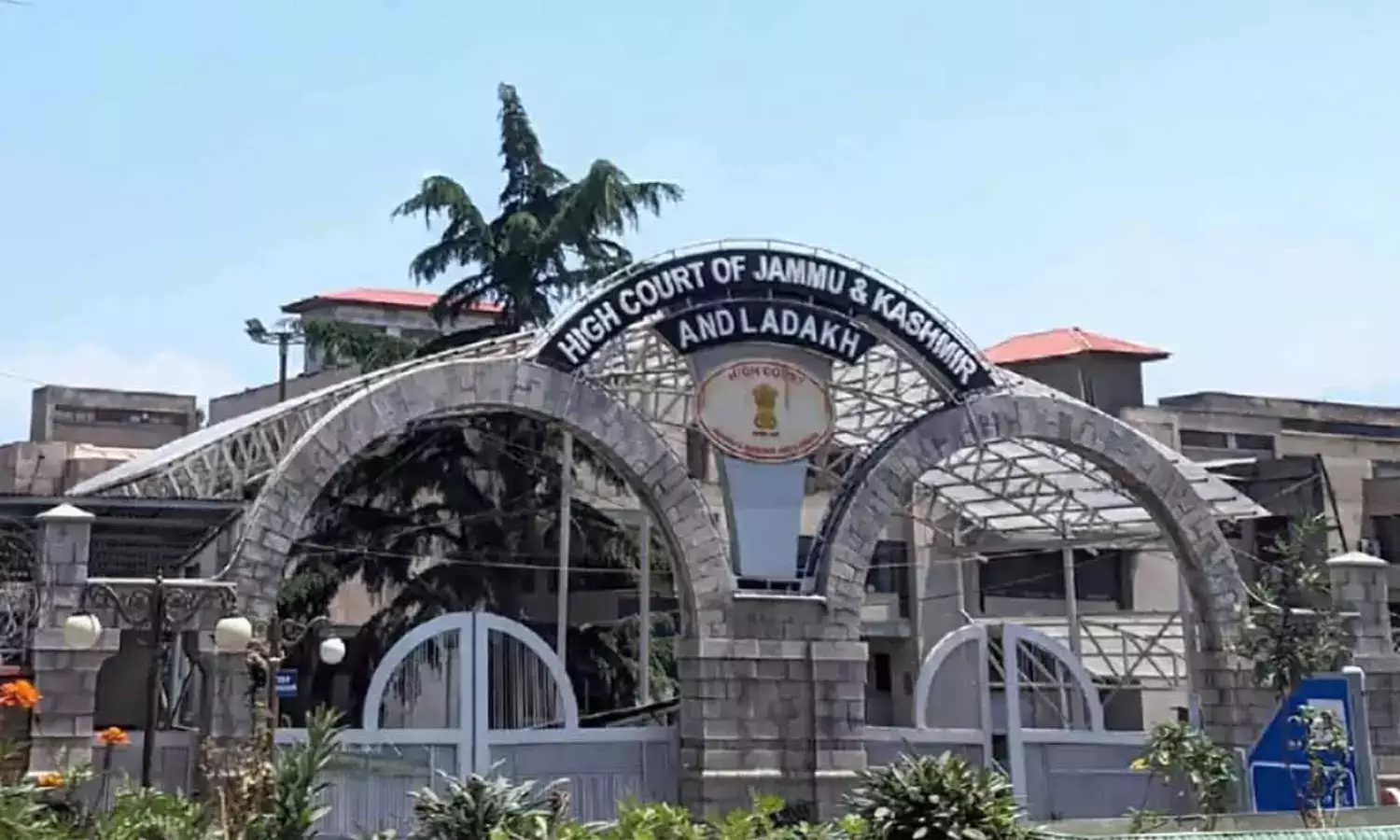
SRINAGAR, MAY 23 (STC): The High Court of Jammu & Kashmir and Ladakh in a case regarding land underneath Government Gousia Hospital in Khanyar, Srinagar, has completely dismantled the multi-crore compensation demand. The court unearthed a critical administrative overreach regarding the identity and authority driving the litigation.
Accordingly, the Court has set aside a Writ Court judgment directing the government to pay ₹4 crore as compensation for land underneath the Government Gousia Hospital, ruling that the claim was built on a misleading foundation and lacked legal basis.
A Division Bench of Justice Sanjeev Kumar and Justice Sanjay Parihar, while hearing the case involving a compensation claim pursued by a cousin of the Chief Minister, found that the litigation had been initiated by an attorney holder who possessed no lawful authority over the Srinagar property. The Bench observed that the power of attorney relied upon by the claimant was restricted exclusively to properties in Gulmarg and carried “no mention of the subject land” beneath Gousia Hospital, rendering the claim legally unsustainable.
The attorney holder, Omar Khalil Nedou, is a direct descendant of the prominent Nedous hotelier family and a first cousin of the incumbent J&K Chief Minister, Omar Abdullah. Furthermore, the legal defense team representing Nedou in court comprised Advocates Zamir Abdullah and Zahir Abdullah, who are both sons of Chief Minister Omar Abdullah.
The conflict centers on an essential healthcare facility in Old City Srinagar. Government Gousia Hospital, situated in Khanyar, has served as a vital medical pillar for the local populace for over four decades, offering essential healthcare to thousands of patients weekly.
The structural history of the facility dates back to 1980. According to court records, land measuring 3 Kanals, 7 marlas, and 6 ½ Square Feet under Khasra No. 100 at Mouza Khaniyar was taken over by the Department of Roads and Buildings (R&B) Kashmir. The R&B wing of the Public Works Department subsequently transferred the possession of this prime tract to the Department of Health and Medical Education specifically to construct the hospital.
The actual owner of the land, Khawaja Nizam Shah (now 91 years old), originally approached the court in 1986 through an Ordinary Writ Petition (OWP No. 1140/1986), asserting that the state had occupied his property without utilizing formal acquisition mechanisms. While Khawaja Nizam Shah received compensation for other chunks of adjacent land under separate 1972 awards, Khasra No. 100 remained uncompensated. The case then languished in administrative limbo for decades until Omar Khalil Nedou stepped into the frame, presenting himself as Shah’s legal attorney.
The Division Bench upon examining the original Power of Attorney executed by the aging Khawaja Nizam Shah on September 3, 2013, the Bench discovered that the mandate was legally restricted to handling an entirely separate family property asset left by Shah’s father in Gulmarg.
The Court, while examining the original authorization deed relied upon to pursue the compensation claim, explicitly extracted Paragraph 3 to underline what it termed a fundamental mismatch between the authority granted and the litigation initiated. The deed authorized representation only in relation to compensation claims concerning land in Gulmarg and stated, “3. to represent me before the Administrative/ Executive authorities in a matter/cause including claim for compensation due to payable to me on account of land registered in the name of my late father Khawaja Salam Shah Naqashbani in Gulmarg.”
Writing the judgment, Justice Sanjeev Kumar observed that the authorization did not extend to the Srinagar property forming the subject matter of litigation and recorded, “There is no mention of the subject land and its management to be taken by Omar Khalil Nedou. It seems that Mr. Omar Khalil Nedou unauthorizedly and without any authority of law filed petition after petition to claim compensation though he was not so authorized.”
The Division Bench also faulted the earlier Writ Court for deciding the matter on merits despite repeated objections raised by the government regarding maintainability and locus standi, holding that the foundational issue of authority to institute proceedings had been overlooked.
“The writ court did not consider this issue and went on to determine the writ petition on merits. Once it is held that Omar Khalil Nedou had no authority to file a writ petition for and on behalf of Khawaja Nizam Shah, it has to be concluded that Khawaja Nizam Shah never staked any claim on the compensation in respect of the subject land,” the Bench observed.
Criticizing the process adopted by the revenue authorities, the Bench observed, “the Additional Deputy Commissioner, Srinagar has erroneously assumed the powers of Collector and has virtually passed the award for payment of compensation of Rs. 4.00 Crores in favour of respondent without initiating process of acquisition under the J&K Land Acquisition Act.”
The court further found a complete absence of any disclosed valuation methodology behind the compensation figure and noted, “To top it all, the Additional Deputy Commissioner, Srinagar has not indicated any yardstick adopted by him to work out the compensation of Rs. 4.00 crores in respect of subject land.”
Finding merit in the government’s challenge, the Division Bench allowed the appeal and set aside the Writ Court order dated May 20, 2025, holding, “For all these reasons, we find merit in this appeal, the same is accordingly allowed. The impugned order dated 20th May 2025 passed by the writ court is set-aside.”
However, while overturning the award, the court clarified that the ruling would not foreclose lawful remedies available to Khawaja Nizam Shah and concluded, “We however make it clear that the judgment passed by us in this appeal shall not come in the way of Khawaja Nizam Shah to lay a claim for compensation on the subject land by taking appropriate legal remedy by arraying all the necessary parties including the Department of Public Works (R&B). It is for him to establish its title over the subject land and also to prove and demonstrate that the same is under occupation of the appellants.”
(Straight Talk Communications I Inputs from KDC)