





Nurturing young minds through the Chill
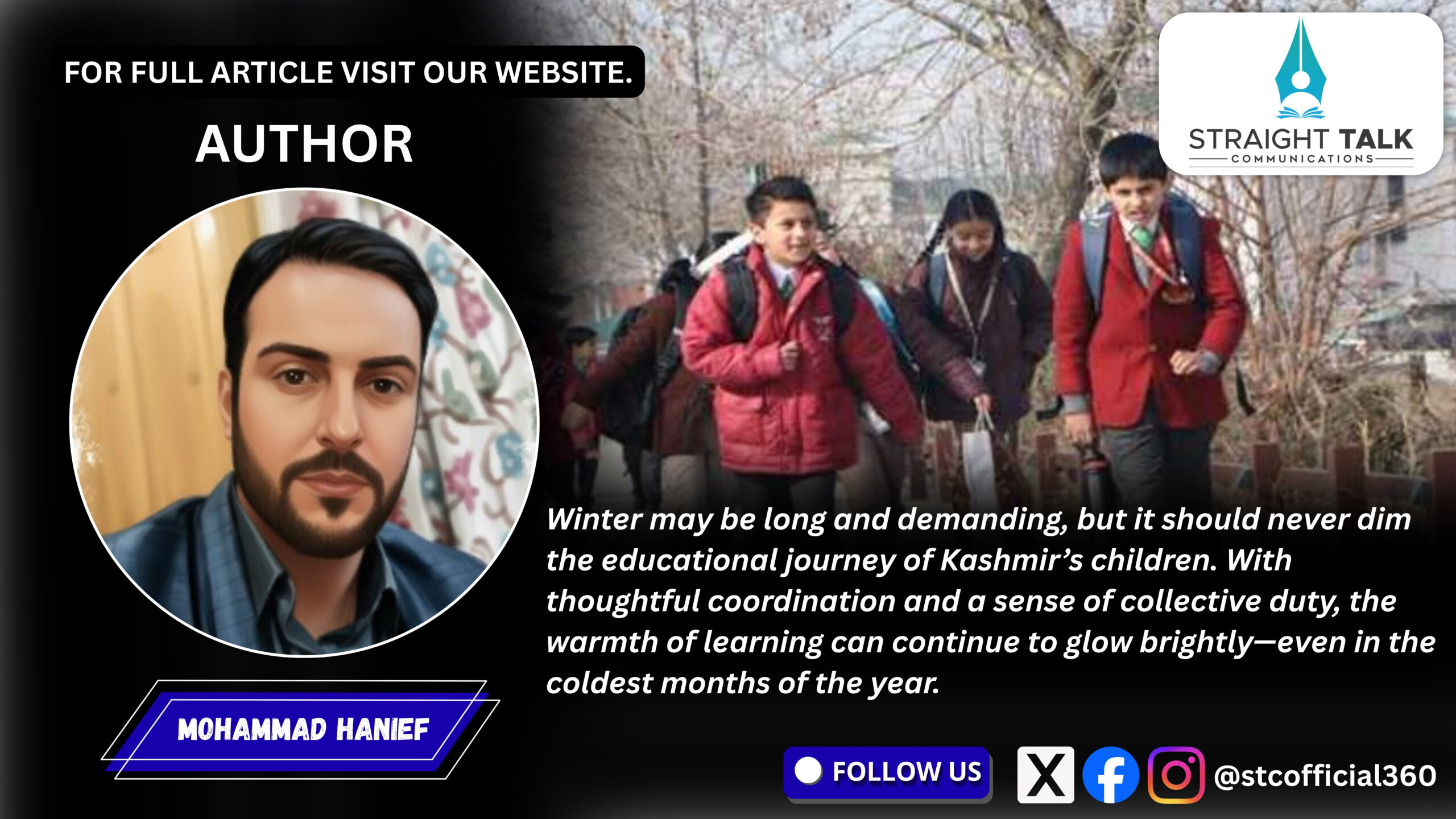
Winter may be long and demanding, but it should never dim the educational journey of Kashmir’s children. With thoughtful coordination and a sense of collective duty, the warmth of learning can continue to glow brightly—even in the coldest months of the year.
Mohammad Hanief
Every year, as autumn fades and the Chinar leaves settle on the ground, Kashmir prepares for a long season of cold silence. Winter arrives early and stays late. Snow begins to gather on rooftops, frost grips the roads, and life slows to a pace shaped by the weather. For children, however, the rhythm of life does not stop; their education must continue even when nature demands a pause. Ensuring the continuity of learning during Kashmir’s harsh winter months has long been a challenge—one that extends beyond climate and touches upon infrastructure, family economics, digital accessibility, and the growing grip of private school monopolies.
Historically, winter vacations in the valley have been lengthy. Schools shut their doors for two or more months mainly for the safety and comfort of students. The classroom environment becomes too cold, roads turn hazardous, and transportation becomes unpredictable. While this closure is essential in many respects, it inevitably disrupts academic momentum. Young learners, especially those in early classes, often lose touch with lessons and struggle to regain focus when schools reopen. The learning gap tends to widen for children from remote villages, where opportunities for supplementary learning are limited.
The physical challenges of the winter season are severe. Heavy snowfall blocks roads for days, sometimes even weeks, isolating entire neighbourhoods. For children in mountainous regions such as Gurez, Karnah, and areas of South Kashmir, attending school in deep winter is nearly impossible. Even within cities, icy roads and sub-zero temperatures make travel unsafe. Inside homes, although families rely on bukharis or kangris to maintain warmth, not every household is capable of creating a conducive learning space. Rooms remain dim due to frequent electricity cuts, and long evenings often pass without adequate lighting or heating. These conditions directly affect children’s ability to study comfortably.
In recent years, the valley has witnessed a gradual shift in how winter education is approached. The widespread use of mobile phones and messaging applications has opened new avenues for communication between teachers and students. WhatsApp groups, recorded lessons, and digital worksheets have become part of winter routine for many school-going children. Although these tools cannot replace the classroom, they serve as important links that keep children academically engaged. Yet, this digital approach is far from universal. Many families either lack smartphones entirely or have only one device shared among multiple children. Internet disruptions during snowfall further limit the effectiveness of online lessons. Despite these limitations, digital learning remains one of the few ways to maintain academic continuity during prolonged closures.
Community-driven initiatives have also played a crucial role in supporting children during winter months. In many localities, volunteers set up small winter study circles inside insulated rooms or community halls. These gatherings, often heated by a bukhari, offer children a chance to revise lessons, interact with peers, and receive support from older students or local educators. Even though these centres cannot replicate the scale or structure of formal schools, they offer warmth, routine, and emotional reassurance—three essentials often missing from the winter environment. Parents frequently express that these spaces prevent their children from falling into the monotony and lethargy that winter can impose.
Emotional well-being is an important, though frequently overlooked, aspect of winter education. Children naturally become restless when confined indoors for long periods. Outdoor play is limited, daylight hours are short, and social interaction reduces significantly. Many children experience boredom or irritability, and some struggle with anxiety or low motivation during long winter breaks. Teachers, educationists, and counsellors consistently advocate for balanced winter routines that incorporate creative activities, storytelling sessions, indoor games, and meaningful family engagement. These elements not only support emotional health but also lay the foundation for strong learning habits.
However, even as families adapt to winter challenges, another concern casts a long shadow over Kashmir’s education system—the rising cost of private schooling. Over the years, private schools have expanded rapidly, largely due to gaps in infrastructure and teaching quality in government institutions. This growth has given private schools considerable control over the educational landscape. Many parents describe this dominance as a form of monopoly that impacts both affordability and fairness.
Each academic year, parents encounter incremental increases in tuition fees, transport charges, and various annual payments termed as development, maintenance, or miscellaneous fees. What troubles families the most is the consistent rise in these costs regardless of winter closures, reduced bus services, or limited academic activity during the snowy months. Parents often find themselves paying full transportation fees even when the buses do not operate for extended periods due to snowfall. Annual fees continue to be charged irrespective of actual school usage. These practices, combined with fixed expenses for uniforms and books sourced through designated vendors, place a significant financial burden on families—especially those already grappling with the additional costs of heating, winter clothing, and healthcare during the cold season.
For middle-class and economically weaker families, the rising cost of private schooling threatens long-term stability. Many parents admit that the escalating fees compel them to compromise in other areas of household spending or even consider shifting children to schools with lesser reputations. This causes emotional stress not just for the parents but also for the children, who may fear losing the familiar environment of their school or friends. The situation has prompted parents’ associations and civil society groups to call for stricter regulation of private school fee structures. They emphasize the need for clear policies, regular monitoring, and transparent communication between schools and families.
While the government has made attempts to improve winter schooling by providing additional worksheets, organizing winter tutorials for board-class students, and encouraging the use of digital platforms, the issue of private school fee regulation remains inadequately addressed. Stronger policies, parents argue, are essential to balance the financial expectations of private institutions with the economic realities of the community they serve. Many believe that ensuring affordability is just as important as ensuring quality, especially in a region with severe climatic constraints.
Despite these multiple challenges, winter in Kashmir also carries unique educational possibilities. The season is deeply connected to the valley’s cultural rhythm—families gather around bukharis, elders share stories of the past, and traditional practices come alive in everyday life. For children, this environment becomes an informal classroom where lessons are woven into daily activities. Snow-covered landscapes naturally stimulate curiosity about weather, science, geography, and environment. The long evenings provide ideal opportunities to cultivate reading habits, engage in creative pursuits, or learn practical life skills such as helping with household responsibilities.
Ultimately, winter education in Kashmir is not only about academic continuity but also about resilience, adaptation, and shared responsibility. Parents play a central role by creating warm study spaces and encouraging discipline. Teachers continue to support students despite limited resources. Communities come together to lift one another. And children learn to remain curious even when the world outside is silent and still.
As the valley prepares for each winter, the focus must remain on sustaining learning without overburdening families. Ensuring fairness in school fees, strengthening digital access, improving infrastructure, and supporting emotional well-being are all essential steps. Winter may be long and demanding, but it should never dim the educational journey of Kashmir’s children. With thoughtful coordination and a sense of collective duty, the warmth of learning can continue to glow brightly—even in the coldest months of the year.
(STRAIGHT TALK COMMUNICATIONS EXCLUSIVE)