





Role of Schools in Motivating Children Toward Their Goals
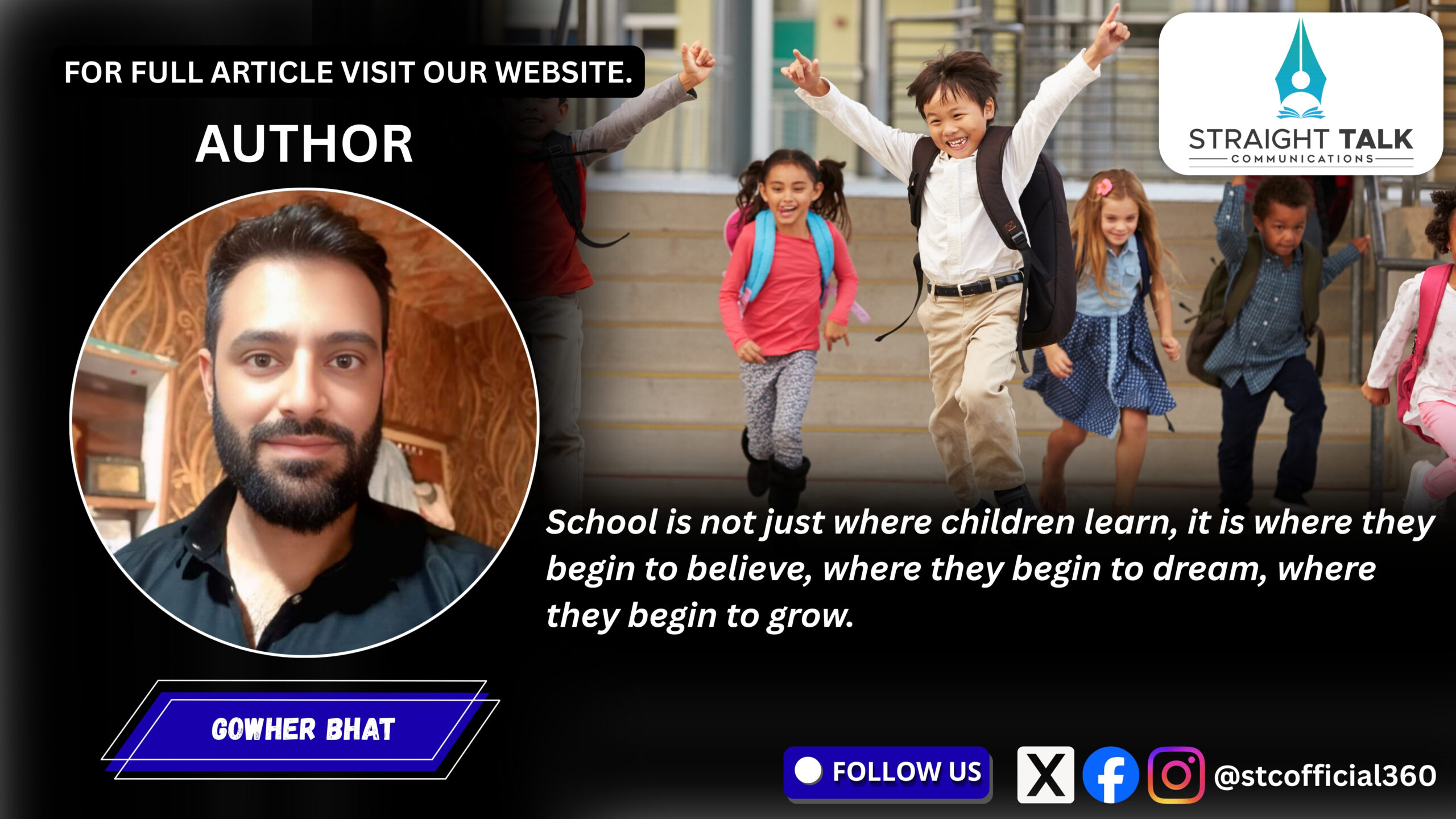
School is not just where children learn, it is where they begin to believe, where they begin to dream, where they begin to grow.
Gowher Bhat
Education is not just about memorizing chapters or passing exams, it is about shaping a child’s inner world, lighting a spark, offering a path forward. Schools are not mere buildings, they are living spaces, sometimes quiet and kind, sometimes harsh and cold. When school becomes a space of safety and encouragement, children do not just learn, they grow.
A major review of Indian adolescents found that when school climate is positive, meaning good student-teacher relationships, peer support, a sense of belonging, fair teaching methods and emotional safety, students show lower levels of stress and depression, higher self-esteem, better attendance, and improved academic performance. Kindness and respect in school correlate with mental health and success.
In schools where students report they belong, where they feel connected, where classmates support each other, where they trust teachers, children are more likely to take part in class, talk about doubts, stay through difficult periods, and aim for long-term goals. Where that climate is missing, where fear, coldness, alienation, or neglect dominate, many drift away, lose interest, or underperform. The difference is not just in marks, it is in whether a child feels they matter.
In one Indian intervention across secondary schools, efforts to build inclusivity, encourage participation, reduce bullying and improve peer and teacher-student relations led over months to noticeable declines in student depression, disruptive behaviour and sense of alienation. Children said they felt safer, more connected, more hopeful. That shift in climate translated into better learning and confidence.
Another strand of research shows that when schools embed life-skills education, teaching problem-solving, emotional awareness, resilience, and self-confidence, students not only cope better but show increased attendance and ambition to continue studies. Emotional resilience, social skills, and self-esteem become as important as textbooks.
It is not only in India that non-academic factors matter. In a large study of over 2,300 high-school students in Boston, USA, researchers found that intrinsic motivation, the desire to understand and learn for its own sake, along with grit and a growth mindset, predicted better grades over years in math, science, and English. Not raw memorization, not cramming, but inner drive and resilience.
Psychologists studying student well-being show that a growth mindset does more than help grades, it improves subjective well-being, meaning students feel more satisfied with their learning, more motivated, less stressed, and more hopeful about the future. Grit and achievement motivation mediate this effect; when students believe their effort matters, they invest energy, stay on track, even when challenged.
That tells us something important. Schools that attend to emotional climate, that nurture motivation, that treat children as human beings and not machines, raise students who believe in themselves, who persist, who try, who risk failure and learn.
Imagine two schools side by side, one with strict rules, cold classrooms, harsh discipline, focus only on exam results, another with compassionate teachers, a sense of community, open debates, art and science labs, student clubs, spaces to fail and try again. The difference in student hearts and futures can be vast.
In harsh environments, global research on bullying and school safety shows alarming results: anxiety, depression, disinterest, even long-term emotional issues. When children do not feel safe or accepted, even the brightest minds dim. On the flip side, some of the brightest success stories come where children once timid and silent found a teacher who listened, a friend who helped, a class that welcomed questions. A small act of kindness, a moment of encouragement, a safe space to speak, these have changed many lives.
In India, with vast disparities between rich and poor, urban and rural, and social classes, school becomes more than a place to learn. For many, school is the only stage where dignity, hope, and possibility can take root. When schools create inclusive, nurturing spaces, they bridge inequalities. They offer children equal chances, regardless of background, to learn, imagine, and aspire. That is not a small gift.
Experts now argue that improving school climate must be part of education policy. Not by adding more textbooks, but by creating safe, supportive spaces, smaller class sizes, teacher training in empathy and communication, counselling services, and opportunities for extracurricular growth, arts, sports, and discussion. They recommend a whole-school approach, not just academics, but mental well-being, inclusion, social support, and creative outlets.
For parents, that means asking questions beyond result sheets. Before enrolling a child, look around at the school: do children smile, do teachers speak gently, is there a counsellor, are there activities beyond study, do children help each other or only compete, does the school treat each child as a person and not just a mark.
For teachers and principals, the challenge is real, but the payoff is more than academic. A classroom where children feel safe to ask, to err, to dream, becomes a place of quiet revolution. Children learn more than facts, they learn worth, dignity, and hope.
For society, it matters deeply, because those classrooms raise the next generation, doctors, artists, thinkers, citizens. If we build them with walls of fear, we raise minds afraid. If we build them with care, respect, and opportunity, we raise souls that hope, that dare, that build.
School is not just where children learn, it is where they begin to believe, where they begin to dream, where they begin to grow. And when we make school right, schools that care for hearts and minds, we cultivate not just students, but human beings who know value, empathy, kindness, and resilience. And that may be the greatest education.
(STRAIGHT TALK COMMUNICATIONS EXCLUSIVE)