



World Radio Day: The Timeless Voice That Still Connects the World
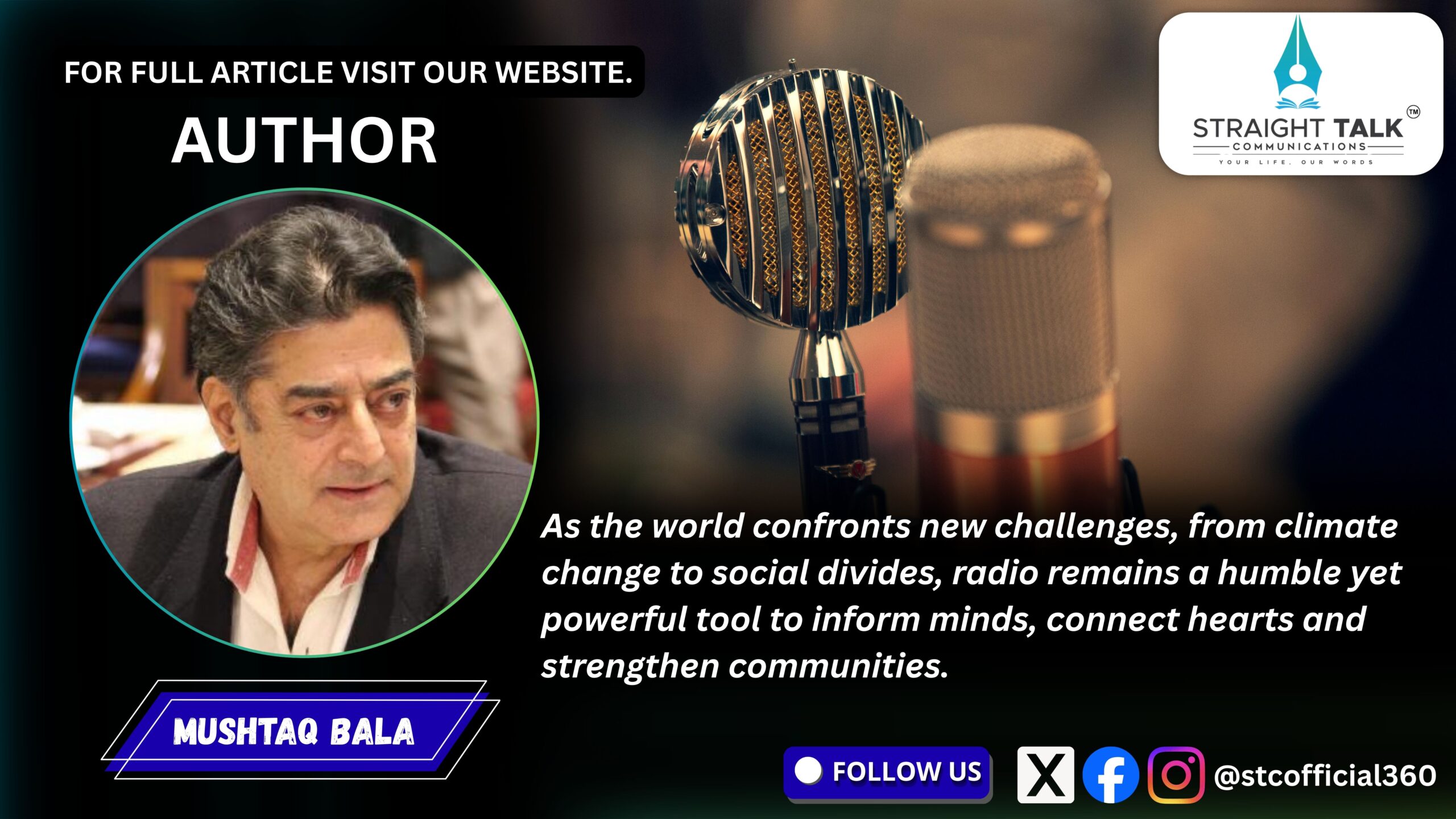
As the world confronts new challenges, from climate change to social divides, radio remains a humble yet powerful tool to inform minds, connect hearts and strengthen communities.
Mushtaq Bala
Every year on February 13, the world celebrates World Radio Day, honouring a medium that has informed, educated, entertained and united generations across continents. In an age dominated by smartphones, social media and instant streaming, radio continues to prove that it is not a relic of the past, but a resilient and evolving companion of the present.
World Radio Day was proclaimed by UNESCO and later adopted by the United Nations, recognising radio’s unmatched reach and accessibility. Even today, radio remains the most trusted and widely consumed medium in many parts of the world, especially in remote and conflict-prone regions where digital connectivity is limited or unreliable.
A Medium That Reaches the Last Mile
Unlike television or the internet, radio does not demand expensive gadgets or high-speed networks. A small battery-operated set or a simple mobile phone is enough to tune into voices from across the valley, the nation and the world. For communities in far-flung villages, border areas and mountainous regions, radio is often the only steady source of news, weather updates, health advisories and public information.
In times of natural disasters, power failures or emergencies, radio becomes a lifeline. When other communication channels fail, radio waves continue to travel, carrying vital information, reassurance and guidance. This reliability has earned radio the title of “the medium of emergencies,” saving countless lives during floods, earthquakes and storms.
Radio and Climate Change: The 2026 Theme
The theme for World Radio Day 2026 — “Radio and Climate Change” — highlights the role of radio in spreading awareness about environmental challenges. Climate change is no longer a distant threat; it is a daily reality felt through erratic weather, shrinking glaciers, floods and heatwaves.
Radio stations, especially community radio, play a crucial role in educating people about climate risks, disaster preparedness and sustainable practices. In rural areas, farmers rely on radio advisories for weather forecasts, crop planning and warnings of extreme conditions. By giving voice to environmental experts, local activists and affected communities, radio helps translate complex climate science into practical knowledge for everyday life.
Voice of Culture, Language and Identity
Radio has also been a powerful guardian of culture and language. Regional broadcasts in local dialects preserve traditions, folk music, storytelling and oral histories that might otherwise fade in the face of globalised media. In culturally rich regions like Jammu and Kashmir, radio has long been a bridge between generations — carrying poetry, music, social debates and shared memories into homes.
Radio programmes have nurtured local talent, promoted artists, and provided a platform for community voices that rarely find space in mainstream media. In this way, radio is not just a broadcaster of information, but a custodian of cultural identity.
Adapting in the Digital Age
Far from being threatened by digital media, radio has adapted and expanded its presence through online streaming, podcasts and mobile apps. Traditional FM and AM broadcasts now coexist with digital platforms, allowing radio to reach younger audiences without losing its loyal listeners.
This blend of old and new has given radio a second life. While the format evolves, the soul of radio remains unchanged — intimate, immediate and human. The simple magic of hearing a familiar voice, a song request, or a local story still creates a bond that no algorithm can replace.
Why Radio Still Matters
In a world flooded with information, radio offers something rare: credibility, companionship and continuity. It speaks to people while they work in fields, drive long distances, cook meals or sit alone in the quiet of the night. It listens back through call-ins, interviews and community programmes, making communication a two-way street.
On World Radio Day, we celebrate not just a technology, but a timeless relationship between the microphone and the listener — a relationship built on trust, voice and shared experience. As the world confronts new challenges, from climate change to social divides, radio remains a humble yet powerful tool to inform minds, connect hearts and strengthen communities.
(STRAIGHT TALK COMMUNICATIONS EXCLUSIVE)