



Guardian of the Wild: The Courage and Legacy of Ghulam Mohideen Koli

Wherever danger arises, whether human or wild, Ghulam Mohideen Koli steps forward, unwavering, fearless, and guided by respect for all living beings.
Gowher Bhat
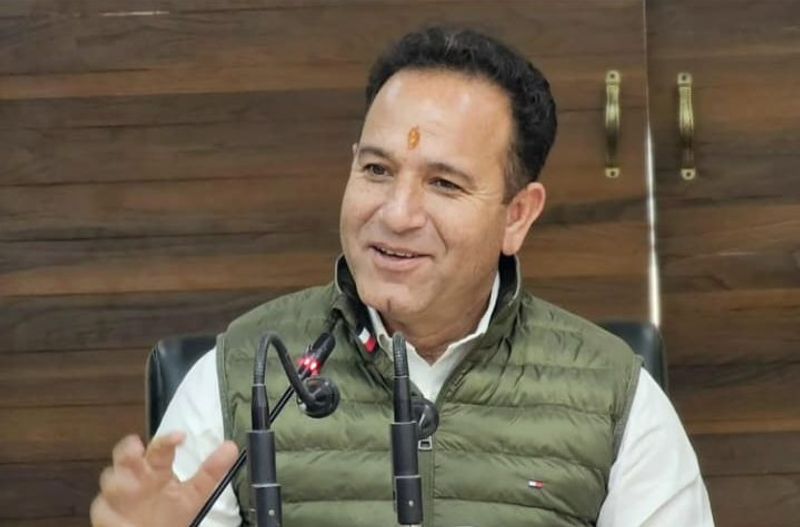
The leopard crouched in the shadows at the edge of the village, eyes glinting with fear and instinct. Children had been sent indoors, livestock corralled, and the air was thick with panic. Most would have frozen. Most would have fled. But Ghulam Mohideen Koli, 45, a wildlife rescuer from Faqir Gujri with the Wildlife Department, Jammu and Kashmir, stepped forward. “Do not panic,” he called, his voice calm but firm. “Fear will make the situation worse. Stay back. Let us handle this.” That day in Fatehpur, Ganderbal, became a defining moment in a career built on quiet courage. The leopard lunged, and Koli faced the unthinkable: he was bitten severely on his right arm. Pain shot through him, blood dripped, but he did not falter. Every movement, every gesture, was calculated, a dance with danger to protect both villagers and the wild creature. Hours later, the leopard was safely returned to the forest, uninjured, and Koli, though bleeding and in pain, walked back with the villagers cheering.
“It hurt badly,” Koli said later, his voice steady. “But I could not stop. I could not let anyone else be in danger. That was my duty.” Villagers remember it vividly. “We were terrified,” said Bilal Shah, a farmer. “The animal came very close. Mohideen sahib was bitten on his arm, and still, he controlled the leopard. We could not believe our eyes. Only he could do that.” Another villager, Shazia Bano, added, “Even the children knew not to cry. He told them, ‘Stay calm. Trust me. Everything will be fine.’ Even with his arm bleeding, he never panicked. That is courage we have never seen before.” Colleagues recall the moment with awe. “While the leopard prowled, Mohideen stood firm, even after being bitten. Not a step back, not a cry. Just control, calm, and determination,” said one team member. “That day, we saw what true courage looks like.”
For Koli, courage is not about heroics. “Bravery is a word others use,” he says quietly. “I was hurt, yes, but my duty came first. Life is precious. Every animal matters, every human matters. That is what drives me.” Born in Faqir Gujri, a village tucked into the folds of the Zabarwan mountains near Srinagar, Koli grew up among the rhythms of the wild. Animals were never distant; they were neighbors, teachers, and sometimes warnings of the untamed. From a young age, he learned that patience, observation, and respect were essential to living alongside the wilderness. “The mountains speak,” he says. “If you listen, they teach patience. They teach respect. Ignore that, and you cannot work in this field.”
Years of training and experience have turned him into a figure of quiet authority. Colleagues know that when chaos erupts, he does not panic. He assesses, plans, and acts. That calm presence steadies nerves and guides action. “Most people freeze when danger approaches,” a fellow rescuer said. “Mohideen does not. He steps forward. In that calm, everyone else finds courage too.” His work goes far beyond moments like Fatehpur Injured birds, trapped bears, wild animals wandering into villages, each scenario demands precision, empathy, and nerves of steel. Koli approaches them all the same way: with respect for life and an unwavering commitment to restore balance. “Animals do not come to human spaces to challenge us. They are driven by fear, hunger, or injury. Our job is to guide them safely back, not dominate them,” he explains.
Even villagers from the remotest hamlets know and respect him. “We hear his name and feel safe,” said Abdul Rashid, a shepherd from the hills above Faqir Gujri. “He comes to our help, he respects the animals, and he does not harm them. That is a great quality. You cannot find many like him.” “When a bear entered our orchard,” added Parveen Bano, a local mother, “Mohideen sahib spoke to the bear, slowly, gently. And the animal left without harming anyone. It seemed like magic. Only he can do that.”
Despite decades of service, Koli remains humble. He sees his work as responsibility, not performance. “Duty comes first,” he says. “Recognition is not the goal. If humans and animals are safe, that is enough. Fame is nothing if life is not protected.” For his colleagues, Koli exemplifies leadership through action. “He teaches by example,” one rescuer said. “In tense moments, he reminds us: ‘We are here to solve, not react.’ That simple guidance has saved lives more than once.”
The mountains of Faqir Gujri continue to shape him, grounding him, giving perspective, and instilling patience. “The mountains gave me identity,” he reflects. “Serving them and the creatures that raised me feels natural. Courage comes from respect, not desire for recognition.”
Koli’s days are long and unpredictable. Emergencies rarely follow a schedule. Calls can come at midnight, in the rain, or in treacherous terrain. Yet he meets each challenge with the same calm determination. “There is no routine in this work. Every situation is unique. You have to adapt, think fast, and never lose control. Panic is contagious. Calmness can save lives.” Colleagues recount instances when his intervention changed the course of potential disaster. “A bear had entered a village near the mountains once. People were screaming. Kids were terrified. Mohideen walked slowly, spoke softly to the animal, and guided it back to the forest. It seemed impossible, yet he did it. That is what makes him remarkable.”
The leopard of Fatehpurabder is only one story among many, yet it captures the essence of his work: courage under pressure, empathy in action, and relentless commitment to duty. “Some protect borders. Some protect people. Mohideen protects harmony,” a colleague said.
Koli’s philosophy is simple but profound. Life, whether human or wild, deserves protection. “Animals do not seek confrontation. They act out of fear. If we respond with aggression, we escalate the danger. Respect is the solution,” he explains. This philosophy extends to the communities he serves. Residents know that calling Koli means help without fear, judgment, or harm to creatures that wander too close. “His presence calms everyone,” said a villager from Faqir Gujri. “Even the animals seem to sense his authority and respect. That is what makes him extraordinary.”
Even after decades of service, Koli continues to venture into danger with the same resolve. Snakes, bears, wild dogs, leopards — he has faced them all. He has rescued animals from roofs, fields, and dense forests. Every encounter is a test of skill, nerves, and courage. “Fear exists in everyone,” he says. “Courage is acting despite fear. When people and animals depend on you, hesitation is not an option. Even when I was bitten, I could not stop. That is the duty I chose.”
As night falls over the Zabarwan slopes and the forests come alive with nocturnal sounds, Koli remains vigilant. His presence is a quiet but powerful assurance that danger, no matter how wild, can be met with intelligence, calm, and courage. He embodies a rare combination: humility and authority, empathy and bravery, patience and decisive action. Those who know him, work with him, or live in the villages he protects, speak of him not as a government officer, but as a legend: a man who carries the mountains and the wild in his heart. “Bravery is not about glory,” he says simply. “It is about responsibility, about doing what is right when no one else can. That is my duty. That is my life.”
In the forests of Kashmir, in villages along the mountain slopes, in orchards and streams, life moves alongside him. And wherever danger arises, whether human or wild, Ghulam Mohideen Koli steps forward, unwavering, fearless, and guided by respect for all living beings. “Some protect borders. Some protect people. Mohideen protects harmony. And that is the greatest courage of all,” a colleague said.
(STRAIGHT TALK COMMUNICATIONS EXCLUSIVE)