



Revisiting rich legacy of late Dr. Aashiq Hussain Naqshbandi for Gen Z

What I remember most about Aashiq Sahib is a man who never seemed able to separate position from conscience.

Dr. Fiaz Maqbool Fazili
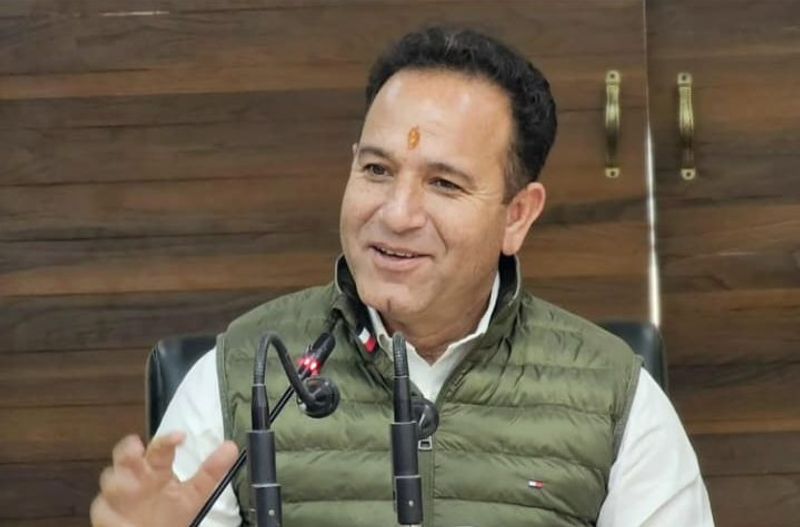
This is not a question against any individual or group. Some people we remember not because of the positions they held, but because of the values they carried. Revisiting the untold pages of an inspiring history, for me, the late Dr. Aashiq Hussain Naqshbandi remains one such person. May Allah make his place in Jannah. He left a rich legacy for Gen Z — and how we should remember and introduce Dr. Aashiq Sahib to them.
My association with Aashiq Sahib went beyond the medical fraternity, beyond professional acquaintance, beyond ordinary social or family connections. There was something deeply personal and spiritual in our relationship — a shared sensitivity towards Iman, truth, conscience, and the responsibility to stand by what one believed was right, without “riyaa” or pretence. I remember him not simply as a physician, administrator or office-bearer. I remember him as a man for whom conscience mattered.
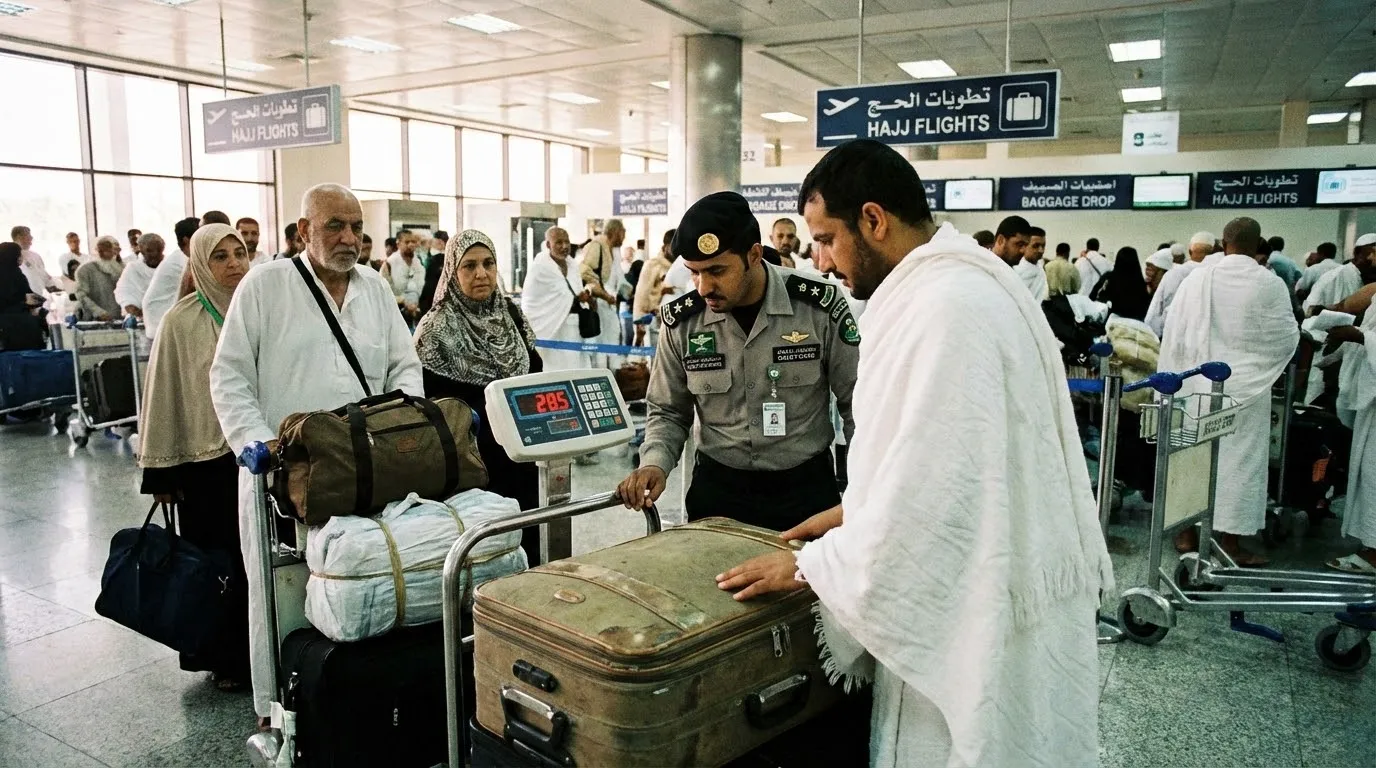
When Aashiq Sahib assumed charge as Principal of a Government Medical College, he called me while I was in Madinah al-Munawwara. He sought my prayers. I asked him: “Aashiq Sahib, this chair may demand compromises — and some of those compromises may be against your very nature. Why did you accept it?” I later posed the same question to Dr. Rafiq Pampori Sahib after he assumed charge as Principal, GMC Srinagar, when he came for Umrah — in Masjid Nabawi and at a friendly dinner. That story happened some other time.
Aashiq Sahib’s response, as I remember it, was simple: perhaps Istikharah had been done if I recall correctly, and someone had to assume the responsibility. I remained apprehensive. I felt someone of his temperament could simply say no. But his response suggested the decision had been made, and it was too late to turn back. Sometime later, a mutual friend — a well-known media personality — called me, wanting me to persuade Aashiq Sahib not to resign. Eventually, after speaking with Aashiq Sahib, it was agreed our mutual friend would accompany him to the Chief Minister and help communicate his decision. I don’t recount this to establish with certainty every reason behind his resignation. I was not a witness to every circumstance. I recount it as my recollection of our conversations. For me, the significance lies elsewhere: what happens when a person of conscience occupies a position where the demands of the chair collide with the convictions of the person sitting in it? The Meaning of Selfless Service; that question is not about Aashiq Sahib alone. It is a question for all of us.
The same Dr. Aashiq Hussain later devoted himself to a cause much closer to his heart — Cancer Society Kashmir. He helped nurture an organisation around a noble mission: bringing together people who believed those affected by cancer deserved compassion, support and dignity. And perhaps that is what philanthropy should ultimately be about: the cause before the chair. The mission before the designation. The patient before the position. Service before status. Yet there is a human tendency that quietly enters almost every organisation as it grows — the desire for recognition, the attraction of titles, the importance we attach to positions. Recent discussions on social media about elections and office-bearer positions in one of the NGO supposed to be philanthropic, above self, titles, positions etc organisation have prompted me to look inward: Have we allowed the position to become more visible than the purpose for which the organisation exists?
Perhaps the question is not about “them,” but about us. The pursuit of positions is not unique to any organisation or community. But when a designation begins to occupy more emotional space than the cause, perhaps it is time to hold up the mirror — and begin with oneself., “Me First. Is a Position Necessary to Serve? Of course, all NGO or other organisations by law need office-bearers. Someone must lead, coordinate, administer, and accept responsibility. There is nothing inherently wrong with holding a position. The question is more fundamental: Is the position serving the cause — or is the cause slowly becoming attached to the position? And perhaps an even more uncomfortable question: Would I continue serving if my name disappeared from the designation, or my tenure expired? If nobody called me President, Gen Secretary, Chairman or Treasurer, would I still show up when someone needed help? Would I give my time, make the calls, visit the patient, or serve quietly when there was no photograph, applause or recognition? Perhaps that is the real test of sincerity.
Personally, I always felt very weak on this stand, and have never felt comfortable pursuing positions or titles. You may call it timidity or escapism; but in hindsight, I ask: If I cannot comfortably carry the burden of accountability for my own deeds before Allah, how can I willingly seek responsibility for others? To me, a position is neither an ornament nor a measure of worth. It is an Amanah. And an Amanah demands” taqwa, competence, justice, sincerity and accountability.
The Qur’anic Surah Al-Isra, shows us Mirror, “We have fastened every person’s deeds to their neck…”Every one of us carries our own record. Every decision. Every responsibility. Every act of justice or injustice. Every Amanah entrusted to us. Ultimately, all of it returns to our own account before Allah. And that makes a” chair-Title,-ameer (team leader) very different from an honour.Before people, a chair may elevate us. Before Allah, it may simply increase our accountability. A designation can make our name larger on a letterhead. It cannot make our account smaller before Allah. When we select or elect someone for an Amanah, what do we actually value? Should We Look For a Leader? Name? Popularity? Influence? Visibility? Oratory? Networking? Or should we give greater weight to integrity, competence, experience, trustworthiness, justice, humility, vision, and commitment to the mission? The Qur’an Ch28:V26gives us a beautifully balanced principle:” “Indeed, the best one you can employ is the strong and trustworthy.”
Strength without trustworthiness can become dangerous. Trustworthiness without competence may not be sufficient. For an Amanah, we need both:” Al-Qawiyy — capability. Sadiq al Al-Ameen — truthful and integrity, Leadership and managerial visionary qualities above self.
In my personal thinking, sometimes, stepping aside is not a withdrawal from service; it is service in its truest and most selfless form. When a tenure comes to an end, there is dignity in making space for someone new—someone who may bring fresh ideas, renewed energy, or strengths that can advance the work in ways I could not. The question, then, is not, “What happens to my position?” but “What best serves the cause?” A title is temporary; an Amanah is not. A position may last for a term, but accountability before Allah has no term limit. True leadership is measured not by how long one holds a position, but by whether the work endures and grows beyond oneself. Remaining in office is not necessarily ambition. Experience, institutional memory, relationships, knowledge, and continuity may genuinely be needed, and staying on can itself be an act of service. Yet there comes a point when continuity is better served by making room for another. A new leader may bring fresh perspective, energy, or abilities that can take the work forward in ways I could not. Stepping aside at such a moment is not an abdication of responsibility; it is an affirmation that the institution, its mission, and the cause matter more than any individual. My responsibility does not end with my tenure. I can pass on experience, offer guidance, share lessons learned, and help my successor navigate the challenges ahead. In that way, stepping aside does not mean stepping away from service; it means serving differently. Perhaps that is the deeper measure of leadership: not how long we remain, but what we leave behind and how well we prepare others to carry the Amanah forward.
Sometimes the greatest service is to step forward; sometimes, with humility and grace, it is to make way. Perhaps one day someone else will occupy the chair we once held. Can we then sincerely say: “Alhamdulillah. If the work continues, the mission advances and people benefit, that is enough for me.”–Can we congratulate them without bitterness? Can we continue helping without needing our name attached to the work? Can we remain useful even when we are no longer visible? If we can, perhaps we have begun to understand the difference between service and position. Because the chair is not great. The responsibility is great. The title does not give a person honour. Character does. And perhaps service reaches its most beautiful form, the ultimate test when a person continues serving after the designation has disappeared.
What I remember most about Aashiq Sahib is a man who never seemed able to separate position from conscience. I remember our conversations around Madinah, his seeking prayers before accepting a difficult responsibility, my own apprehension about what it might demand of him, and our later conversations after his decision to resign. I do not claim to know every reason behind that decision, nor do I present one version of events as the whole truth. Others may remember that period differently. What remains with me is the larger lesson: no position should ever become greater than the conscience of the person who holds it. That lesson is especially important in humanitarian work. A charitable institution exists for a cause greater than any office-bearer. The designation must never become louder than the mission, nor the individual greater than the people being served.
WHY MY PEN DOES NOT STOP! not another number. Another concern. Sometimes a society does not lose its moral compass because people stop knowing the difference between right and wrong. It loses it because the wrong people are repeatedly presented as role models. And that is where a question needs to be asked—perhaps uncomfortable, perhaps inconvenient, but necessary: Who decides whom Kashmir should listen to, admire, interview and celebrate?
Positions pass. Titles fade. But the courage to place conscience, service, and the cause above oneself is a legacy worth leaving—and one worth following. At the end of the day, perhaps the simplest question is also the most difficult: If the position disappeared tomorrow, would my service continue? If the answer is yes, perhaps we are serving the cause. If the answer is no, perhaps we were serving something else. May Allah grant us the sincerity to serve without seeking status, the courage to accept responsibility when needed, the humility to step aside when better for the cause, and the wisdom to remember that every position is temporary — but every Amanah will ultimately be answered for. The true beauty of serving humanity does not lie in holding a position, but in serving with sincerity.
(STRAIGHT TALK COMMUNICATIONS EXCLUSIVE)