


From Abraha to the Houthis: A Lesson Written in History
Makkah and Madinah belong to the spiritual heart of the Muslim world; their sanctity must never become a casualty of war and geopolitics.
Khurshid Ahmad Akhoon
There are moments when the political conflicts of the Middle East cease to be merely matters of strategy, territory or regional rivalry and touch something far deeper—the religious conscience of millions of Muslims across the world.
The recent incident involving a drone intercepted south of Makkah has once again brought the security of the two Holy Mosques into sharp focus. Saudi authorities attributed the incident to the Houthi militia, stating that the drone was destroyed before it could enter Makkah’s restricted airspace. The Houthis, however, denied that Makkah was their target.
Whatever the competing claims surrounding the incident, one principle should remain beyond dispute: Makkah and Madinah must never become theatres of military confrontation or instruments of regional power politics.
The message to the Houthis must therefore be unequivocal: any military action that threatens the security of the Holy City or places the sanctity of the Holy Places at risk deserves the strongest condemnation.
There is, moreover, a profoundly evocative chapter in the history of Makkah. From the land of Yemen came the army of Abraha, advancing upon the Kaaba with the intention of destroying the Sacred House. Yet the power of the invader proved insignificant before the protection of the Lord of the House. The Qur’an immortalised the episode in Surah al-Fil, and the army that came with arrogance and might was rendered powerless.
Times change, rulers change and armies change; but the lessons of history endure.
If, even today, any power or armed organisation harbours designs against the security of the Holy Places—whether acting directly or through proxies—it should remember that the sanctity of the Haramain cannot be reduced to a bargaining instrument in a regional struggle.
This is also why the regional policies of Iran and its reported relationship with the Houthi movement deserve serious scrutiny. United Nations reporting has documented evidence of foreign assistance to the Houthis and has noted similarities between weapons and military equipment used by the group and systems produced or operated by Iran.
But criticism must be directed at governments, policies and armed organisations rather than indiscriminately at entire peoples. The policies of the Iranian state and the sentiments of ordinary Iranian citizens are not necessarily one and the same. Likewise, the actions of an armed movement should not automatically be attributed to every Yemeni.
The same principle applies to Israel. Its military policies and actions in the region, particularly where they contribute to further bloodshed and instability, deserve scrutiny on their own merits. Yet no regional conflict should ever become a pretext for placing the security of Makkah and Madinah at risk.
Nor should opposition to the policies of the United States, Israel or any other power lead Muslims into overlooking fundamental questions of faith, history and religious reverence.
For Muslims, the love and honour accorded to the great Companions of the Prophet Muhammad ﷺ—Abu Bakr al-Siddiq, Umar al-Faruq and Uthman al-Ghani, among others—form an integral part of our religious tradition. Likewise, Umm al-Mu’minin Aisha al-Siddiqah (RA) occupies an exalted place in Islamic history and devotion. Any language of contempt or disrespect directed at these revered personalities is deeply offensive to Muslims and cannot be justified by political differences. When the leaders or official representatives of a country, irrespective of their sectarian identity, engage in or condone such derogatory treatment of these revered figures, we regard such conduct as fundamentally incompatible with the reverence and respect that Muslims accord to the earliest generations of Islam.
Yet even here, justice in language is essential. One may condemn a government’s policies without condemning an entire nation, and one may reject the conduct of an armed organisation without holding every member of its wider community responsible.
The Two Holy Mosques are not the political possession of any transient administration. They are at the heart of the spiritual consciousness of the Muslim world.
Makkah is the direction towards which Muslims turn in prayer. Madinah is the blessed city of the Messenger of Allah ﷺ. Their sanctity transcends borders, governments and political ideologies.
The security of these sacred places must therefore remain a common concern of the Muslim world.
Whether the threat comes from the Houthis, from policies pursued by Iran, from Israeli military actions, or from any other actor, the sanctity and security of the Haramain must never become collateral damage in the rivalries of the Middle East.
History offers a final and powerful reminder. The army of Abraha possessed numbers, power and confidence, yet none of these could overcome the protection of the Lord of the Kaaba. The Qur’anic account remains a timeless reminder that worldly power is ultimately subject to a higher sovereignty.
The lesson is not a call for vengeance. It is a call for restraint, reverence and humility before the sanctity of the House of Allah.
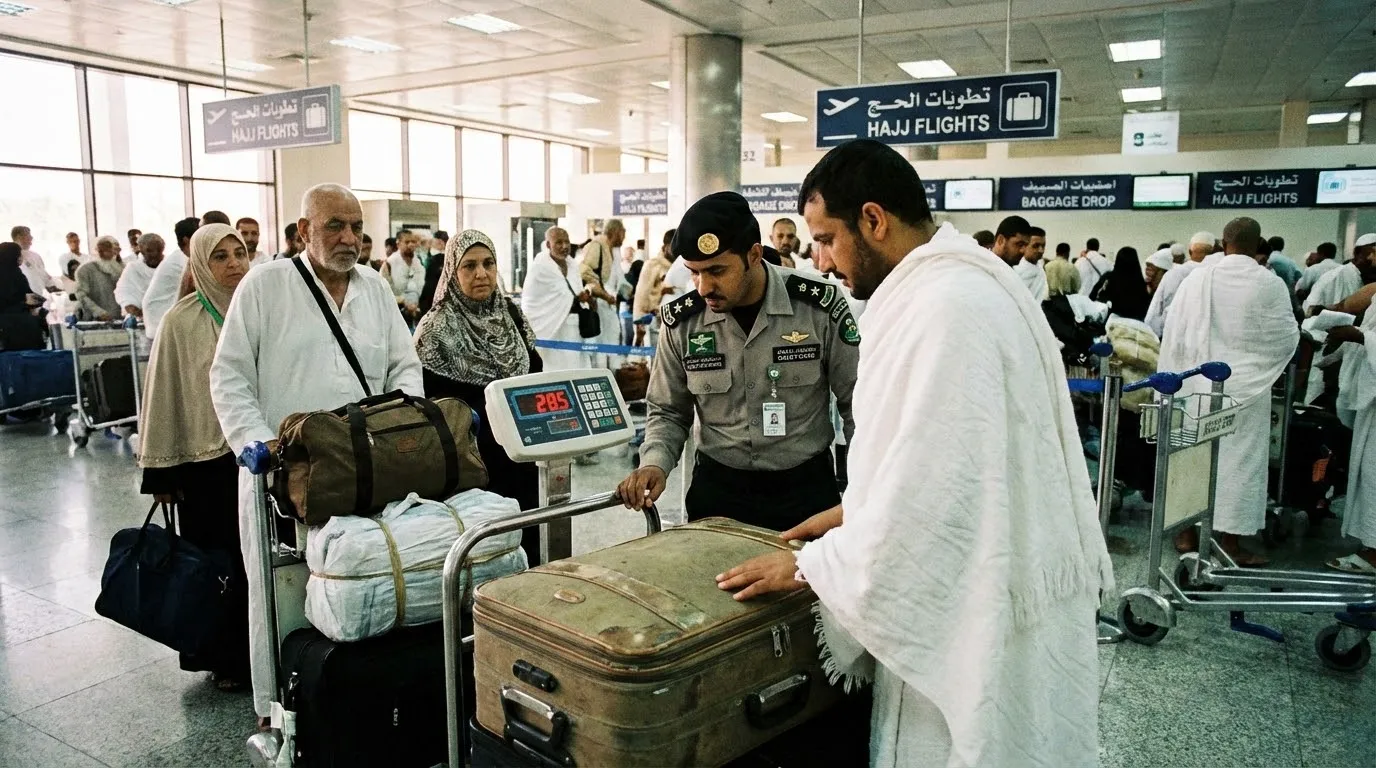
May Allah protect Makkah and Madinah from every form of danger, preserve the sanctity of the Holy Places, safeguard the pilgrims and residents, and frustrate every design that threatens their peace and security.
The Haramain are our devotion.
The Haramain are our honour.
The Haramain are in our hearts.
May Allah Almighty preserve His Sacred House and protect the blessed city of His beloved Messenger ﷺ for generations to come.
Ameen!
(STRAIGHT TALK COMMUNICATIONS EXCLUSIVE)