


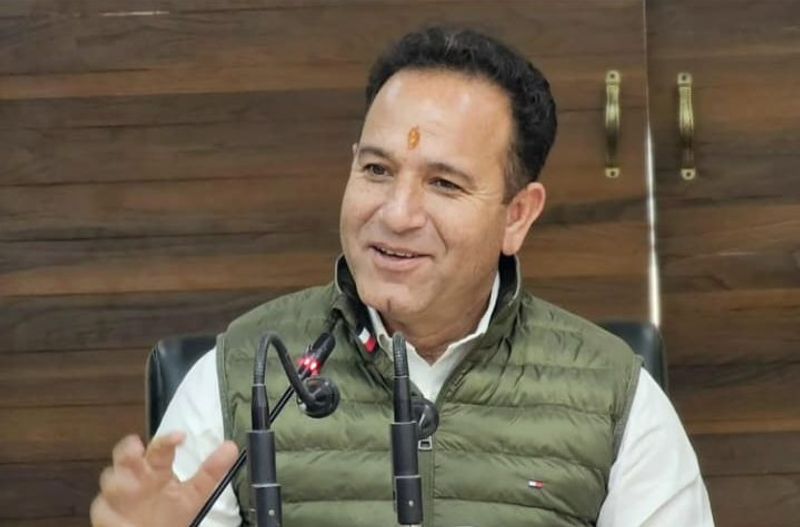


SUNDAY BYTES: A tryst with Kashmir’s Gen Z
Young people are not short of talent. They are waiting for open doors and fair opportunities.
Dr. Fiaz Maqbool Fazili
Let me begin with a moment at the cricket ground. I was hurrying through the crowded streets towards a marriage lunch when a roadside hoarding outside Amar Singh Club caught my eye: “Irani Trophy”. I stopped. “Wow! Jammu and Kashmir have reached this height?”
For a few moments, the marriage lunch, the traffic and my hurried schedule faded into the background. I checked the score and watched our young players battling it out. There was a quiet sense of pride – not merely because they were doing well, but because I could not help comparing their journey with ours.
In our playing days, an innings defeat could almost feel like a consolation if we had managed to put up a fight. Now, young Kashmiri cricketers were carrying themselves on a much bigger stage, making a generation before them proud. I smiled to myself. How far they had come.
Horns blared, pedestrians pressed past, and my watch warned me that I was late. But Jammu and Kashmir batsmen were at the crease. I checked the score, promising myself only a few seconds. Then one run became another, and the urgency of lunch gave way to the thrill of watching young players carry not only their own hopes, but also the expectations of a region.
The match, and the Ranji Trophy victory, felt like a rebuttal to a phrase I had often encountered as a misnomer online: “bekaar jamaat”—a dismissive description of an idle, directionless generation supposedly wasting its days in jokes, photographs and social-media banter.
Looking Beyond the Label.
Often, the label we see reflects only the surface. It notices young people gathered online, but not the graduate preparing applications late at night, the young man studying for a competitive examination while helping in his family’s shop, or the person behind the camera learning editing, lighting and storytelling without formal training.Over time, I came to know that some had completed university, some were still studying, and others were searching for work. Their conversations moved between humour and anxiety: recruitment notices, examination dates, rejected applications, possible jobs in the Gulf and ideas for small businesses.
Though memories fade, one detail stayed with me. A message that began as a joke about a state recruitment board vacancy could quickly turn into a serious exchange about eligibility, application deadlines and the cost of travelling for an examination. Their social-media group was not merely a place to pass the time. It was also an informal noticeboard, advice desk and support network. For many, it was their only public space to share information, display their work and remain connected to opportunities beyond the Valley. The more closely I observed them, the more inadequate the label appeared.
Behind the memes were graduates who could write, organise and communicate. Behind the photographs were young people developing skills in photography, video production and graphic design. Behind casual conversations were aspiring entrepreneurs discussing food businesses, online services and independent work.
Skills Learned Outside Formal Institutions
I remember some of these young people learning practical digital skills without attending a formal course. One had begun experimenting with video editing using a mobile phone and freely available software. Another was discussing how to promote a small food venture through social media rather than relying only on passing customers.
These were modest beginnings, but they showed initiative and adaptability. Their social-media activity was not simply a sign of idleness. It could also represent learning, experimentation, communication, and an attempt to create opportunities in difficult circumstances.
Beyond the Conventional Career Path
Their career ambitions were also broader than the old formula of a ~Sarkari naukri—a government job. A government position undeniably remains desirable for its security and status, but many young people are exploring hospitality, sport, content creation, healthcare, online work and small-scale enterprise.
A young person opening a restaurant near high-cost Residency Road may lack capital or professional advice. Yet investing savings, learning procurement, and managing customers is itself a form of enterprise—a practical response to unemployment, not evidence of failure.
I saw this more clearly when I encountered a young female graduate Ms… (name obscured) running a “Dahi” business from her farmhouse near one of the tourist hubs. The business was not a large investment or a polished corporate venture. It involved the daily realities of purchasing supplies, managing staff, serving customers, and dealing with uncertain earnings. But it represented a decision to create an opportunity rather than wait indefinitely for one. That distinction matters.
Young Women Creating New Choices
Young women are making similar calculations while negotiating family expectations and restrictions on mobility. Some are entering entrepreneurship, healthcare, education, cosmetology, boutiques, and digital work. When a young woman builds a business or professional identity beyond the conventional career path, she is not merely earning an income; she is expanding the choices available to others. I have previously written about young Kashmiri women who moved into entrepreneurship after finding that their original academic or professional plans did not work out. Their journeys were not smooth. They involved uncertainty, criticism, assistance, despite soft loans, technical guidance, and the need to prove themselves repeatedly. Yet each step demonstrated that a young woman’s future need not be confined to a single approved career.
The Obstacles They Face
Despite many schemes and concessions, the obstacles are substantial. Government vacancies are limited, recruitment can be slow, and the limited private sector cannot absorb the number of graduates entering the market. Many young people also lack professional networks, career counselling, affordable training, and start-up finance.
A student may know how to code, design or edit video but have no reliable equipment, mentor or client base. An aspiring sportsperson may possess discipline and skill but lack quality coaching, proper grounds and regular competition.
A young person in the Valley may be connected to the world through a smartphone yet remain distant from markets, investors and specialised training. Digital access can display opportunity without making it reachable.
The Lesson of the Cricket Match
This is why the cricket match affected me so deeply. Jammu and Kashmir’s players were not asking to be exempted from competition; they were competing within it. Their performance showed what can happen when young people receive coaching, selection, team structure, and a recognised platform. The result was not guaranteed, but the opportunity was real. As I watched the match, I thought of my own cricketing days at Amar Singh College and of players such as the late Parvaiz Qureshi and Abdul Qayoom, known to us as “Chana”. Those memories made the moment personal. But the young players on the screen also represented something larger: a generation that does not want sympathy in place of opportunity.A player who appears idle while waiting in the pavilion may walk onto the field within minutes and change the course of a game. What matters is not the appearance of waiting, but whether the opportunity to play is provided. The same principle applies beyond cricket.
Turning Ability into Achievement
A graduate needs transparent recruitment and practical career guidance. An entrepreneur needs credit, mentoring and access to markets. A young woman starting a business needs mobility and safety. A creator needs training, equipment and reliable digital infrastructure. An athlete needs grounds, coaching and regular competition. These are not abstract demands. They are the practical conditions that convert ability into achievement.
My tryst with Gen Z has taught me that our young people are neither a uniform group, nor are they free of frustration or uncertainty. But the young people I encountered were already demonstrating identifiable skills. They organised online, learned independently, communicated across platforms, experimented with business, pursued sport and adapted to an economy offering fewer conventional openings than their parents expected. They were not simply waiting for life to begin. They were applying, training, creating, studying, selling, filming, competing, and trying again after rejection.
A Generation in Transition
That old phrase “BJ ” may have described their visibility while ignoring their work. It saw the hours spent online but not the application submitted, the video edited, the customer served, or the practice session completed. A better description would be a generation in transition—educated but underemployed, connected but not fully included, and determined to find its own path. The cricket field offered the clearest message: they can compete if they are given the chance.
JK Gen Z does not need romantic praise, aliases, tags, or easy labels. It needs fair recruitment, better training, accessible finance, stronger sports infrastructure, reliable digital systems, and institutions willing to recognise skills beyond conventional degrees.
Give young people those conditions and then judge them by what they build. They may not all become cricketers, entrepreneurs or professionals. But they deserve the opportunity to discover what they can become.
Our young people are not short of talent. They are waiting for open doors—and fair fields on which to show what they can do.
(STRAIGHT TALK COMMUNICATIONS EXCLUSIVR. The author is a regular columnist at STC .)