





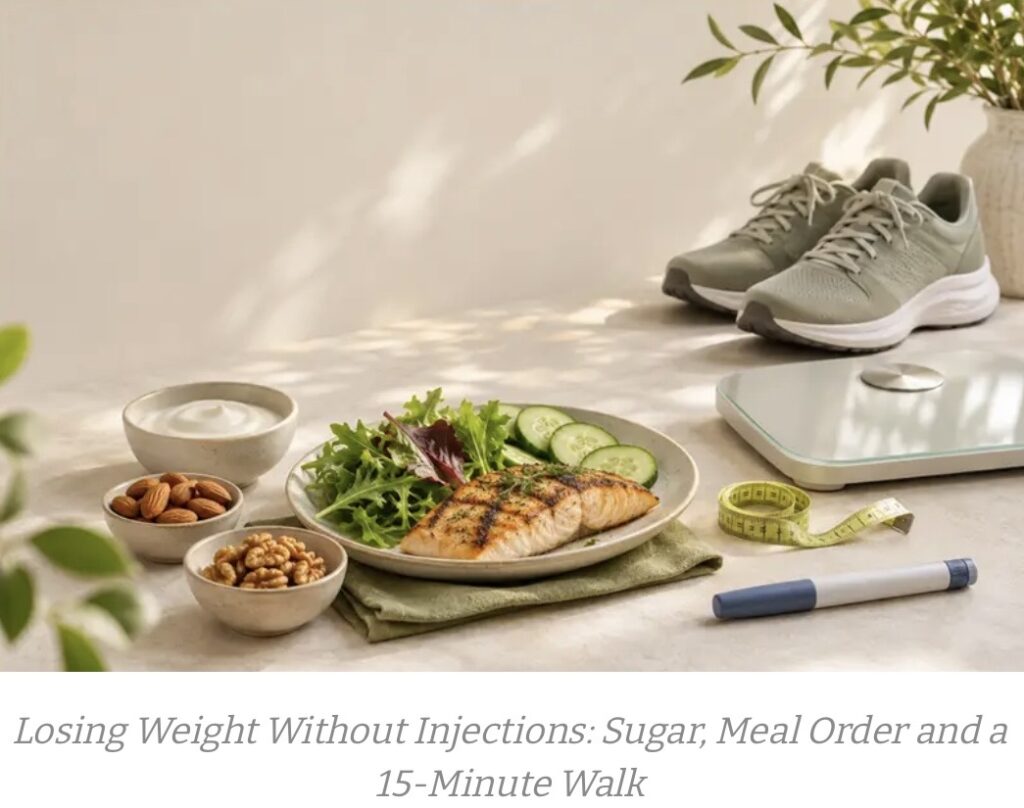
Losing Weight Without Injections: Sugar, Meal Order and a 15-Minute Walk
Know your sugar intake, change the order in which you eat, and walk for 15 minutes after every meal.
By Dr. Fayaz Shawl, MD, FACP, FACC, FSCAI
Director, Interventional Cardiology, Adventist HealthCare White Oak Medical Center, Maryland, USA, Clinical Professor of Medicine, George Washington University, Visiting Chief Consultant Interventional Cardiologist, Zulekha Hospital, Dubai, UAE, Founder, The Fayaz Shawl Philanthropic Foundation
Obesity: A growing global epidemic
Obesity has emerged as one of the greatest public health challenges of the 21st century. According to the World Health Organization’s latest report, released on October 7, 2026, approximately 1.1 billion people worldwide were living with obesity in 2024—about one in seven people. [1]
Excess body weight, particularly abdominal obesity, increases the risk of:
- Type 2 diabetes
- Coronary artery disease and heart attacks
- Hypertension
- Stroke
- Fatty liver disease
- Obstructive sleep apnea
- Certain cancers
- Premature death
As a cardiologist, I believe that preventing obesity and addressing its underlying causes are fundamental to reducing the growing burden of cardiovascular disease.
The emergence of GLP-1 weight-loss medications
In recent years, medications such as semaglutide (Wegovy and Ozempic) and tirzepatide (Mounjaro and Zepbound) have transformed the management of obesity and diabetes. These medications reduce appetite, increase the sensation of fullness and help patients consume fewer calories.
These effective medications can be expensive, cause gastrointestinal side effects and require long-term treatment. In the STEP 1 extension study, participants regained approximately two-thirds of their lost weight within one year of stopping semaglutide and structured lifestyle intervention. [11]
Can many individuals achieve meaningful and sustainable weight loss without depending on these medications?
For many people, consistent lifestyle changes can help. I would like to emphasize three fundamental principles:
1. Reduce daily sugar consumption.
2. Follow the correct sequence of eating.
3. Walk for 15 minutes after every meal.
Part A: Understanding sugar and its contribution to obesity
1. How much sugar should we consume every day?
American Heart Association (AHA) recommendation: Limit ADDED sugar to no more than 36 grams per day for men and 25 grams per day for women. [2]
| Men | Women | |
| Daily added sugar limit | 36 grams | 25 grams |
| Equivalent teaspoons | 9 | 6 |
| Approximate calories | About 150 | 100 |
My personal recommendation for adults with obesity during the initial phase of weight reduction: Aim for TOTAL sugar (natural plus added) of 35 grams per day for men and 25 grams per day for women, if appropriate for the individual.
These are my proposed initial targets, not established clinical guidelines or proven weight-loss thresholds. Reducing excess added sugar and total calorie intake remains the priority. Individualise the targets to ensure adequate nutrition.
A systematic review published in the British Medical Journal demonstrated that decreasing dietary sugar consumption was associated with weight reduction, while increasing sugar consumption was associated with weight gain. [3]
2. Natural sugar versus added sugar
Natural sugars are found in fresh fruits, vegetables, milk and unsweetened yogurt. Added sugars are commonly found in chocolates and sweets, cakes and pastries, biscuits and cookies, soft drinks, sweetened breakfast cereals, sweetened tea and coffee, and packaged foods.
Natural sugars in whole fruits are accompanied by fibre, vitamins and other beneficial nutrients. Therefore, fresh fruit should not be considered equivalent to sweets or sugary beverages. Nevertheless, portion sizes and overall carbohydrate content remain important, particularly in individuals with diabetes.
The AHA limits apply only to added sugars. No universally recommended total-sugar limit has been established. [12] Consider an extreme example: ten medium bananas contain about 140 grams of natural sugar and twenty medium apples contain about 380 grams. Although whole fruits are nutritious, unlimited quantities may add substantial calories. Normal portions of whole fruit are compatible with a healthy weight-loss diet.
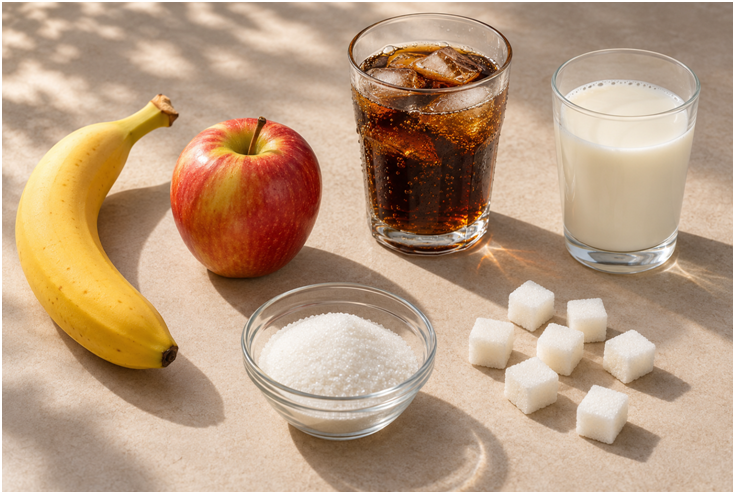
Figure 1. Know the sugar content of everyday foods and drinks. The sugar cubes are illustrative, not a measurement of the sugar in each item.
Choose lower-sugar alternatives. For example, use spinach, lettuce, cucumber, broccoli or cauliflower in place of some refined carbohydrates; these non-starchy vegetables contain little sugar, although not necessarily zero. One cup of cow’s milk contains about 12 grams of natural sugar (lactose), whereas many unsweetened almond milks contain 0 grams. Choose an unsweetened, calcium- and vitamin D-fortified product and check the label. Almond milk is generally lower in protein than cow’s milk; obtain adequate protein from other foods, or consider unsweetened fortified soy milk. Choose berries or modest portions of other whole fruit instead of juice. [14]
3. Know the sugar content of everything you eat
One of my strongest recommendations is to develop awareness of the sugar content of your daily food. Today, technology makes this remarkably easy. Before consuming a food item, simply ask Google, an AI assistant such as ChatGPT, or a nutrition app:
- How many grams of sugar are in a banana?
- How much sugar is in a mango?
- How much added sugar is in this breakfast cereal?
- How many grams of sugar are in a cup of tea with two teaspoons of sugar?
- How many calories and carbohydrates are in my lunch?
For packaged foods, always verify the information against the nutritional label. Online and AI answers are estimates and can occasionally be wrong, so treat them as a guide rather than an exact figure. The more you understand what you are eating, the better equipped you become to manage your weight.
4. Sugar content of commonly consumed foods
| Food item | Portion | Approximate total sugar* |
| Banana | Half a medium banana | 7–8 g |
| Banana | One medium banana | 14 g |
| Apple | One medium apple | 19 g |
| Orange | One medium orange | 12 g |
| Mango | One cup, sliced | 23 g |
| Strawberries | One cup | 7 g |
| Blueberries | One cup | 15 g |
| Grapes | One cup | 23 g |
| White rice, cooked Preferably avoid | One cup (about 160 g) | Less than 1 g† |
| Refined pasta, cooked Preferably avoid | One cup (about 140 g) | Less than 1 g† |
| Table sugar | One teaspoon | 4 g |
| Tea with sugar | Two teaspoons of sugar | 8 g |
| Honey | One tablespoon | 17 g |
| Orange juice | One glass, 240 ml | 21 g |
| Coca-Cola (regular) | One can, 330 ml | 35 g |
| Coca-Cola (regular, US) | One can, 355 ml (12 oz) | 39 g |
| Pepsi (regular, US) | One can, 355 ml (12 oz) | 41 g |
| Cow’s milk (plain) | One cup (240 ml) | About 12 g |
| Almond milk, unsweetened | One cup (240 ml) | 0 g (check label) |
| Spinach, raw | One cup | About 0.1 g |
| Green leaf lettuce, raw | One cup, shredded | About 0.3 g |
| Cucumber, raw with peel | One cup, sliced | About 0.9 g |
| Broccoli, raw | One cup, chopped | About 1.5 g |
| Green salad (lettuce and spinach, no dressing) | One cup | Less than 1 g |
| Tea or coffee, unsweetened | One cup, without milk | 0 g |
These values are approximate and vary according to serving size, brand and preparation. Cola recipes also differ between countries; in the UK, for example, regular Pepsi contains sweeteners and less sugar than the US version. *These figures show total sugars, which include both natural and added sugars. The AHA limits refer only to added sugars. Vegetables contain small amounts of natural sugar; salad values vary with ingredients and dressing. Milk alternatives vary by brand. [15] †Rice and pasta contain very little sugar, but one cup of cooked rice or pasta contains about 43–45 grams of starchy carbohydrate, which the body breaks down into glucose. Portion size and total carbohydrate intake are therefore important. For people with obesity actively trying to lose weight, I recommend preferably avoiding white rice and refined pasta. If rice is consumed, consider a small portion of safely refrigerated rice (see Part B).
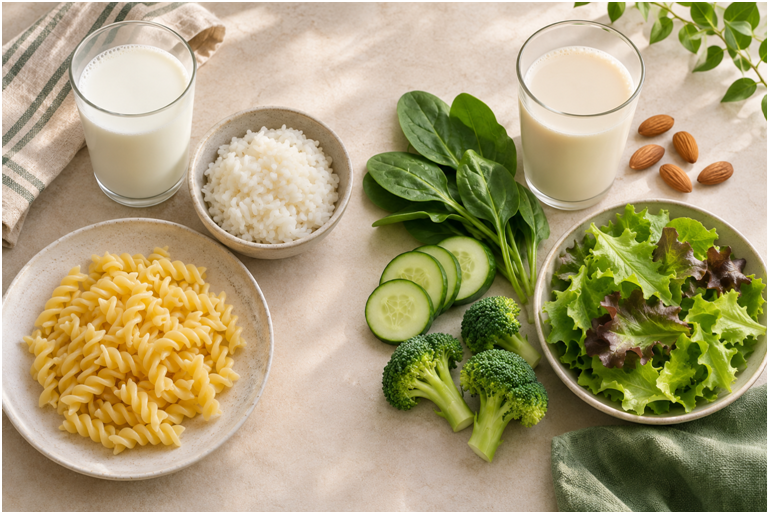
Figure 2. Practical lower-sugar alternatives: compare cow’s milk with unsweetened almond milk, and replace some refined starches with leafy greens and other non-starchy vegetables.
A single can of a sugary soft drink can exceed a woman’s entire recommended daily added-sugar allowance and approach or exceed a man’s.
5. Beware of hidden sugars
Many foods advertised as healthy contain surprising amounts of added sugar. Examples include flavoured yogurt, granola and breakfast cereals, protein and energy bars, salad dressings, tomato ketchup, packaged bread, fruit-flavoured beverages and low-fat desserts. In South Asian and Middle Eastern homes, sweetened tea and kahwa, bakery breads and biscuits, and festive sweets such as halwa and kheer are common sources.
Always check the amount of added sugar per serving and determine how many servings you are actually consuming.
6. Eat your fruit rather than drinking it
Eating a whole orange is nutritionally different from drinking a glass of orange juice. Whole fruits provide fibre, promote fullness and generally take longer to consume. A glass of juice, on the other hand, may contain the sugar from several pieces of fruit, with substantially less fibre.
I recommend fresh fruit in reasonable portions rather than fruit juices, even when the juice contains no added sugar. Berries, particularly strawberries, raspberries and blackberries, are excellent options because of their relatively low sugar and high fibre content.
Part B: The importance of meal sequencing
In my previous article, Diabetes: A Silent Epidemic—Why the Order You Eat Matters, I emphasized that the sequence in which food is consumed can significantly influence post-meal blood glucose levels. The same principle can be incorporated into a weight-management programme, and it forms the foundation of my Shawl Precision Program.
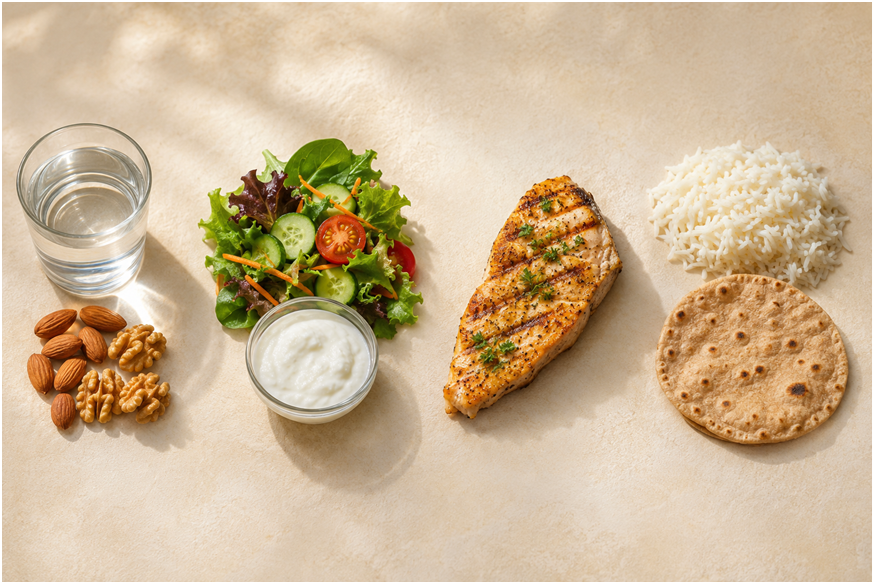
Figure 3. Meal sequence, from left to right: nuts and water before the meal, vegetables with plain dahi first, protein next, and a modest portion of carbohydrates last, if included.
Step 1: Almonds and walnuts before meals
Approximately 20–30 minutes before your main meal of the day, consider consuming:
- 8–10 almonds
- 3–4 walnut halves
- One glass of water
Nuts contain healthy fats, protein and fibre, which may promote fullness and help reduce overeating. However, nuts are calorie-dense: this small portion provides roughly 110 calories. Taken before all three meals, it would add more than 300 calories a day, enough to cancel the benefit of cutting sugar. I therefore recommend it before the main meal only, or as a replacement for an existing snack rather than an addition to it.
Step 2: Vegetables first
Begin your meal with green leafy vegetables, cucumber, lettuce, broccoli, cauliflower or salad, along with unsweetened yogurt or dahi. Fibre-rich vegetables promote fullness and can help moderate the absorption of carbohydrates.
Step 3: Protein second
Next, consume protein-rich foods such as fish, chicken, eggs, lentils, beans, tofu or plain Greek yogurt. Adequate protein is particularly important during weight loss because it helps preserve muscle mass. People with chronic kidney disease should ask their doctor how much protein is appropriate for them.
Step 4: Carbohydrates last
Whenever possible, eat carbohydrates towards the end of the meal, after vegetables and protein. For individuals with obesity actively trying to lose weight, I recommend preferably avoiding white rice and refined pasta, particularly during the initial phase of weight reduction. Replace them with fibre-rich vegetables, legumes and adequate protein. Keep portions of other starchy foods modest; whole-grain alternatives are preferable where practical.
If you eat rice, choose refrigerated rice.
As I mentioned in my previous article, cooking rice, cooling it and keeping it in the refrigerator overnight can increase its resistant starch content. Resistant starch is less readily digested and can help moderate the post-meal glucose response. A small study in healthy adults found a lower glucose response with cooled and reheated rice than with freshly cooked rice. [9] Even so, keep the portion small and eat it last.
Food safety is important with cooked rice. Cool it and place it in the refrigerator within one hour of cooking, eat it within 24 hours, and reheat it thoroughly until it is steaming hot all the way through. Reheat rice only once. [13]
A small study of 16 adults with type 2 diabetes, published in BMJ Open Diabetes Research & Care, found that consuming carbohydrates after proteins and vegetables reduced the post-meal glucose response by approximately 53% compared with eating carbohydrates first. Interestingly, this study also demonstrated an increase in the body’s naturally produced GLP-1 hormone. [4] This natural rise, however, is far smaller and shorter-lived than the effect of injectable GLP-1 medications.
Although meal sequencing cannot be expected to reproduce the magnitude of weight loss achieved with GLP-1 drugs, it represents a simple dietary strategy for improving post-meal glucose control.
Healthy snacks between meals
If you feel hungry between meals, choose a small handful of almonds (about 10) together with a bowl of plain Greek yogurt or dahi, instead of biscuits, sweets, bakery items or a sugary drink. This combination provides protein, healthy fats and fibre, keeps you full for longer and contains no added sugar.
Choose plain, unsweetened yogurt, because flavoured yogurts often contain several teaspoons of added sugar. For flavour, add a few berries or a pinch of cinnamon rather than sugar or honey.
Stay well hydrated
Drink 2–3 litres of water a day, and more in hot weather or when you are physically active. Water contains no calories, and replacing sugary drinks, juices and sweetened tea with water is one of the simplest ways to reduce your daily sugar intake. Thirst is also sometimes mistaken for hunger, so a glass of water before reaching for a snack can help.
People with heart failure or kidney disease may need to limit their fluid intake and should follow their doctor’s advice on how much to drink.
Part C: Walk for 15 minutes after every meal
One of the most underestimated tools for improving metabolic health is walking shortly after eating. My recommendation is simple:
| After each meal | Walking duration |
| Breakfast | 15 minutes |
| Lunch | 15 minutes |
| Dinner | 15 minutes |
| Total daily activity | 45 minutes |
| Total weekly activity | 315 minutes |
This requires no gym membership, expensive equipment or specialised training.
Walk at a brisk but comfortable pace, one at which you can talk but not sing, and start within 10–15 minutes of finishing your meal. In total, this provides 315 minutes of activity a week, which exceeds the 150–300 minutes of moderate activity recommended by the World Health Organization. [7]
Prioritise the walk after dinner whenever it is safe and practical. Many people eat their largest and most carbohydrate-rich meal in the evening and then sit or lie down, so blood glucose can remain elevated for hours. The studies described below found particularly favourable effects after the evening meal.
Start a 15-minute walk within 10–15 minutes of finishing dinner. You do not need to go outside: walking around your home, along a corridor or up and down a room is enough. Later in the evening, while sitting to watch television or read, add the seated soleus push-ups described below.
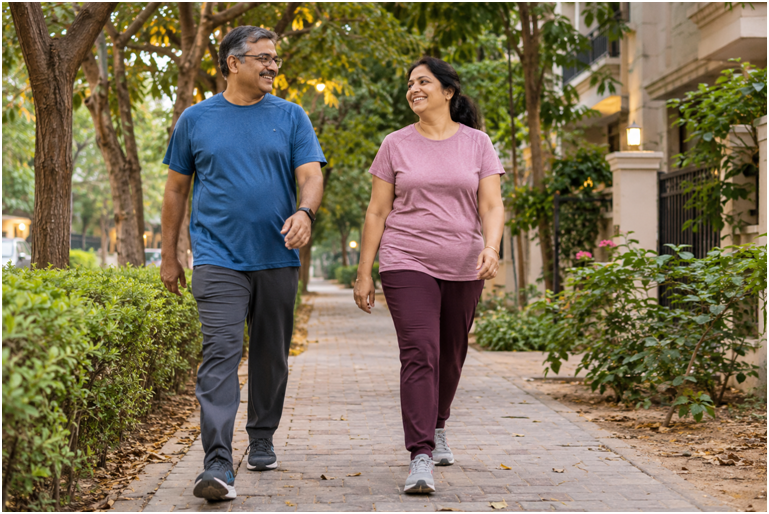
Figure 4. A 15-minute walk after meals, especially after dinner, can help improve post-meal glucose control.
Why is walking after meals important?
After eating, blood glucose levels rise as carbohydrates are digested and absorbed. When we walk, our skeletal muscles utilise glucose for energy. This helps reduce post-meal glucose elevations while increasing energy expenditure.
Potential benefits include improved blood glucose control, improved insulin sensitivity, increased calorie expenditure, reduced sedentary time, improved cardiovascular fitness and assistance with weight management.
What does the scientific evidence show?
A study conducted by researchers at George Washington University, where I serve as Clinical Professor of Medicine, and published in Diabetes Care demonstrated that three 15-minute periods of walking after meals improved 24-hour glucose control in older individuals at risk of developing diabetes. The three short walks were as effective as a single 45-minute walk, and more effective at controlling the rise in glucose after the evening meal. [5]
Another randomized study in 41 individuals with type 2 diabetes demonstrated that a 10-minute walk after each meal lowered post-meal glucose by about 12% more than a single 30-minute walk taken at any time of day. The benefit was greatest after the evening meal, at about 22%. [6]
Individuals who cannot walk outdoors can walk inside their homes, offices or shopping centres. Those unable to walk may consider suitable seated activity, as described below, after discussing their limitations with a healthcare professional.
If you develop chest discomfort, unusual breathlessness, dizziness or palpitations while walking, stop and seek medical advice. If symptoms are severe or persistent, or suggest a heart attack, seek emergency medical help immediately.
Cannot walk? Try the seated soleus push-up
For people who cannot walk because of arthritis, injury, age or other limitations, seated heel raises may provide a way to reduce prolonged inactivity. Those who can walk can also do them during periods of sitting, especially in the evening. The movement activates the soleus, a muscle deep in the calf.
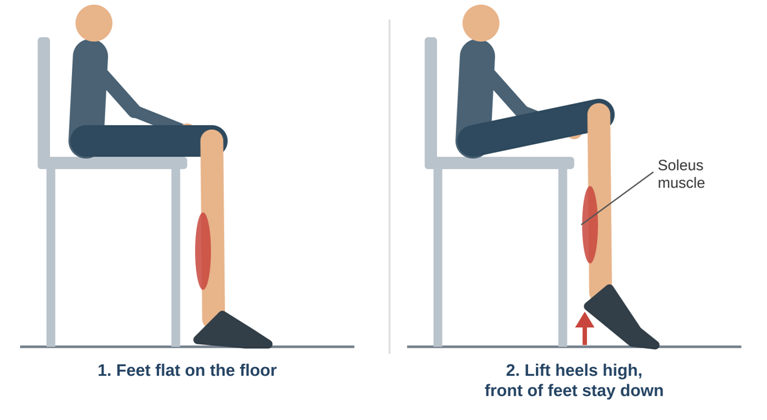
Figure 5: The seated soleus push-up. Sitting with the feet flat on the floor (1), raise the heels as high as possible while the front of the feet stays on the floor (2), then lower them and repeat continuously. The highlighted area shows the soleus muscle in the lower calf. Illustration based on the method described by Hamilton et al., iScience 2022. [10]
How to do it:
- Sit on a chair with your feet flat on the floor and your knees bent at a right angle.
- Keeping the front of your feet on the floor, lift your heels as high as they will go.
- Lower your heels back down to the floor, and repeat continuously at a comfortable pace.
- Start with a few minutes after each meal and build up gradually. It can be done while watching television, reading or working at a desk.

Figure 6. Gentle seated heel raises can help interrupt prolonged sitting. Perform them as tolerated, keeping the balls of the feet on the floor.
How does it reduce sugar spikes?
The soleus is adapted for sustained activity. In research settings, specially performed soleus contractions have increased oxidative metabolism and glucose utilisation with relatively little reliance on stored muscle glycogen. This may help reduce post-meal glucose elevations. Ordinary heel raises may activate the muscle, but their metabolic effects depend on how the movement is performed and for how long.
In a small study from the University of Houston, a specialised, supervised soleus exercise performed for several hours during a glucose challenge reduced glucose and insulin responses by up to 52% and 60%, respectively. [10] This was an acute laboratory study. Brief, ordinary seated heel raises have not been shown to reproduce these results, and their effects on long-term weight loss remain unproven. They are a practical way to interrupt sitting, rather than an equivalent replacement for walking.
Part D: How much weight could you lose?
Consider an individual who consumes 100 grams of added sugar daily. By reducing this to about 35 grams, daily calorie consumption could decrease by approximately 260 calories, provided these calories are not replaced by other foods.
| Time period | Potential calorie reduction |
| Per day | 260 calories |
| Per week | 1,820 calories |
| Per month (30 days) | 7,800 calories |
Adding 45 minutes of brisk daily walking burns roughly a further 150–200 calories for an adult weighing about 80 kg. Over several months, these changes can contribute to meaningful weight loss.
A word of realism: the body adapts as weight falls, so weight loss does not continue in a straight line. A published mathematical model estimates that, on average, a sustained reduction of around 10 calories per day eventually produces about one pound (0.45 kg) of weight loss, with about half of this change occurring during the first year. [8] On that basis, cutting 260 calories a day could theoretically lead to a long-term weight reduction of approximately 12 kg, if the change is maintained. This is a model-based illustration, not a prediction or guarantee for any individual.
However, individual results depend on age, starting weight, metabolism, activity level, total calorie consumption and underlying medical conditions. Weight loss requires an overall energy deficit. There is no need to pursue rapid weight loss. Gradual, sustainable weight reduction is the objective.
Part E: Ten practical recommendations for losing weight without medication
1. Follow the AHA added-sugar limits. For adults with obesity during the initial phase of weight loss, my proposed total-sugar targets are 35 grams per day for men and 25 grams for women, individualised to preserve adequate nutrition.
2. Use Google, an AI assistant or a nutrition app, and always the nutritional label, to understand the sugar and calorie content of your food.
3. Stay well hydrated according to your individual needs; avoid sugary beverages and minimise fruit juices. Follow your physician’s advice if you have a fluid restriction.
4. Before your main meal, eat a small portion of almonds and walnuts, in place of a snack rather than in addition to it.
5. Begin meals with vegetables and unsweetened yogurt.
6. Eat adequate protein before consuming carbohydrates.
7. Preferably avoid white rice and refined pasta during active weight reduction if you have obesity. If you eat rice, consider safely refrigerated rice in a small portion. Eat bread, chapati and other starchy foods towards the end of the meal, in controlled portions.
8. Walk briskly for 15 minutes after every meal, if able, starting within 10–15 minutes of finishing. Prioritise the walk after dinner. If you cannot walk, consider suitable seated exercises, such as heel raises, as a way to interrupt inactivity.
9. Monitor your body weight and waist circumference weekly.
10. Maintain adequate sleep and incorporate muscle-strengthening exercises into your routine.
Conclusion: Prevention begins at the dining table
Modern medicine has provided us with remarkably effective medications for obesity. These treatments have an important role, particularly for individuals with obesity-related medical complications, and the habits described here work alongside them, not against them. However, we must not underestimate the benefits of modifying our daily eating habits and increasing physical activity.
Weight management is not simply about eating less. It is also about understanding what we eat, how much we eat, the sequence in which we eat and what we do after eating.
People already receiving weight-loss or diabetes medications should consult their physicians before making changes to their treatment. Those taking insulin or sulfonylurea tablets (such as gliclazide or glimepiride) need particular care, because reducing sugar and walking after meals can lower blood glucose further and may require a dose adjustment to avoid hypoglycaemia. Those with heart disease, other medical conditions or mobility limitations should individualise their activity programme with their healthcare professional.
My message is simple:
Count your sugar. Control your portions. Change your meal sequence. Walk for 15 minutes after every meal.
These small changes, when practised consistently, can make a meaningful difference to our weight, metabolic health and cardiovascular well-being.
The journey towards a healthier life may begin with your next meal—and the 15 minutes that follow it.
Scientific references
1. World Health Organization. Obesity and overweight. Fact sheet, updated 7 October 2026. https://www.who.int/news-room/fact-sheets/detail/obesity-and-overweight
2. American Heart Association. How Much Sugar Is Too Much? https://www.heart.org/en/healthy-living/healthy-eating/eat-smart/sugar/how-much-sugar-is-too-much/
3. Te Morenga L, Mallard S, Mann J. Dietary sugars and body weight: systematic review and meta-analyses of randomised controlled trials and cohort studies. BMJ. 2013;346:e7492. doi:10.1136/bmj.e7492.
4. Shukla AP, et al. Carbohydrate-last meal pattern lowers postprandial glucose and insulin excursions in type 2 diabetes. BMJ Open Diabetes Res Care. 2017;5:e000440. doi:10.1136/bmjdrc-2017-000440.
5. DiPietro L, et al. Three 15-min bouts of moderate postmeal walking significantly improves 24-h glycemic control in older people at risk for impaired glucose tolerance. Diabetes Care. 2013;36:3262–3268. doi:10.2337/dc13-0084.
6. Reynolds AN, Mann JI, Williams S, Venn BJ. Advice to walk after meals is more effective for lowering postprandial glycaemia in type 2 diabetes mellitus than advice that does not specify timing: a randomised crossover study. Diabetologia. 2016;59(12):2572–2578. doi:10.1007/s00125-016-4085-2.
7. World Health Organization. WHO guidelines on physical activity and sedentary behaviour. Geneva: World Health Organization; 2020.
8. Hall KD, Sacks G, Chandramohan D, et al. Quantification of the effect of energy imbalance on bodyweight. Lancet. 2011;378(9793):826–837. doi:10.1016/S0140-6736(11)60812-X.
9. Sonia S, Witjaksono F, Ridwan R. Effect of cooling of cooked white rice on resistant starch content and glycemic response. Asia Pac J Clin Nutr. 2015;24(4):620–625.
10. Hamilton MT, Hamilton DG, Zderic TW. A potent physiological method to magnify and sustain soleus oxidative metabolism improves glucose and lipid regulation. iScience. 2022;25(9):104869. doi:10.1016/j.isci.2022.104869.
11. Wilding JPH, et al. Weight regain and cardiometabolic effects after withdrawal of semaglutide: The STEP 1 trial extension. Diabetes Obes Metab. 2022;24(8):1553–1564. doi:10.1111/dom.14725.
12. U.S. Food and Drug Administration. Added Sugars on the Nutrition Facts Label. https://www.fda.gov/food/nutrition-facts-label/added-sugars-nutrition-facts-label
13. UK Food Standards Agency. Home food fact checker: Rice. https://www.gov.uk/government/publications/home-food-fact-checker/home-food-fact-checker
14. U.S. Food and Drug Administration. Milk and Plant-Based Milk Alternatives: Know the Nutrient Difference. https://www.fda.gov/consumers/consumer-updates/milk-and-plant-based-milk-alternatives-know-nutrient-difference
15. U.S. Department of Agriculture. FoodData Central, food composition database. https://fdc.nal.usda.gov/