


FRIDAY SERMON: Autism Affected Child
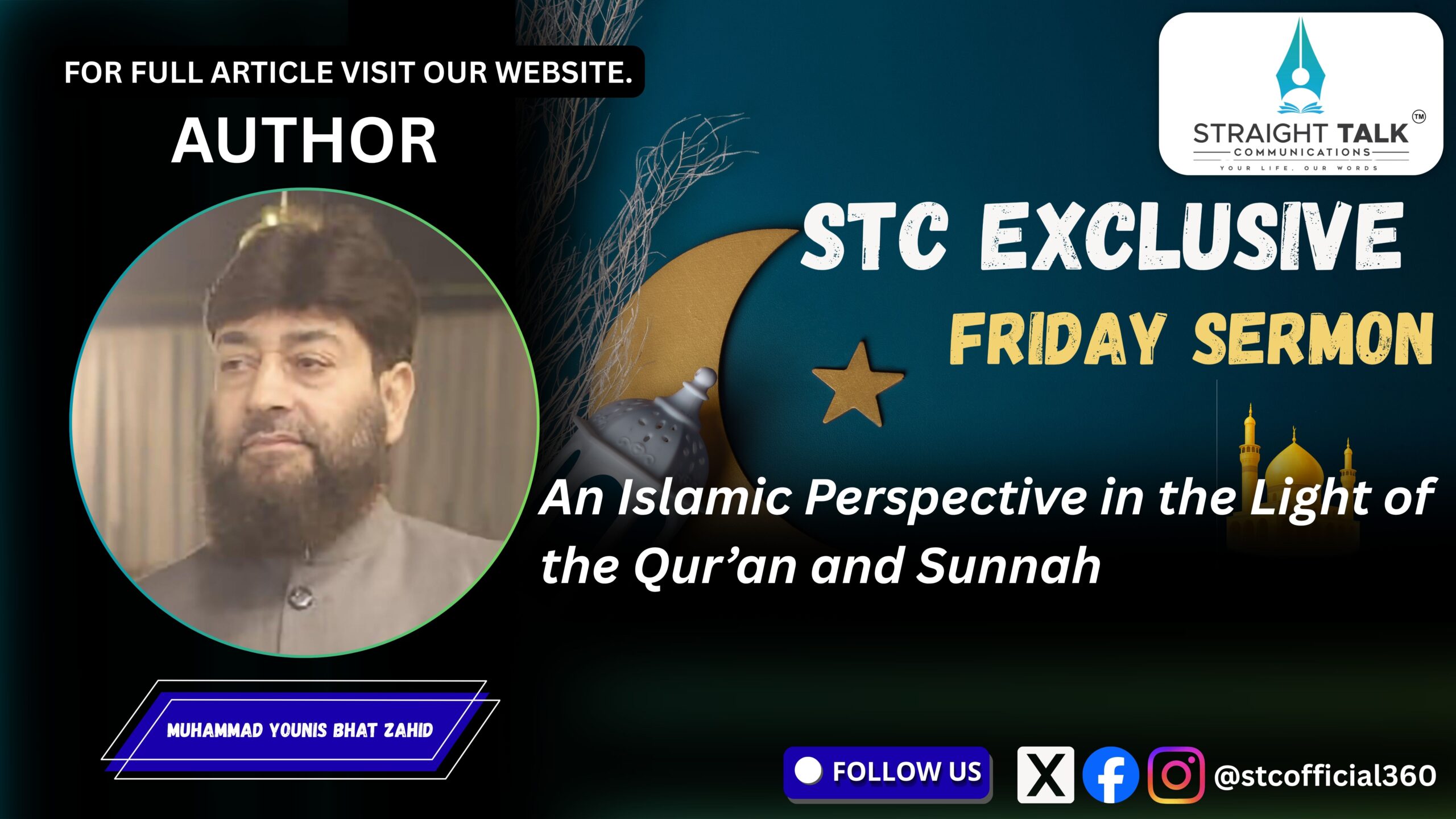
An Islamic Perspective in the Light of the Qur’an and Sunnah
Muhammad Younis Bhat Zahid
Islam presents a comprehensive and compassionate understanding of human diversity. Every human being is created by Allah according to His divine wisdom. Differences in physical health, mental ability, emotional strength, and developmental patterns are part of Allah’s perfect system of creation. Some children are born healthy and strong, some exceptionally gifted, while others are born or develop with special needs.
Autism Spectrum Disorder (ASD) is one such developmental condition that affects communication, behavior, emotional expression, and social interaction. Unfortunately, due to ignorance, cultural myths, and lack of religious awareness, autism is often misunderstood and viewed as a source of shame, punishment, or parental failure. Islam strongly rejects such thinking.
Allah clearly declares:
“Allah creates what He wills.”
(Surah Ash-Shura 42:49)
Therefore, an autism affected child is fully Allah’s creation, honored with human dignity, and entrusted to parents and society as an amanah (trust). Such children are not a curse, but a means of test, mercy, patience, and spiritual elevation.
1. Autism and the Concept of the “At-Risk Child”
An At-Risk Child is a child who, due to biological, psychological, social, or environmental factors, is more likely to face developmental delays, emotional difficulties, educational challenges, or social exclusion. Autism affected children are often categorized as at-risk because they may struggle to communicate their needs, express emotions, or protect themselves from neglect, abuse, or misunderstanding.
From an Islamic perspective, being “at-risk” does not mean being inferior or less valuable. Rather, it indicates that the child deserves greater protection, care, compassion, and responsibility from parents, educators, scholars, and society.
Allah says:
“So as for the orphan, do not oppress him. And as for the needy, do not repel him.”
(Surah Ad-Duha 93:9–10)
Scholars explain that this command applies to all vulnerable individuals, including children with disabilities or developmental challenges.
The Prophet ﷺ said:
“Each of you is a shepherd, and each of you is responsible for his flock.”
(Bukhari & Muslim)
Thus, an autism affected child is an at-risk child whose care is a collective moral and religious responsibility.
2. Definition of Autism in the Light of Islam
Autism Spectrum Disorder is a neurodevelopmental condition that affects a child’s ability to communicate, interact socially, regulate emotions, and behave in socially typical ways. Symptoms may include delayed speech, repetitive behavior, limited eye contact, sensory sensitivity, and difficulty understanding social cues. The intensity of these characteristics varies widely, which is why autism is described as a “spectrum.”
Islam does not measure human worth by physical perfection or intellectual ability. Human dignity is granted by Allah to every child without exception.
Allah states:
“Indeed, We have honored the children of Adam.”
(Surah Al-Isra 17:70)
This honor includes autism affected children fully and completely.
3. Gifted Child, Average Child, and Autism Affected Child
a) Gifted Child
A gifted child is blessed with exceptional intelligence, creativity, memory, or skills. Islam teaches that such abilities are a blessing (ni‘mah) and a test, requiring gratitude and responsible use.
“And whatever blessing you have is from Allah.”
(Surah An-Nahl 16:53)
b) Average (Common) Child
An average child develops according to common milestones. Islam does not rank people by intelligence or ability, but by righteousness.
“Indeed, the most honorable of you in the sight of Allah is the most righteous.”
(Surah Al-Hujurat 49:13)
c) Autism Affected Child
An autism affected child may face communication and social challenges, yet may possess unique strengths such as honesty, focus, memory, or creativity. Islam teaches that limitations do not reduce spiritual worth.
The Prophet ﷺ said:
“Allah does not look at your bodies or your appearances, but He looks at your hearts and your deeds.”
(Sahih Muslim)
4. Role of Parents: A Divine Responsibility
Parents of an autism affected child are chosen by Allah for a special trust. Their responsibility includes acceptance, patience, love, protection, education, and treatment.
Allah commands:
“O you who believe! Protect yourselves and your families from the Fire.”
(Surah At-Tahrim 66:6)
Parents must avoid denial, shame, or comparison and instead adopt patience and trust in Allah.
The Prophet ﷺ said:
“When Allah loves a servant, He tests him.”
(Tirmidhi)
5. Sibling Affection and Moral Training
Siblings play a vital role in the emotional well-being of an autism affected child. Islam emphasizes mercy, kindness, and protection toward the young and vulnerable.
The Prophet ﷺ said:
“He is not one of us who does not show mercy to our young.”
(Tirmidhi)
Educating siblings about autism prevents cruelty, jealousy, and neglect and fosters compassion.
6. Family Support System
Islam considers the family the foundation of society. In the case of an autism affected child, the entire family must support the parents emotionally and practically. Blame, embarrassment, or isolation contradict Islamic ethics.
Allah says:
“And cooperate in righteousness and piety.”
(Surah Al-Ma’idah 5:2)
A united family environment strengthens the child’s confidence and reduces parental stress.
7. Responsibilities of Schools and Religious Scholars
a) Schools
Education is a right of every child in Islam.
The Prophet ﷺ said:
“Seeking knowledge is obligatory upon every Muslim.”
(Ibn Majah)
Schools should adopt inclusive education, train teachers, and create flexible learning environments for autism affected children.
b) Religious Scholars
Religious scholars must eliminate myths that autism is a curse or punishment. They should promote patience, prayer, hope, and correct Islamic understanding.
Allah says:
“So remind, for indeed the reminder benefits the believers.”
(Surah Adh-Dhariyat 51:55)
- Society’s Approach: From Stigma to Support
Islam strictly forbids mockery, discrimination, and humiliation.
Allah commands:
“Let not a people ridicule another people; perhaps they may be better than them.”
(Surah Al-Hujurat 49:11)
A righteous society ensures dignity, inclusion, and respect for autism affected children.
The Prophet ﷺ said:
“The best of people are those who are most beneficial to others.”
(Tabarani)
9. Steps Parents and Guardians Should Take
Parents should combine reliance on Allah with practical action:
Early diagnosis and intervention
Professional therapy and medical care
Structured routines
Emotional support and encouragement
Continuous prayer and patience
The Prophet ﷺ said:
“Seek treatment, for Allah has not created a disease except that He has created its cure.”*
(Abu Dawood)
10. Awareness Programs
Ignorance is the greatest challenge surrounding autism. Islam encourages awareness and knowledge.
Allah says:
“Are those who know equal to those who do not know?”
(Surah Az-Zumar 39:9)
Mosques, schools, media, and community centers should conduct awareness programs, workshops, and training sessions.
11. Conclusion
An autism affected child is not a burden, but a trust from Allah. Such children are a means of mercy, reward, and moral growth for parents and society. Islam teaches acceptance, dignity, patience, and responsibility. True success lies not in physical or intellectual perfection, but in fulfilling the rights of Allah’s creation.
Allah promises:
“Indeed, with hardship comes ease.”
(Surah Ash-Sharh 94:6)
Autism, too, carries hidden wisdom, mercy, and divine purpose for those who understand it through the light of faith.
And Allah knows best
(STRAIGHT TALK COMMUNICATIONS EXCLUSIVE. makahmadina11@gmail.com)
Well elaborated & beautifully concluded.
Beautifully elaborated & well concluded.