



When Saam, Daam, Dand, Bhed Enters Democracy

There is something deeply contradictory about speaking the language of democracy while practising the politics of Saam, Daam, Dand, Bhed.
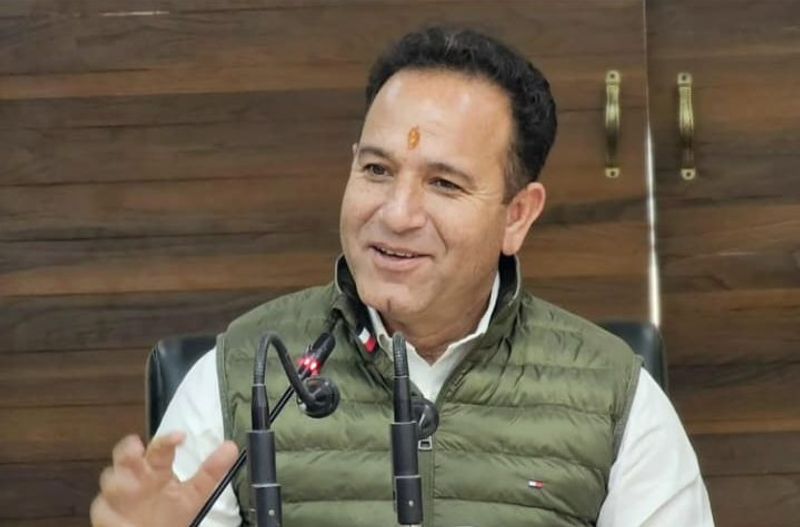
Khursheed Ahmad Akhoon
Saam, Daam, Dand, Bhed belongs to an older political tradition—a doctrine in which persuasion, inducement, punishment and division could all be employed to achieve an objective. In matters of war, national security or confronting forces hostile to the state, one may understand the logic behind such a doctrine. But democracy is not war. A political opponent is not an enemy of the nation. He is a participant in the same constitutional system.
And this is where the real danger begins.
When the desire to win an election becomes so overwhelming that every method is defended as legitimate, democracy is reduced to a mere ritual of voting. The ballot remains, the speeches remain, the slogans remain—but the spirit of democratic competition begins to disappear.
In recent years, serious concerns have been raised about the functioning and perceived independence of democratic institutions, the use of investigative agencies against political opponents, pressure on dissenting voices, and the manner in which peaceful protests and political criticism have sometimes been dealt with. Such allegations must always be examined through evidence, due process and independent institutional scrutiny. But they also deserve to be taken seriously rather than dismissed merely because they are politically inconvenient.
The most disturbing consequence is the weakening of the Opposition.
A democracy without a strong Opposition is like a parliament without a question. Those who govern need people who can challenge them, expose their mistakes and demand accountability. An Opposition is not an obstacle to governance; it is one of the safeguards against the abuse of power.
The same principle applies to minorities, farmers, journalists, civil society and every citizen who disagrees with the government. Their dissent may be inconvenient. Their demands may be politically uncomfortable. Their protests may challenge authority. But disagreement is not disloyalty, and dissent is not a crime.
The phrase “everything is fair in love and war” cannot be imported wholesale into democratic politics. Elections are not wars, and political opponents are not enemies to be defeated by every available means.
A party has every right to seek victory. It has every right to persuade voters, build alliances, defend its record and expose the failures of its opponents. But the moment political power begins to be used in ways that undermine a level democratic playing field, the question is no longer merely who won the election. The question is whether the democratic institutions themselves are being strengthened or weakened.
It is in this broader context that the present government, like any government entrusted with considerable political authority, must also remain open to scrutiny. A strong electoral mandate brings not only the authority to govern but also a greater responsibility to preserve the credibility and independence of democratic institutions. Concerns about the functioning of investigative agencies, constitutional bodies or other institutions should therefore be addressed with transparency and due process, rather than simply being dismissed as political criticism.
The government of the day has a responsibility to ensure that institutions remain trusted by citizens across the political spectrum. Political power is temporary; institutions are meant to endure. A government may legitimately pursue its political objectives, but those objectives should never come at the cost of weakening the democratic space available to its opponents.
History ultimately remembers governments not merely for the elections they won, but for the democratic institutions they strengthened while they were in power.
Saam, Daam, Dand, Bhed may be an ancient manual of power. It must never become a modern licence for political wrongdoing.
Because governments come and go. Political victories fade. But once democratic institutions are weakened for the sake of power, rebuilding public trust can take generations.
(STRAIGHT TALK COMMUNICATIONS EXCLUSIVE)