


Religion, Region and Political Rhetoric: Have We Learnt the Lessons of Partition?

When political ambition exploits religious and regional identity, ordinary people inherit the divisions while political leaders often reap the benefits.
Anil Kumar Sharma
In today’s world of instant communication, geographical boundaries no longer prevent us from hearing the voices of people living across them. We can listen to discussions, read opinions and understand the experiences of ordinary citizens and intellectuals in countries that were once part of the same undivided India. As I follow these voices, both in India and Pakistan, I often find myself returning to a painful question: Was the Partition of India in 1947 an unavoidable historical necessity, or was it also the consequence of political ambitions that exploited religious identities and the failure of leadership to find a common path?
In conversations and writings that I encounter, I find a recurring argument that Partition was not simply a clash between two religious communities. It was also shaped by the political ambitions of the leadership of that period, the policies of the British rulers and their interest in managing the transfer of power in a manner that served their strategic interests. The colonial policy of dividing communities and the growing distrust between political groups created conditions in which religious identity became a powerful instrument of political mobilisation. While historians may differ on the relative weight of these factors, the human cost of the eventual division is beyond dispute.
The Partition of 1947 divided not only a territory but also families, friendships, neighbourhoods and centuries of shared cultural life. Millions were forced to leave their homes, countless people lost their lives, and communities that had lived together for generations found themselves separated by a newly drawn international border. Those who suffered most were ordinary people who had neither designed the political arrangements nor controlled the decisions that shaped their destiny.
The question that troubles me is whether the common people on both sides truly wanted the kind of permanent hostility that developed after Partition, or whether successive political narratives made it increasingly difficult for them to look at one another beyond the identities assigned to them. Ordinary Indians and Pakistanis have their own aspirations. They want security, employment, education, healthcare, dignity and a peaceful future for their children. These needs are remarkably similar, irrespective of religion or nationality. Yet the political language surrounding the two countries often gives greater prominence to historical grievances, security fears and mutual suspicion.
Pakistan was created in the name of a separate Muslim nation, based on the argument that religious communities constituted distinct nations. Yet the creation of Bangladesh in 1971 demonstrated that a shared religion alone could not overcome differences of language, culture, political representation and economic power. The separation of East Pakistan from West Pakistan remains an important historical reminder that nationhood cannot be sustained merely by religious affinity. Justice, equal representation, dignity and a genuine sense of belonging are equally important.
This is why I believe we must examine Partition not merely as a chapter of history but as a lesson for the present. Understanding the political circumstances of 1947 does not require us to endorse the proposition that people belonging to different religions cannot live together as citizens of one nation. Nor should the suffering of that period become a permanent justification for distrust between communities that continue to share this subcontinent’s cultural, linguistic and historical inheritance.
The same concern applies to contemporary India. Our country chose a constitutional path in which citizenship does not depend on belonging to a religious majority or a particular region. India’s diversity has never meant that disagreements do not exist. It means that we have sought to create a common national framework within which different faiths, languages, cultures and political opinions can coexist.
Unfortunately, religion and regional identity continue to offer attractive instruments for political mobilisation. It is often easier to awaken fear than to inspire confidence, easier to remind people of historical injuries than to persuade them to work together for a better future. When public debate becomes dominated by questions about who belongs, who is more loyal and who poses a threat to whose identity, the essential concerns of ordinary citizens risk being pushed aside.
I am particularly concerned about the way common people become drawn into political narratives that strengthen divisions. A political leader may deliver a provocative speech, a party may organise its response, television debates may intensify the controversy, and social media may circulate the most inflammatory portions of the exchange. Within hours, people who were going about their daily lives can find themselves arguing with neighbours, colleagues and friends over issues that political leaders themselves may eventually move beyond.
Who, then, bears the lasting consequences? It is rarely the political leadership alone. It is the ordinary citizen whose relationships become strained, the young person who inherits prejudice without understanding its origins, and the family that begins to view another community through suspicion rather than personal experience.
This brings me to Jammu and Kashmir, where religion, regional identity and political rhetoric have long played a consequential role. The region’s history is complex, and its people have diverse experiences and aspirations. Their legitimate concerns about dignity, representation, development and constitutional rights deserve serious consideration. But such concerns must not become instruments for creating permanent insecurity or deepening divisions between the people and the institutions responsible for governing them.
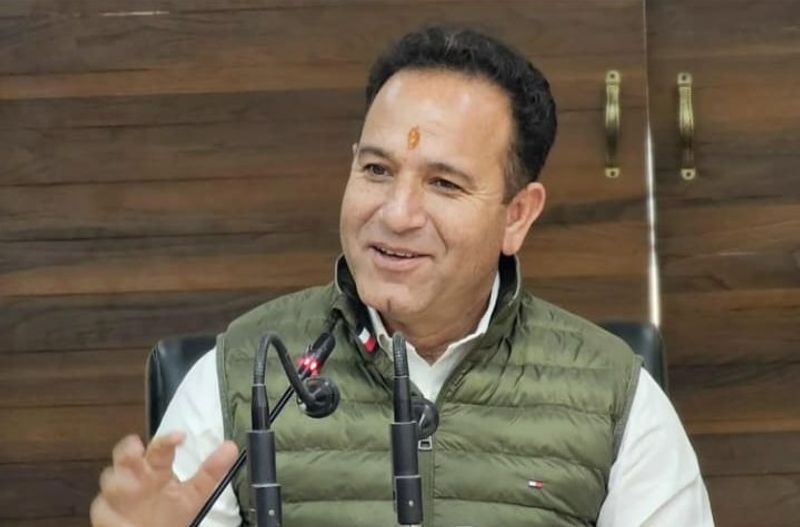
The recent statement by Dr Farooq Abdullah in Baramulla has once again brought this question into public debate. He credited Pakistan’s continued international advocacy of the Kashmir issue with helping to protect the interests and identity of Kashmiris, while expressing doubts about the intentions of the Centre. His remarks were sharply criticised by political opponents and provoked a wider controversy.
A political leader has every right to criticise the government of the day. Questioning the Centre, demanding justice and raising concerns about the future of Jammu and Kashmir are legitimate elements of democratic discourse. But when a leader invokes a neighbouring country as a protector of the region’s people, the statement deserves careful scrutiny, particularly in a region that has experienced conflict, violence and deep political mistrust.
The question is not simply whether one agrees or disagrees with Dr Abdullah. The more important question is whether such rhetoric helps people find practical solutions to their problems or intensifies their anxieties about identity and belonging. Is it possible to raise legitimate regional concerns without making people feel that their future depends on an external political contest? Can leaders build confidence in democratic institutions rather than deepen public suspicion through sweeping statements about intentions?
At the same time, those who oppose such statements must exercise equal responsibility. Labelling an entire community or treating every criticism of the government as disloyalty is no answer. Democratic institutions become stronger when they can withstand criticism, respond to genuine grievances and demonstrate through their actions that every citizen’s dignity and rights matter. Political disagreement should invite reasoned debate, not a competition to question one another’s patriotism.
I believe the real test of leadership lies in the ability to rise above the immediate gains of political rhetoric. A leader who genuinely cares for the people must be prepared to speak about employment, education, healthcare, investment, peace and the future of the younger generation with the same passion with which political identity is discussed. The measure of leadership should be the confidence it builds among people, not the intensity of the divisions it creates.
The tragedy of Partition should have taught the subcontinent that the politics of religious identity can produce consequences that outlive the leaders who promote it. The creation of borders did not erase shared memories, cultural connections or the common aspirations of ordinary people. Nor did it eliminate the responsibility of political leadership to ensure that differences are managed through dialogue, justice and democratic institutions.
We cannot reverse 1947, and we cannot pretend that the history of India and Pakistan is free from conflict or painful memories. But we can refuse to allow that history to become a permanent instrument for dividing people today. We can recognise legitimate national security concerns without treating every citizen across a border as an enemy, and we can defend our national interests without denying the humanity of ordinary people.
For me, the greatest danger lies not in the existence of different religions, regions or political opinions, but in the deliberate use of these differences to make people distrust one another. Religion should offer moral guidance, regional identity should preserve cultural richness, and politics should provide a means of solving public problems. None should become an excuse to deny another person dignity or belonging.
Partition divided a country in 1947. Must every generation continue to divide its people in the name of that history?
That is the question our political leaders, intellectuals and ordinary citizens must ask themselves. The real tribute to the millions who suffered during Partition would be to build a society in which no one has to fear another because of religion, language or birthplace, and in which political leaders earn public trust by solving people’s problems rather than exploiting their sentiments.
A nation is not made stronger by repeatedly reminding its people whom they should fear. It becomes stronger when its citizens have enough confidence in their institutions, their fellow human beings and their shared future to disagree without becoming enemies.
Borders may separate nations, but political wisdom must prevent those borders from becoming walls between human hearts.
“Tumko zariya banakar main apni manzil dhoondta hoon, Tumhare hi jazbaaton se apni siyasat bunta hoon. Tum ladte raho mazhab aur mazhab ke naam par, Main kursi ki oonchaiyon ka raasta chunta hoon.”
(STRAIGHT TALK COMMUNICATIONS EXCLUSIVE. The Author is a Columnist | Former Banker | Social Commentator. Email: anil.kumar.sharma9419@gmail.com)