

BREAKTHROUGH: Ladakh to get UT-level elected body with legislative powers, as MHA releases meeting minutes
STC NEWS DESK
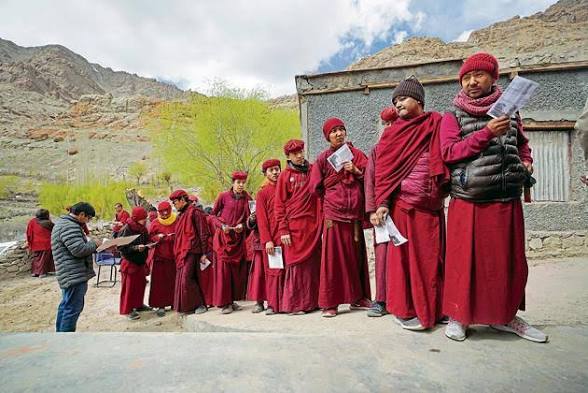
SRINAGAR, JULY 04 (STC): The Ministry of Home Affairs (MHA) has released the official minutes of its meetings with civil society groups from Ladakh, including the Leh Apex Body (LAB), and the Kargil Democratic Alliance (KDA). The minutes reveal a breakthrough agreement in which the Centre has proposed a unique, customized model of self-governance under Article 371 for the Union Territory of Ladakh.
This draft agreement marks a significant step toward resolving years of political deadlock, agitations, and representation deficits in the region.
What is the Proposed Governance Model for Ladakh?
As per the agreed model of governance, instead of the Sixth Schedule, the Centre will implement a customized, unique (sui generis) framework drawing from the various provisions of Article 371 (similar to protections in Nagaland or Mizoram).
This is intended to legally safeguard Ladakh’s tribal culture, land, and local employment.
The agreement envisages that Ladakh will move away from being a purely bureaucrat-run Union Territory. A democratic, Union Territory-level elected body will be established to provide a political voice to the local population.
This new elected body will not just be advisory; it will be vested with distinct executive, financial, and legislative powers to govern local subjects.
In a major shift from standard UT administration, the elected executive will have direct control and supervision over civil servants who manage subjects under the elected body’s purview.
This also includes the authority to review and appraise officials’ performance, making the bureaucracy directly accountable to the elected government.
The new overarching legislature will be structured to work in harmony with the grassroots Panchayati Raj Institutions (PRIs).
While immediate full statehood is not part of this immediate package due to financial constraints (particularly the burden of government salaries), the Centre has formally acknowledged in the official minutes that Statehood remains the “long-term aspiration” of the Ladakhi people.
It’s worth mentioning that in August 2019, the abrogation of Article 370 and the Jammu and Kashmir Reorganisation Act, 2019 bifurcated the erstwhile state. Ladakh achieved its long-standing demand to become a separate Union Territory, but it was designated as a UT without a legislature.
Prior to 2019, Ladakh had four MLAs in the J&K Assembly. Its transition to a UT left all administrative control with the Centre-appointed Lieutenant Governor, severely curtailing local democratic representation. The existing Ladakh Autonomous Hill Development Councils (LAHDCs) of Leh and Kargil had limited powers.
Fearing demographic changes and loss of land rights, the civil groups spearhead massive protests, shutdowns, and fasts (notably led by climate activist Sonam Wangchuk).
They had listed four-point demand such as full Statehood for Ladakh, safeguards under the Sixth Schedule of the Constitution, establishment of a separate Ladakh Public Service Commission (LPSC) for job reservations and two parliamentary seats for the region (Leh and Kargil).
(Straight Talk Communications)