
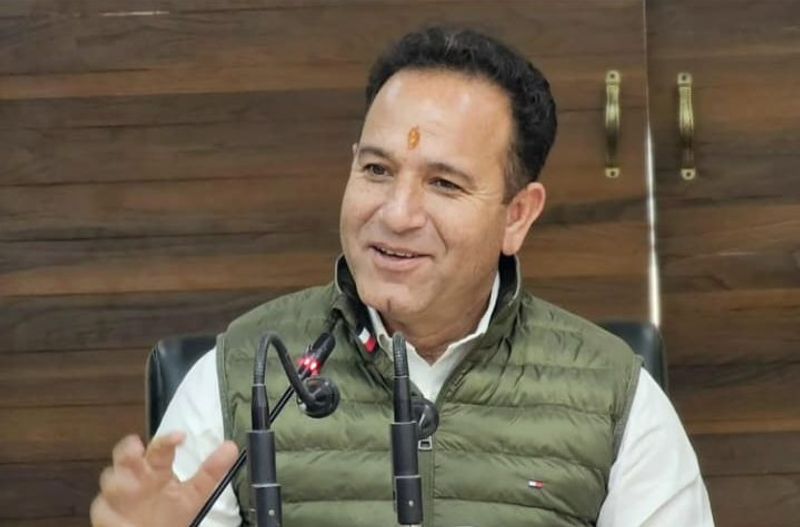


BY THE WAY: Significance of Sign Language for Inclusive growth
When you cannot hear the pain or hear the request, just feel the pain
Dr Noour Ali Zehgeer
The world is going to celebrate the International Day of Sign Languages on 23rd September for the full realisation of the rights of hearing-impaired people. Sign language is a means of communication through body movements, especially hand, finger, arm, head, and facial expressions, besides particular symbols that have been developed for communication. It is a full-fledged natural language with its own grammar and lexicon. This practice is older than speech. Imagine when u have to show your annoyance and you can’t speak, just move hands to protest or explain.
Since conventional speaking requires the ability to hear for people to learn and use spoken language, sign language helps hearing-impaired (HI) people communicate with others as well as among themselves. This helps in the social inclusion of HI people and leads to a path of their all-round development with dignity. Sign language is not optional—it is essential for human rights, education, and inclusion. Its significance lies in ensuring equal opportunities for Deaf individuals while enriching global linguistic and cultural diversity.
The history of signs is as old as civilisation itself. When there was no formal language, signs were used for communication. Initially, babies and their families communicate with each other through signs. Over time, standard sign languages such as American Sign Language (ASL), British Sign Language (BSL), and Indian Sign Language (ISL) have developed. These languages serve as effective communication tools for HI people to interact and function in society.
Sign language is used where speaking is not possible or difficult. It can be frustrating for HI people when they are unable to communicate properly with the people around them. Sign language bridges the communication barriers between hearing-impaired and speaking people.
Sign language is a naturally evolved language like other oral languages and is considered the mother tongue of many HI people. Like other spoken languages, sign language is also used to convey feelings, thoughts, and other information to recipients. Sign language interpreters translate oral language into visual-manual language to help HI people understand the information.
According to Census 2011, there are more than 13 lakh HI people and more than one crore people with some degree of hearing difficulty in Bharat. As per a WHO report, by 2050, nearly 250 crore people will have some degree of hearing loss and at least 70 crore will require hearing rehabilitation worldwide. Hence, there is a need to promote sign language in various areas for the betterment and upliftment of HI people. Once hearing children learn sign language, it will help them interact with their HI counterparts, which will be useful in the mainstreaming and inclusive education of such students.
Access to information through sign language is a fundamental right of HI people. It is also essential to provide educational, vocational, social, and personal guidance in sign language to HI people. Such people have to face a lot in the form of social stigma and discrimination. The lack of facilities, such as the unavailability of signage at public places and challenges in schools and workplaces, makes their day-to-day lives difficult.
The absence of sign language interpreters in schools is an important barrier to the education of HI persons, which ultimately results in many such people remaining uneducated or being forced to drop out. Under Samagra Shiksha, efforts have been made to provide appropriate hearing equipment to HI children so that they can cope with the lessons taught and remain in the mainstream.
It is the need of the hour that sign language be promoted effectively in every walk of life, not only for HI people and those working with them, but for all members of society and families where such persons live.
To have a inclusive growth of Society governments in very states and UT, should implement programs to improve their lives. Collaborations with International societies should be promoted to make it widely available and acceptable.
Language Access
- Ensures Deaf and hardofhearing children acquire language during critical developmental years.
- Prevents language deprivation, which can permanently affect cognition and academic success.
- Recognized as a natural language with grammar, syntax, and expressive power.
Cognitive Development - Early exposure supports working memory, literacy, and problemsolving skills.
- The brain reorganizes itself to process sign language, showing it is treated as equal to spoken input.
Social Inclusion
- Builds community belonging and strengthens cultural identity.
- Enables facetoface communication without reliance on written translation or technology.
- Promotes equal participation in education, employment, and public life.
Cultural Preservation - Over 300 distinct sign languages exist worldwide, each tied to unique cultural roots.
- Preserves Deaf culture and linguistic diversity.
Practical Applications - Used in schools, workplaces, healthcare, and public services to ensure accessibility.
- Bridges communication gaps even between speakers of different spoken languages.
- Expands opportunities for economic empowerment and independence.
Awareness and sensitisation activities will pave the way for changing the mindset of society as well as families. This will prove to be a milestone in the long run for mainstreaming the people and contributing to the welfare of the country. Sign language is vital because it provides full, natural communication access for Deaf and hardofhearing people, prevents language deprivation in children, and fosters inclusion, identity, and equal participation in society. It is not a simplified substitute for spoken language but a complete linguistic system with its own grammar and cultural depth.
Every Government should work to ensure to create an environment in Schools, offices and other places to make their life easy and compliment their courage to live and excel in Life. LIP SERVICE WONT WORK.
(STRAIGHT TALK COMMUNICATIONS EXCLUSIVE)