
PSAJK President contests Rs 240 crore school textbook market estimate, calls it ‘misleading’
STC NEWS DESK
SRINAGAR, NOVEMBER 04 (STC): Even as the textbook market may be Rs 240 crore, the figures being calculated on the basis of Rs 4,000 per set are not correct. There’s need to look at the issue in a broader perspective when it comes to about books and knowledge.
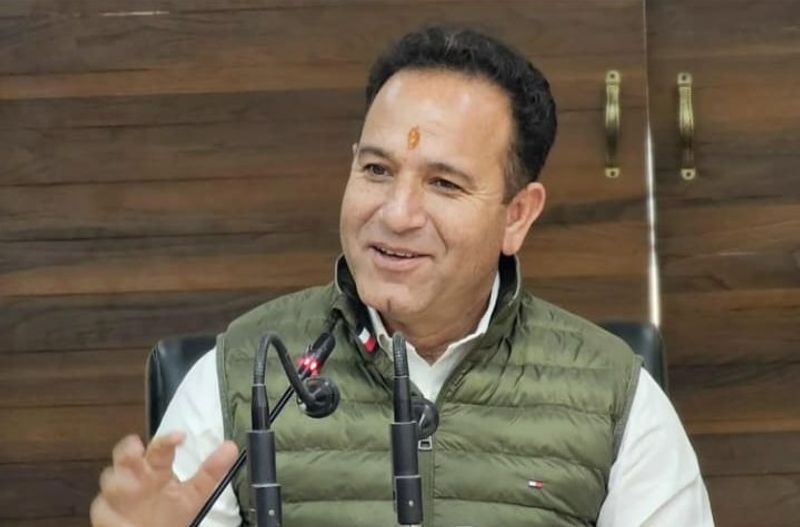
Private Schools Association Jammu and Kashmir (PSAJK) President Nazrul Islam stated this on Wednesday questioning the estimates placing the private school textbook market at Rs 240 crore. He described the figures as misleading.
The PSAJK claimed that the tobacco business accounted for around Rs 800 crore, soft drinks Rs 1,700 crore and meat Rs 2,500 crore, including purchases worth approximately Rs 1,400 crore from outside Jammu and Kashmir.
He questioned why expenditure on educational material was being singled out for scrutiny without adequately considering its contribution to learning and employment.
Nazrul Islam said thousands of people depended on the textbook trade, including booksellers, distributors and workers associated with the supply chain.
He maintained that the size of the market alone should not become a basis for questioning expenditure on books, particularly when educational material remained an essential component of school learning.
Referring to government directions concerning the sale and availability of textbooks, he said parents should have the freedom to purchase books from different sellers rather than depend on a single outlet.
He said schools could make textbooks available through multiple booksellers and online platforms, including Amazon, but cautioned that availability and pricing could vary depending on stock.
He also questioned comparisons showing significant price differences between the same books at different outlets, saying discounts could depend on the quantity of available stock and the timing of purchases.
“If orders are placed for two or three books, a particular discount may be available. But when larger quantities are ordered, the stock may get exhausted. These aspects must also be considered,” he said.
On textbook pricing, the PSAJK president said books published by different educational publishers could not always be compared solely on their printed prices. Citing Cambridge University Press as an example, he said certain educational packages included curriculum support, digital applications and teacher training programmes, which could influence their overall cost.
He urged the government to examine these factors while assessing textbook pricing and the selection of educational material by private schools.
He also advocated greater continuity in school curricula, suggesting that institutions should retain a particular curriculum for at least two to three years rather than frequently change textbooks. Such continuity, he said, would help parents and schools plan better while reducing unnecessary changes in learning material.
“When we talk about quality education and educational upskilling, these books provide important support to children. If there are issues with books or their content, schools should examine them,” he said.
He said the association remained in contact with private schools and would seek to facilitate a wider discussion on the issue in the coming days.
“We want an open debate on books. Experts should participate so that the government and the public can understand the different aspects of the issue,” Islam said.
He called for a balanced approach that addresses parental concerns over textbook costs while also considering educational quality, curriculum requirements and the interests of those associated with the book trade.
(Straight Talk Communications I Inputs from KNS)