




Rise of Adventure Sports: Opportunity, Transformation, and Responsibility
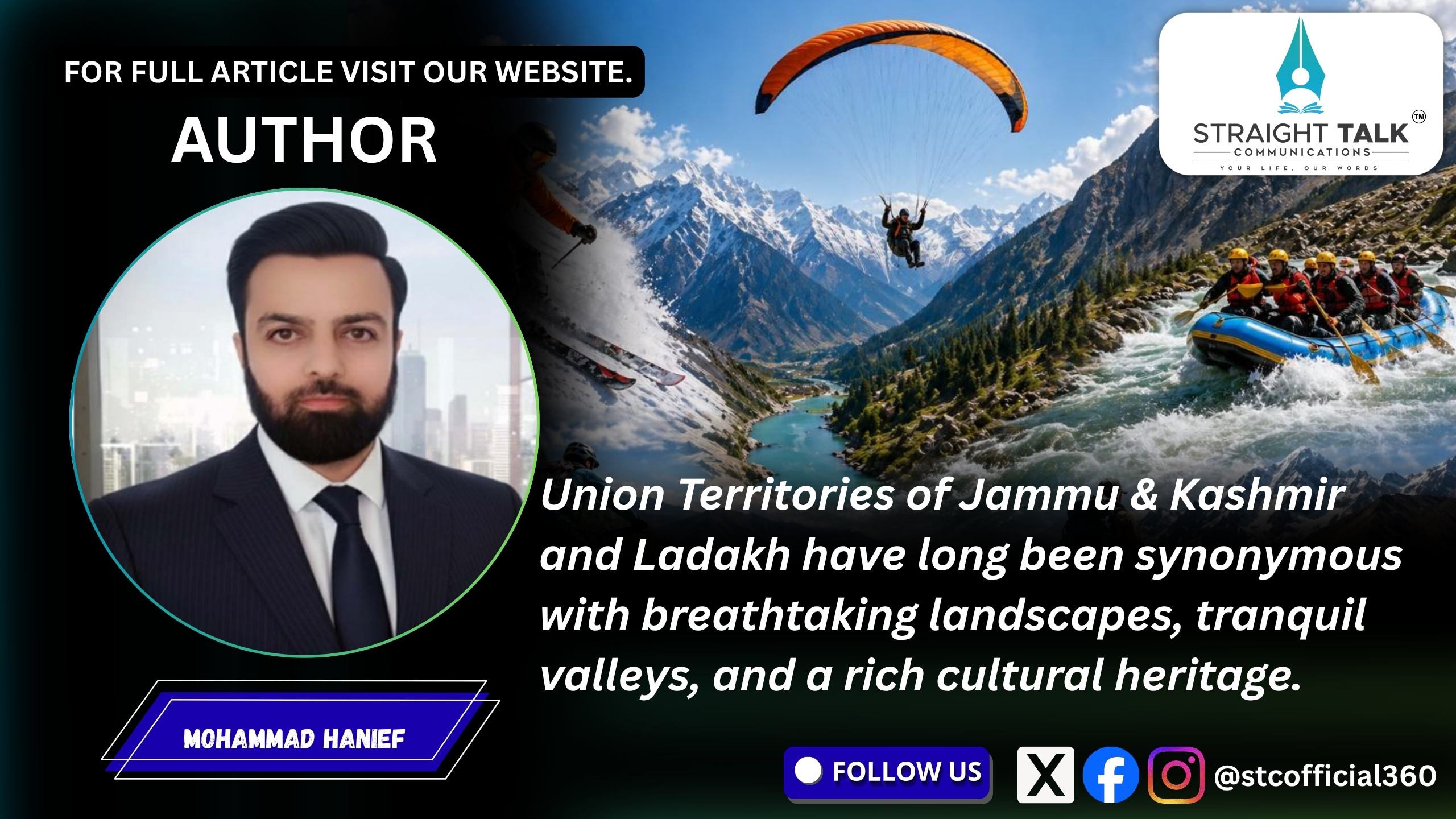
Mohammad Hanief
Union Territories of Jammu & Kashmir and Ladakh have long been synonymous with breathtaking landscapes, tranquil valleys, and a rich cultural heritage. For decades, tourism in these regions revolved largely around sightseeing and leisure. Today, however, a quiet but significant transformation is underway. The regions are steadily emerging among India’s most promising hubs for adventure tourism, reflecting a broader shift in how travel is experienced across the country.
Adventure sports are no longer peripheral attractions; they are becoming central to the identity of tourism in the region. This evolution is shaped by a combination of improved infrastructure, better connectivity, changing traveller preferences, and a renewed emphasis on experiential tourism. Across Jammu, Kashmir, and Ladakh, each region is contributing in its own distinctive way to this growing narrative.
The Kashmir Valley has taken a leading role in this transformation. Known for its lush meadows, snow-covered mountains, and flowing rivers, it offers an ideal setting for a wide range of adventure activities. Gulmarg, in particular, has gained recognition as a premier destination for winter sports. Its expansive slopes and favourable conditions attract skiing and snowboarding enthusiasts, while its infrastructure continues to evolve to meet growing demand. Beyond winter, the Valley offers trekking routes through alpine landscapes, river rafting in fast-flowing streams, and opportunities for paragliding and mountain biking.
Destinations such as Pahalgam and Sonmarg are increasingly becoming centres for outdoor recreation. These areas, once primarily associated with scenic beauty, are now witnessing a steady influx of travellers seeking active engagement with nature. Camping, hiking, angling, and other outdoor pursuits are gaining popularity, supported by local communities that are gradually adapting to the changing demands of tourism. This shift is not merely about adding new activities; it represents a deeper change in how the Valley is perceived and experienced.
Jammu, often seen through the lens of pilgrimage tourism, is also carving out a space for adventure sports. Its hilly terrains, forested landscapes, and relatively less crowded destinations offer unique opportunities for exploration. Places like Patnitop and Sanasar are emerging as important centres for activities such as paragliding, trekking, and camping. These locations provide an alternative to the more frequented destinations, appealing to travellers looking for quieter yet equally engaging experiences.
The rise of adventure tourism in Jammu is particularly significant because it complements the region’s existing tourism profile. By combining spiritual journeys with outdoor activities, it broadens the appeal of the region and encourages longer stays. This diversification not only benefits tourists but also creates new avenues of income for local communities, helping to strengthen the regional economy.
Ladakh, with its stark and dramatic landscapes, represents a different dimension of adventure tourism. Known for its high-altitude terrain and rugged environment, it has become a magnet for thrill-seekers from across the world. Activities such as mountaineering, high-altitude trekking, river rafting, and long-distance motorbiking have come to define the region’s tourism identity. The challenging conditions of Ladakh demand resilience and preparation, making it a destination for those seeking intense and transformative experiences.
The appeal of Ladakh lies not only in the activities it offers but also in the sense of remoteness and raw beauty that defines the region. Its growing popularity reflects a broader trend in adventure tourism, where travellers are increasingly drawn to destinations that offer authenticity and a connection with nature in its most unfiltered form.
Taken together, Jammu, Kashmir, and Ladakh form a comprehensive adventure tourism landscape. The diversity of terrain and climate allows for a wide spectrum of activities, catering to different levels of experience and interest. From gentle recreational pursuits to extreme sports, the region offers something for everyone, making it a unique destination within India’s tourism framework.
This growth is closely linked to wider developments across the country. India as a whole is witnessing a shift towards experience-driven travel, with adventure tourism playing an increasingly important role. From the Himalayan states to the Western Ghats and the Northeastern region, there is a growing emphasis on outdoor activities, eco-tourism, and sustainable travel. In this context, Jammu and Kashmir and Ladakh occupy a strategic position, offering some of the most diverse and compelling landscapes for adventure enthusiasts.
An important aspect of this transformation is the role of local communities, particularly the youth. Adventure tourism is creating new opportunities for employment and entrepreneurship, enabling people to engage directly with the tourism sector. Local guides, instructors, and small business owners are becoming key stakeholders in this evolving ecosystem. This not only enhances the visitor experience but also ensures that the benefits of tourism are more widely distributed.
However, the rapid expansion of adventure tourism also brings with it a set of challenges that must be addressed with care. The Himalayan region is ecologically fragile, and increased tourist activity can place significant strain on its natural resources. Issues such as waste management, unregulated construction, and overuse of popular sites are becoming increasingly visible. Without proper planning and regulation, the very landscapes that attract visitors could be at risk.
Safety is another critical concern. Adventure sports inherently involve risks, and ensuring the well-being of participants requires strict adherence to safety standards and the presence of trained professionals. The development of proper infrastructure, certification systems, and monitoring mechanisms is essential to maintain credibility and trust in the sector.
Climate change adds another layer of complexity. Changing weather patterns, variations in snowfall, and environmental stress are beginning to affect the reliability of certain activities. Winter sports, in particular, are vulnerable to these changes, highlighting the need for adaptive strategies and long-term planning.
The path forward lies in adopting a balanced and sustainable approach. Growth must be guided by responsibility, with a clear focus on preserving the natural and cultural heritage of the region. Collaboration between government agencies, private stakeholders, and local communities will be crucial in building a resilient and inclusive tourism ecosystem.
Efforts must also be directed towards promoting responsible travel practices among visitors. Awareness campaigns, eco-friendly initiatives, and community participation can play an important role in ensuring that tourism development remains sustainable. Investing in skill development and training will further strengthen the sector, enabling it to meet global standards while retaining its unique character.
The rise of adventure sports in Jammu, Kashmir, and Ladakh represents more than just a shift in tourism trends. It reflects a broader transformation in how the region is evolving—towards a future that is dynamic, inclusive, and opportunity-driven. At the same time, it underscores the importance of thoughtful development that respects the delicate balance between growth and preservation.
As the region continues to embrace this new identity, it stands at a crucial juncture. The choices made today will shape the future of its tourism landscape. With careful planning, responsible practices, and a commitment to sustainability, adventure tourism can become a powerful force for economic growth and social development.
In the end, the true success of this transformation will not be measured solely by the number of visitors or the range of activities offered, but by the ability to preserve the essence of the region—its natural beauty, cultural richness, and ecological balance—while opening new pathways for progress.
(STRAIGHT TALK COMMUNICATIONS EXCLUSIVE)