


SUNDAY BYTES: Can Shared Mobility Decongest Srinagar City?
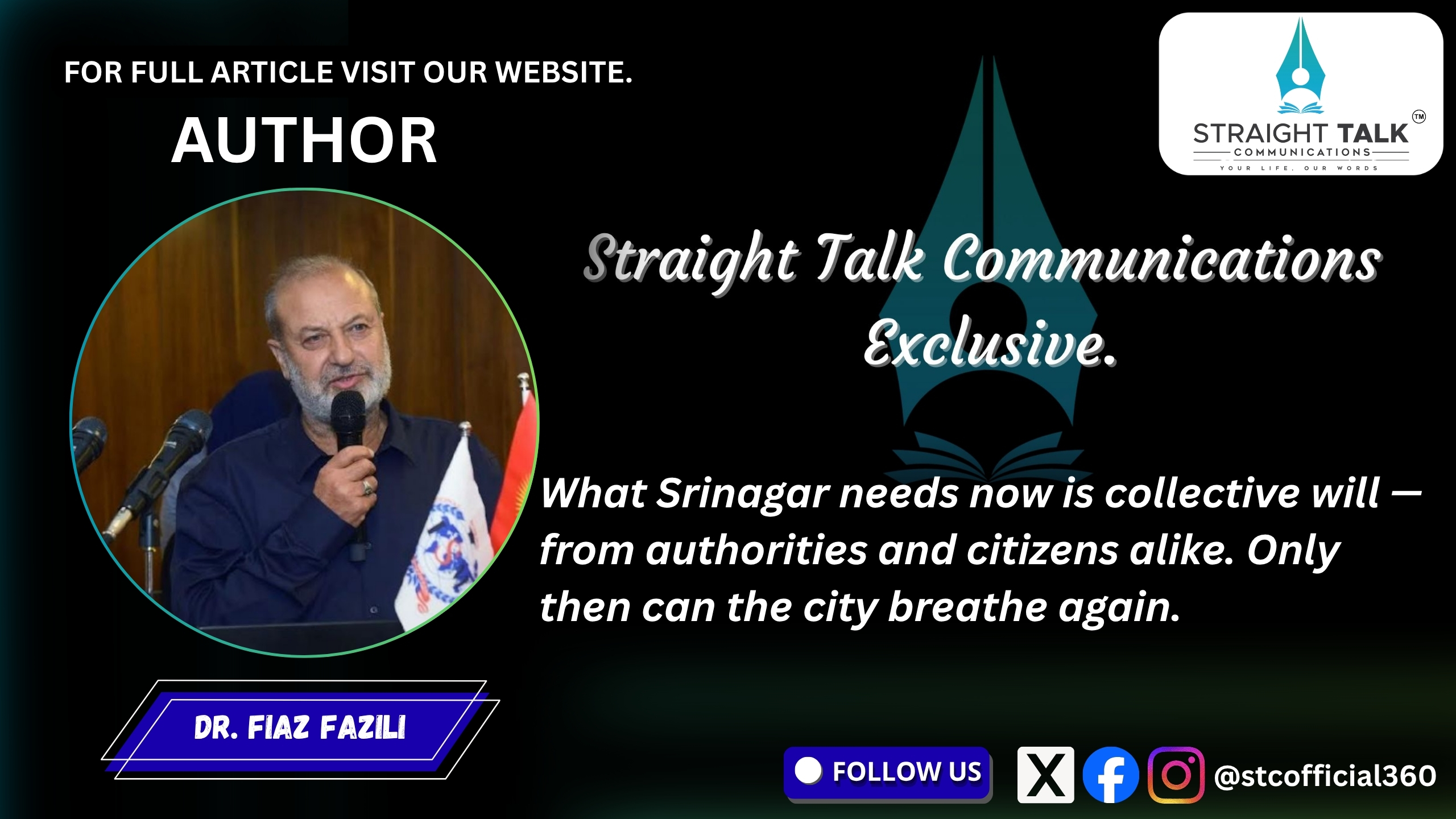
What Srinagar needs now is collective will — from authorities and citizens alike. Only then can the city breathe again.
Dr. Fiaz Fazili
Traffic in Srinagar is no longer merely a civic inconvenience; it has become a daily psychological burden. The very word “traffic” is enough to trigger anxiety: Which route should I take? How early I should leave ?. Will I reach on time? Should I avoid Hyderpora? Is Jehangir Chowk/Abdullah bridge blocked again? For thousands of commuters, students, patients, office-goers, tourists, and traders, these questions shape everyday life.
The bottlenecks are now familiar to every resident of Srinagar — Hyderpora Chowk, Jehangir Chowk, Abdullah Bridge, Rajbagh intersection, Boulevard Road, and Hawal near Firdous Cinema. During peak hours, these junctions often resemble parking lots rather than roads. Vehicles crawl bumper-to-bumper while pedestrians struggle to find even a narrow strip to walk on.
Concerned citizens (GCC), civil society groups, and transport experts have repeatedly highlighted these issues. Seminars have been conducted, memorandums submitted, and public discussions held with the traffic regulation authorities. Yet, despite acknowledgment of the crisis, there appears to be no immediate comprehensive solution. The reasons are obvious: the number of vehicles has multiplied exponentially, while the road length, parking facility and carrying capacity of Srinagar city have remained almost unchanged. The city has expanded vertically and commercially, but not proportionately in terms of transport infrastructure. Srinagar today faces the paradox of modern urban growth without corresponding urban mobility planning. More importantly lacks of realisation how my driving habits add to chaos. Whenever I travel from Hyderpora to Lal bazar, the fear of erratic traffic behaviour is always at the back of my mind. Half the effort while driving is not just reaching the destination, but saving oneself from accidents, chaos, and avoidable irritation.
At every signal, someone behind keeps honking even when the light is still red. Speedy Motorcyclists dangerously overtake from the left while another speeding vehicle almost brushes past from the right. Queue jumping has become routine. Unauthorized parking on both sides of roads narrows already choked spaces. Street carts, roadside vendors, and shopkeepers displaying goods on footpaths force pedestrians onto the roads, adding further confusion and risk.
The worst scenes are witnessed in poorly planned colonies where large SUVs like Thars and Scorpios enter extremely narrow lanes. When two vehicles confront each other, one has to reverse several meters just to create passage. Add to this the reckless speed of some school vans carrying children in colonies as none is there to monitor — it becomes deeply worrying.
While travelling, one notices many drivers using mobile phones or wearing earpods while driving. Scooties often carry three riders, with a small child standing in front holding the steering, all without helmets. Cars are parked carelessly near U-turns, forcing vehicles to negotiate multiple times before making a proper turn, unnecessarily slowing traffic flow.
Traffic management cannot improve merely through enforcement or penalties. Traffic is not only a policing issue; it is equally a matter of civic discipline, patience, planning, changing behaviours and self-correction. If citizens themselves refuse to follow basic road ethics, no traffic department alone can permanently solve the problem. One encouraging trend, however, is that many people now place contact numbers on dashboards while parking in narrow lanes or congested parking spaces. It reflects growing awareness that one’s convenience should not become another person’s hardship. If we genuinely want traffic to improve, we must first reform our own traffic behaviour on the roads. Respecting lanes, avoiding unnecessary honking, obeying signals, parking responsibly, protecting pedestrians, no acrobatics and driving with patience are small acts individually — but together they create a culture of safer and smoother traffic.
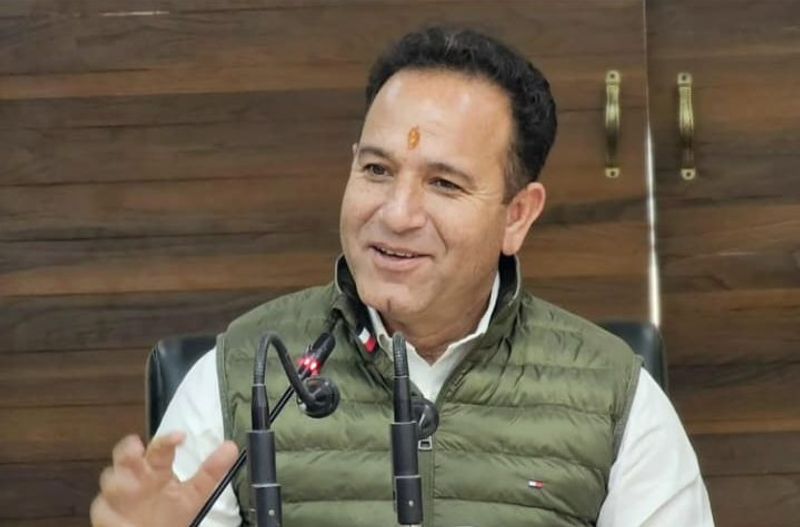
It is unfair to expect the Traffic Department alone to correct a problem that society collectively contributes to every single day.Amid this chaos, however, some proactive efforts deserve appreciation. The role of senior traffic officials, particularly Mr.Aijaz Bhat, the super cop on passionate mission , his associate Mahboob-ul-Haq, and the team has been visible on the ground. Their drives against illegal parking, encroachments on pedestrian pathways, correcting road blocks and roadside obstructions have sent a message that traffic regulation cannot succeed without discipline and enforcement.
One only needs to observe the condition of many city roads to understand the challenge. Pedestrian paths on both sides are often occupied by illegally parked vehicles, street vendors, shopkeepers, carts, and even unauthorized extensions of commercial establishments. What remains available for traffic movement shrinks dramatically. Add to this erratic driving behaviour, unregulated stopping of vehicles, VIP movement disruptions, poor lane discipline, and inadequate parking infrastructure, and the result is inevitable chaos.
The problems are many. The solutions, too, are many — but most require time, political will, coordination, and public cooperation.
Yet among all proposed solutions, one idea deserves serious and urgent consideration is vision of: shared mobility. The concept, strongly advocated by SSP Traffic Mr.Aijaz Bhat, may well represent one of the most practical and achievable pathways to decongest Srinagar city.As Mr. Aijaz Bhat rightly observes, the success of app-based transport systems such as Uber Technologies and Ola Cabs demonstrates that traffic chaos can be reduced through resource pooling, communication systems, and geographically coordinated mobility services.His central argument is simple yet profound: the real crisis is not merely roads — it is the will to change.
Any ordinary citizen can see that Srinagar’s congestion is primarily due to the overwhelming number of private vehicles on the roads. These vehicles are not only moving; they are also occupying valuable road space while parked. Private transport has become both a necessity and a lifestyle. The public transport system has gradually failed to inspire confidence, forcing people toward personalized mobility.
Why do people prefer private vehicles in a congested city? This question always baffles me. Because the key lies in their own pocket. There is independence, flexibility, and predictability. One can leave anytime without waiting at bus stops or worrying about route changes. There is comfort in travelling directly from home to destination without shifting luggage or changing transport modes midway. In a city where weather conditions fluctuate sharply, private vehicles also shield commuters from rain, snow, heat, and inconvenience. A parent dropping children to school, a doctor rushing to hospital duty, or a trader carrying goods naturally finds private transport more practical. But this convenience comes at a collective cost.
Private transport consumes fuel, road space, parking space, and mental peace. Traffic jams waste productive hours, elevate stress levels, contribute to hypertension and road rage, and increase environmental pollution. One may leave home comfortably but arrive exhausted.Srinagar today is paying the price of unchecked motorization.
The uncomfortable truth is that no city — however modern — can indefinitely absorb unlimited private vehicles without collapsing into congestion. Even global metropolitan cities now prioritize public and shared transport over personal vehicle dependency.
Shared mobility offers a middle path. It does not necessarily mean eliminating private vehicles. Rather, it means reducing unnecessary dependence on them by creating reliable, comfortable, time-bound, and integrated public transport systems. The key to successful shared mobility is not speed alone; it is predictability.
If commuters know that a bus, shuttle, or shared transport will arrive at a particular time and reach designated locations reliably, many would willingly opt for it. Time spent inside a comfortable public transport vehicle is not “wasted” time. One can read, work on a laptop, check messages, study, relax, or simply observe the city without the stress of driving. A person driving alone in a private car occupies disproportionate road space compared to the number of passengers carried. If even a fraction of commuters shifts toward organized shared mobility, the reduction in congestion could be significant. The city therefore needs a layered transport model.
Wide roads and major corridors should support larger buses operating on fixed schedules and dedicated lanes wherever feasible. Smaller feeder vehicles can connect interior localities and colonies to these arterial transport corridors. Importantly, there should be minimal overlap and route confusion.
This integration between main transport arteries and feeder systems is how many successful urban transport systems function worldwide. However, infrastructure alone cannot solve the crisis. Behavioural change is equally important.
One sensitive but important observation raised by Aijaz Bhat concerns public psychology. Many people remain reluctant to adopt shared mobility because public transport often requires carrying belongings manually, waiting at stops, or adjusting routines. Yet these are behavioural adaptations that societies across the world have gradually embraced for the larger collective good.
Urban mobility is not merely an engineering issue; it is a social contract. Srinagar must therefore rethink its relationship with roads, vehicles, and urban life itself. The administration also needs to simultaneously pursue several complementary reforms:
1.Strict regulation of roadside parking.
2.Multi-level parking facilities in commercial hubs.
3.Removal of encroachments on footpaths.
4.Promotion of pedestrian-friendly infrastructure.
5.Synchronised traffic signalling systems.
6.Staggered office and school timings.
7.Regulation of unnecessary VIP movement disruptions.
8.Expansion of cycling tracks where feasible.
9.Development of water transport along the Jhelum and Dal routes.
10.Smart surveillance and AI-based traffic monitoring.
- Rational annual vehicle registration planning.
12.Incentivising electric shared mobility.
Above all, Srinagar desperately requires long-term urban planning involving traffic experts, town planners, Roads & Buildings authorities, Smart City officials, environmentalists, transport unions, civil society, and citizen groups. Traffic cannot be treated as an isolated police issue alone.A city’s traffic reflects the culture and discipline of its society. No amount of flyovers or widening ,or supercops strategic /operational planning can permanently solve congestion if encroachments continue, illegal parking persists, and every household adds multiple vehicles annually without restraint.
The challenge before Srinagar is therefore not merely technical — it is moral, behavioural, and civic. The encouraging aspect is that awareness is growing. Citizens increasingly recognize that endless road expansion within a historic and geographically constrained city is neither practical nor environmentally sustainable.
Shared mobility may not solve everything overnight. But it can become the beginning of a new urban culture — one that values efficiency over vanity, cooperation over individualism, and sustainability over unchecked consumption.
The solution, as rightly said by Aijaz Bhat, often lies within the problem itself. What Srinagar needs now is collective will — from authorities and citizens alike. Only then can the city breathe again.
(STRAIGHT TALK COMMUNICATIONS EXCLUSIVE. The author is a healthcare quality expert, and columnist who writes frequently on civic and social issues in Kashmir.)