

Three-day nationwide ban strike deferred following meeting between UFBU and IBA

STC NEWS DESK
SRINAGAR, SEPTEMBER 28 (STC): Bank customers across the country heaved a sigh of relief when the United Forum of Bank Unions (UFBU) in a circular issued on 27 September announced deferment of three-day nationwide bank strike which was scheduled from 28-30 September.
It’s notable that the UFBU, an umbrella body of seven unions representing 90% bank employees and officers, had announced a three-day nationwide strike from 28-30 September, primarily to press for the implementation of a five-day banking week.
Banks were functional on Sunday, 27 September, to minimize disruption to customer services, as the proposed strike was to follow the weekend holidays on 26 and 27 September.
The UFBU had earlier held a one-day strike on 11 September. The next strike was planned for three continuous days — 28, 29 and 30 September.
According to the UFBU’s official statement, the unions have raised four main demands.
Implementing a 5-day banking week; declaration of all Saturdays as holidays
- Withdrawal of the government’s performance-linked incentive (PLI) schemes
- Modification of the incentive scheme through bilateral talks; a non-discriminatory incentive scheme for employees and officers
The All India Bank Officers’ Confederation (AIBOC) said on 9 September that there were two rounds of online meetings. “There has been no concrete outcome on the Five-Day Work Week,” the union had said.
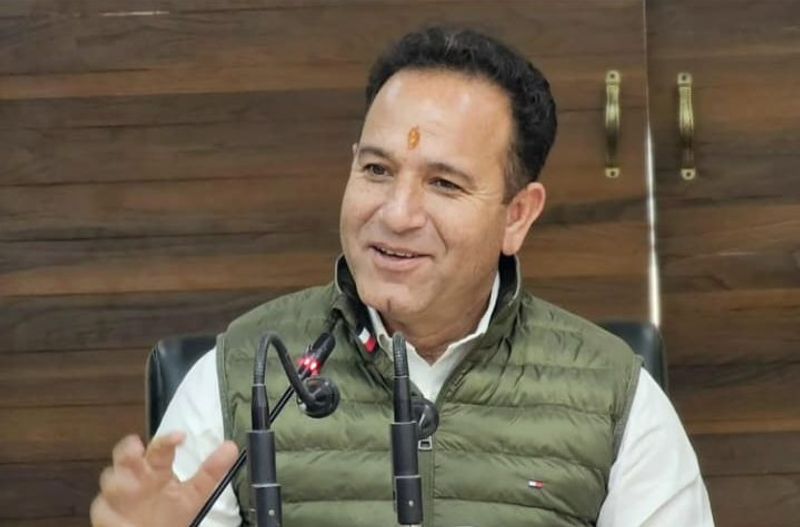
Recently, at a press conference in Shimla, Narendra Sharma, UFBU Himachal Pradesh Convenor and President of the Bankers United Forum of Himachal Pradesh, said the unions were compelled to resort to industrial action because commitments made in an agreement with the government more than two-and-a-half years ago had yet to be implemented.
“Our main demand is the implementation of a five-day banking week, with Saturday and Sunday as weekly holidays. The second major issue is the withdrawal of the new Performance Linked Incentive scheme, which has been implemented unilaterally by the Department of Financial Services,” ANI quoted Sharma.
“More than two-and-a-half years have passed since the agreement was signed, but the commitments made in it have still not been implemented. We have therefore been left with no option but to resort to agitation,” he said.
Right now, two Saturdays (the second and fourth of the month) are holidays; the remaining Saturdays (the first, third and fifth) are working days. “We have agreed to extra working hours from Monday to Friday, and so we have asked for all Saturdays to be holidays,” he said.
According to unions, banks agreed in principle to move to a five-day work week in 2015, when the second and fourth Saturdays were declared holidays. The issue was revisited in 2020 and later formalized through a wage settlement signed on 8 March 2024.
Under this arrangement, bank employees agreed to work an additional 40 minutes each day, Monday to Friday, in exchange for declaring all Saturdays as holidays.
As reported, the strike was deferred after a meeting between the Indian Banks’ Association (IBA) and the UFBU at 9:30 pm on Sunday.
According to the UFBU circular, “A high-level committee of IBA and UFBU will be formed immediately to discuss the demand for declaring remaining Saturdays as holidays and explore alternatives to arrive at a solution acceptable to all stakeholders and customers.”
On the Performance Linked Incentive (PLI) scheme for Scale IV and above officers, the two sides agreed that discussions could start with the IBA proposing modifications to the government to address observations raised by unions and associations.
The circular stated that the residual issues mentioned in the minutes dated 8 March 2024 will also be taken up for discussion for early resolution.
“In view of the above, it was agreed by the UFBU that the proposed agitational programmes and strike actions will be deferred,” the circular further stated.
(Straight Talk Communications I Inputs from Agencies)