



J&K High Court restores dismissal of police constable accused of having militant links
“President, Governor can dismiss employee without inquiry on Cabinet advice if State security is at stake.”
STC NEWS DESK
SRINAGAR, MAY 31 (STC): Acting on the aid and advice of the Council of Ministers, the President or a Governor can dismiss a government employee without holding a departmental inquiry where they are satisfied that such an inquiry is not expedient in the interest of the security of the State.
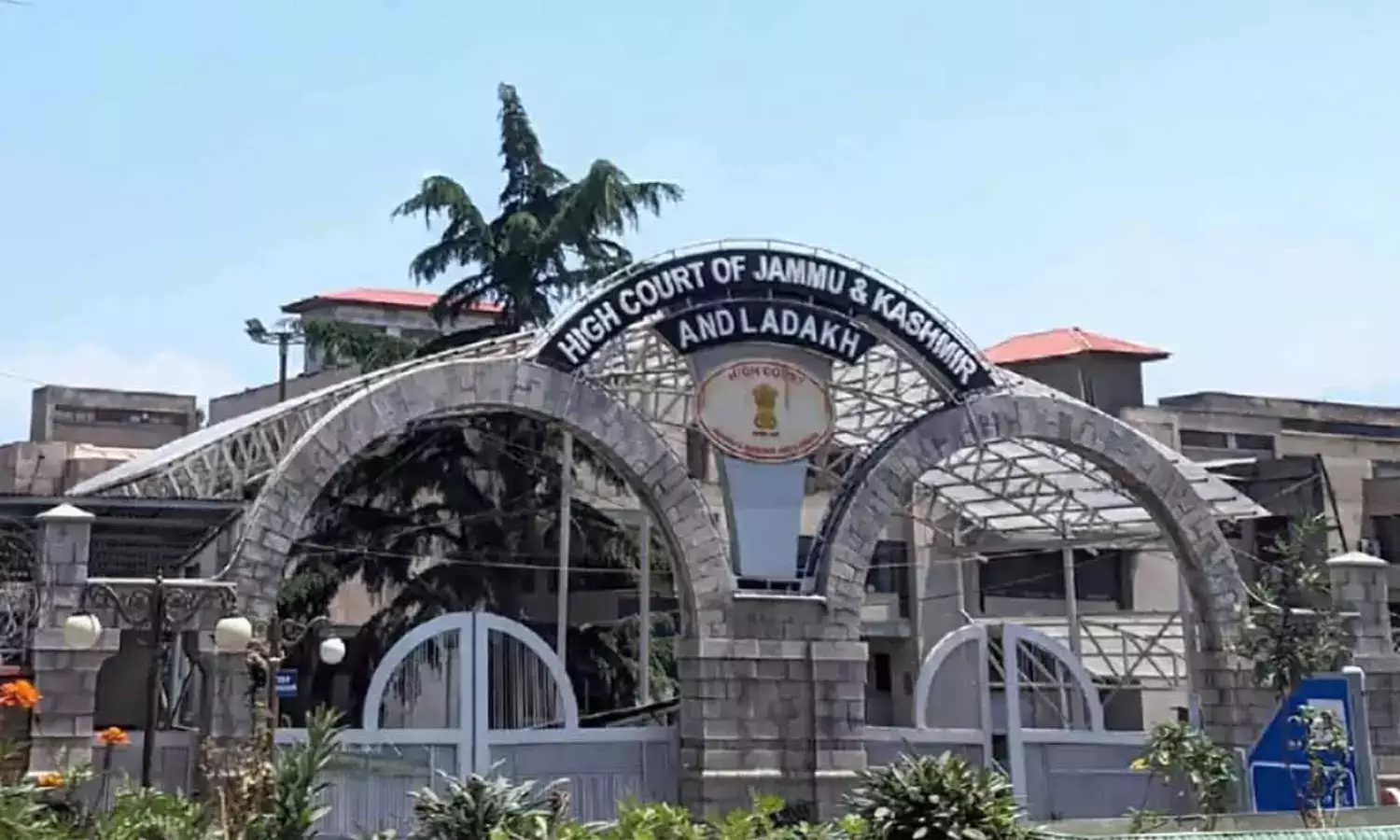
The Jammu and Kashmir and Ladakh High Court stated this in a ruling after a Division Bench of Justice Sanjeev Kumar and Justice Sanjay Parihar allowed an appeal filed by the erstwhile State of Jammu and Kashmir and restored the dismissal of a police constable accused of having militant links. The court set aside a 2011 Single Judge order that had quashed his removal from service.
The Bench said the satisfaction contemplated under Section 126(2)(c) of the Constitution of Jammu and Kashmir, which corresponds to Article 311(2)(c) of the Constitution of India, is “not personal satisfaction but the satisfaction of the Head of the State or Government acting on the aid and advice of the Council of Ministers”.
“For the application of clause (c), the satisfaction of the President or the Governor, as stated above, is not personal satisfaction but the satisfaction of the Head of the State or Government acting on the aid and advice of the Council of Ministers,” the court said.
The court added that such satisfaction regarding the expediency of holding an inquiry is final and that the President or Governor is “not supposed to disclose the facts on which it is based either to the civil servant concerned or to any authority”.
The case arose from the dismissal of Ghulam Mohammad Tantray, a police constable who was arrested in 2004 in connection with a case registered at Police Station Zadibal, Srinagar, under Section 120-B RPC and provisions of the Arms Act. Departmental proceedings were initially started against him, but the government subsequently invoked Section 126(2)(c) and dismissed him from service on the ground that his activities were prejudicial to the security of the State.
Tantray challenged the dismissal before the High Court. In 2011, a Single Judge set aside the order, holding that the government had not disclosed sufficient reasons for abandoning the departmental inquiry midway and resorting to the constitutional exception.
Allowing the government’s appeal, the Division Bench held that the writ court had failed to examine the material available on record and described the earlier judgment as “sketchy and seriously flawed”.
The Bench said the constitutional position was well settled that while a government servant ordinarily cannot be dismissed, removed or reduced in rank without a departmental inquiry, Article 311(2)(c) creates an exception where an inquiry may be dispensed with in the interest of the security of the State.
Explaining the scope of the provision, the court observed that the expression “security of the State” cannot be given a narrow meaning.
“The security of the State in clause (c) is not confined to the security of the whole State, nor is it confined to armed rebellion or revolt; it may be open or clandestine,” the Bench said.
It further observed that “disaffection in armed, paramilitary, or police forces is an act that affects the security of the State”.
“The involvement of the Government machinery, particularly of those serving in security forces like the J&K Police, in subversive activities aimed at disintegrating the country undoubtedly affects the security of the State,” the court said.
The Bench relied on decisions of the Supreme Court, including Shamsher Singh v State of Punjab, Union of India v Tulsiram Patel and A.K. Kaul v Union of India, to hold that constitutional powers under Article 311(2)(c) are exercised by the President or Governor on ministerial advice and not in their personal capacity.
Referring to Tulsiram Patel, the High Court noted that the President or Governor may dispense with an inquiry if they are satisfied that holding one would not be “advantageous or fit or proper or suitable or politic in the interest of the security of the State”.
The Bench also clarified that while orders passed under Article 311(2)(c) are subject to judicial review, the scope of such review is limited.
Quoting Supreme Court precedent, the court said judicial review would be available where the satisfaction of the President or Governor is vitiated by mala fides or based on wholly extraneous or irrelevant considerations.
At the same time, it stressed that courts cannot examine the adequacy of the material relied upon by the government or sit in judgment over questions of policy and expediency.
“Courts do not sit in appeal over the sufficiency of material upon which the competent authority draws its satisfaction,” the Bench observed.
Examining the record, the court found that material had been placed before the Cabinet showing that the respondent had allegedly established contact with a Pakistani militant, arranged a hideout for him and that searches conducted during the investigation had led to recovery of two hand grenades from his rented accommodation.
The judgment records that a committee headed by the then Chief Secretary had examined the matter and that the Home Department subsequently prepared a detailed memorandum for consideration by the Cabinet.
According to the memorandum, a regular inquiry was considered inexpedient because the employee allegedly had militancy-related connections, witnesses might not come forward to depose against him for fear of reprisals, and inquiry officers could face threats to their lives, families and property.
The Cabinet approved the proposal and recommended action under Section 126(2)(c), following which the matter was placed before the Governor.
Holding that the material before the government justified the invocation of the constitutional provision, the Bench said there was “no warrant or justification” for interference with the dismissal order.
Allowing the appeal, the court set aside the Single Judge’s judgment and dismissed the writ petition filed by the former constable.
(Straight Talk Communications I Source KDC)