



Mata Kheer Bhawani: Where Faith, Memory and Kashmir’s Composite Culture Converge
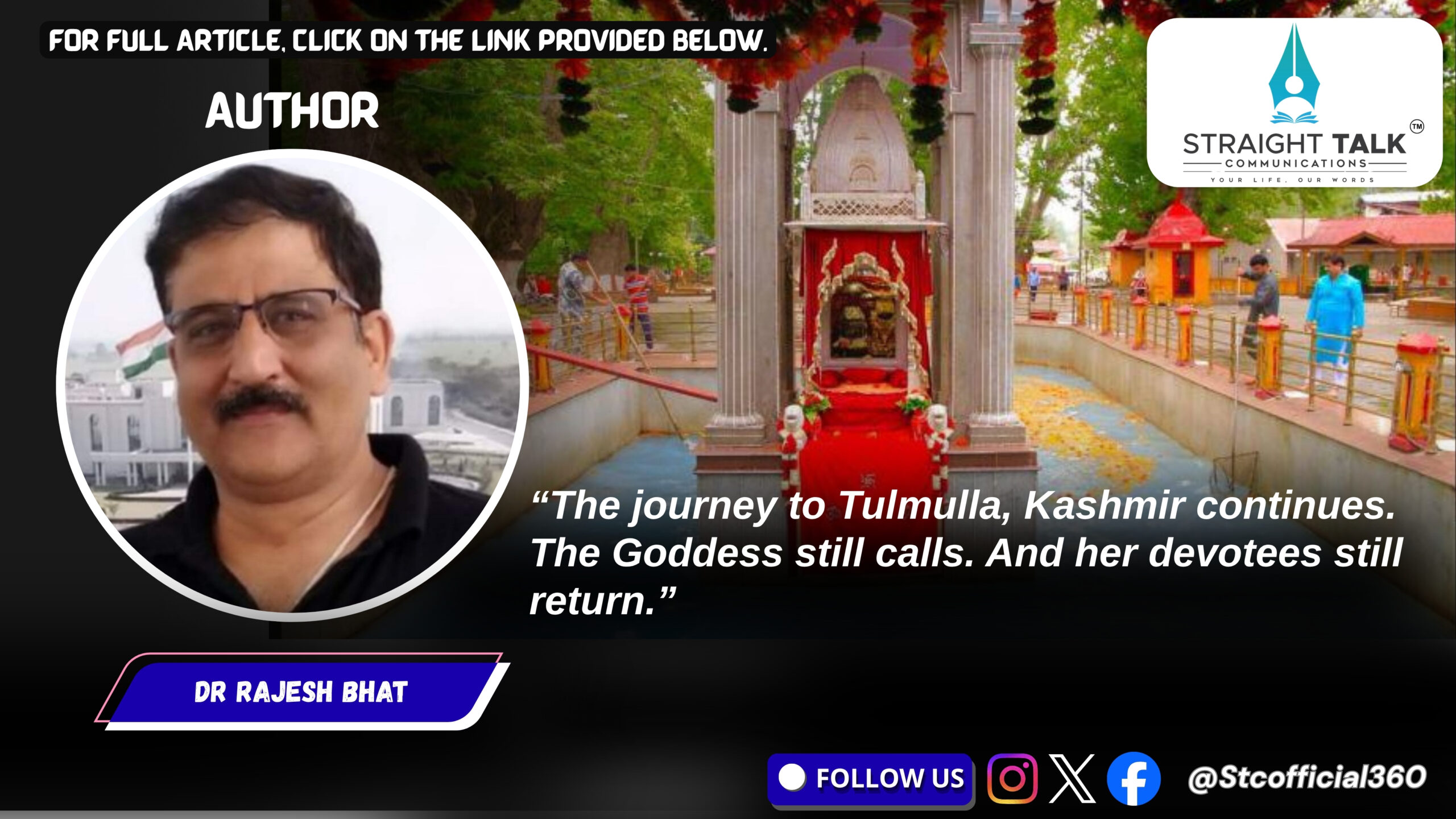
“The journey to Tulmulla, Kashmir continues. The Goddess still calls. And her devotees still return.”
Dr Rajesh Bhat
Few places in Kashmir embody the Valley’s centuries-old composite culture as profoundly as the shrine of Mata Kheer Bhawani at Tulmulla. For generations, this sacred abode of Mata Ragnya Devi has stood not merely as a place of worship for Kashmiri Pandits but as a symbol of coexistence, shared traditions and mutual respect between communities.
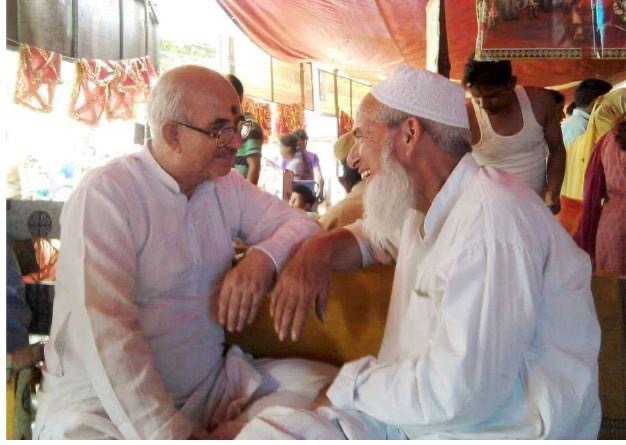
One of the most remarkable aspects of the Mata Kheer Bhawani pilgrimage has been the support and affection extended by local Muslims. Long before the exodus of 1990 and even after that, Muslim neighbours and traders would help pilgrims with flowers, milk, earthen pots and other offerings required for worship. Even today, many local Muslim families consider the Mela a part of the Valley’s shared heritage. It is often said that some among them observe traditional restrictions associated with the shrine and avoid entering its precincts after consuming meat, reflecting a unique reverence that transcends religious boundaries.
The shrine has always symbolised Kashmir’s composite culture. The annual Mela is perhaps one of the few occasions when memories of coexistence still find visible expression. Local residents participate in facilitating the pilgrimage, helping visitors and ensuring that the sacred atmosphere of the shrine is maintained. Their role in preserving and protecting the shrine through difficult decades remains an important chapter in the shrine’s history. Through decades of turmoil, these local residents continued to watch over the shrine, preserving a bond that transcended religious identities.
The passage of time has, however, created a new challenge. An entire generation of Kashmiri Muslims born after 1990 has grown up without witnessing the vibrant social and cultural interactions that once defined the annual Mela. Many have never seen the Valley’s composite traditions in their full expression. It is, therefore, important that parents, elders and community leaders pass on these stories to younger generations. They need to know why places like Mata Kheer Bhawani at Tulmulla, the shrine of Sheikh-ul-Alam (Nund Rishi) at Charar-e-Sharief, Baba Rishi at Tangmarg and other shared spiritual spaces have occupied a unique place in Kashmir’s collective consciousness. These are not merely religious sites; they are symbols of a civilizational ethos where people of different faiths found common ground in reverence, compassion and mutual respect. In an era increasingly marked by divisions, such places remind Kashmiris of a time when devotion united rather than divided, and when the Valley’s spiritual heritage belonged to all who cherished it.
The Sacred Spring and its mysterious colours
At the heart of the shrine lies the sacred spring, whose waters have fascinated devotees for centuries. Kashmiri tradition holds that the colour of the spring reflects the destiny of the Valley. Clear blue or milky hues are regarded as auspicious, while dark shades are considered ominous. Whether viewed as faith, folklore or coincidence, devotees have long associated changes in the spring’s colour with major events that shaped Kashmir’s history.
Many pilgrims recall that the waters reportedly turned unusually dark during periods of great uncertainty and conflict. Such accounts are frequently linked with the Indo-Pak wars of 1965 and 1971, the turbulent events of 1989 that preceded the exodus of Kashmiri Pandits, and the Kargil conflict of 1999. In each case, devotees interpreted the darkening of the spring as a warning from the Divine Mother of difficult times ahead.
This year too, during June 22, 2026 Mela, some pilgrims expressed concern over the appearance of the spring water. Unlike the brighter shades witnessed in several previous years, devotees observed a little darker hue which, according to traditional belief, is not regarded auspicious. Whether one accepts such interpretations or not, the discussions around the spring once again underscored the profound emotional and spiritual relationship devotees share with the shrine.
The annual Mela has survived wars, political upheavals and displacement because it represents far more than a religious gathering. For Kashmiri Pandits, Tulmulla is an emotional homeland. Every Chinar tree, every pathway and every ripple in the sacred spring evokes memories of generations that worshipped here before them.
When Tulmulla fell silent
The events of 1990 transformed the pilgrimage forever. The mass displacement of Kashmiri Pandits almost emptied the Valley of much of its indigenous Hindu population, and the once-crowded pilgrimage nearly disappeared. Between 1990 and 1996, only a few devotees, often travelling under extraordinary security arrangements, managed to visit the shrine. The festive atmosphere gave way to silence. The familiar caravans of pilgrims were gone, and the Mela became a poignant reminder of a community’s sudden uprooting .Yet faith refused to fade.
Recreating Tulmulla in Exile
As displaced families settled across India, they sought to recreate a piece of Tulmulla wherever they lived. Temples dedicated to Mata Kheer Bhawani emerged in Jammu, Delhi, Ghaziabad, Faridabad and many other cities. These shrines helped preserve tradition among younger generations born away from Kashmir. More recently, the global Kashmiri Pandit diaspora has taken this effort overseas, with land reportedly acquired in California for establishing a shrine dedicated to Mata Kheer Bhawani.
Yet every devotee acknowledges a truth: no replica can replace Tulmulla, Kashmir.
The original shrine remains the spiritual centre of devotion. It is here that memory resides. It is here that generations offered prayers. It is here that displaced families still seek a sense of belonging.
The pilgrimage began witnessing a revival in 1997 as conditions permitted larger numbers of devotees to return. Since then, attendance has steadily grown. Today, the Mela serves as one of the largest annual gatherings of Kashmiri Pandits anywhere in the world.
For many, it has also become a reunion of lives interrupted by history. Friends separated during the turmoil of 1990 meet again beneath the Chinars after decades. Former classmates rediscover one another. Neighbours exchange memories of vanished mohallas and ancestral homes. Every year, Tulmulla becomes a living archive of remembrance.
The Mela inevitably attracts political attention. Leaders from virtually every political party, irrespective of ideology, visit the shrine on the festival day. Cameras record their presence and statements dominate headlines. Yet the essence of the pilgrimage lies elsewhere—in the quiet prayers of ordinary devotees who travel hundreds of kilometres simply to bow before the sacred spring.
Given the shrine’s symbolic significance, extensive security arrangements are now an inseparable part of the annual event. Security forces secure routes, monitor vulnerable areas and maintain a visible presence throughout the pilgrimage. Over the years, there have been isolated militant attacks, threats and attempts to disrupt the atmosphere surrounding the Mela. Yet such incidents have never succeeded in breaking the determination of devotees to return.
The Eternal Call of Tulmulla
Every Jyeshtha Ashtami, as chants echo through the Chinar grove and devotees offer milk and flowers to the Goddess, Tulmulla reminds Kashmir of something deeper than politics and conflict. It reminds the Valley of a shared heritage, of friendships that survived displacement, of local guardians who protected a sacred space, and of a faith that remained unbroken even in exile.
For the Kashmiri Pandit community, Mata Kheer Bhawani is not merely a shrine. It is memory sanctified. It is exile seeking reunion. It is the enduring voice of a homeland calling its children home.
That is why, despite the passage of decades, despite displacement across continents, despite the construction of countless replicas, the journey to Tulmulla, Kashmir continues. The Goddess still calls. And her devotees still return.
(STRAIGHT TALK COMMUNICATIONS EXCLUSIVE. Dr. Rajesh Bhat is a senior journalist, author and media analyst with a PhD in Strategic Media Affairs. He has extensively written on broadcasting, media policy and cultural heritage, with a particular focus on Jammu and Kashmir. He can be approached at: raajbhat@gmail.com)