


Beyond Borders: The Language of Love and Compassion
Beyond every border, the deepest truth remains unchanged: We are all members of one human family.
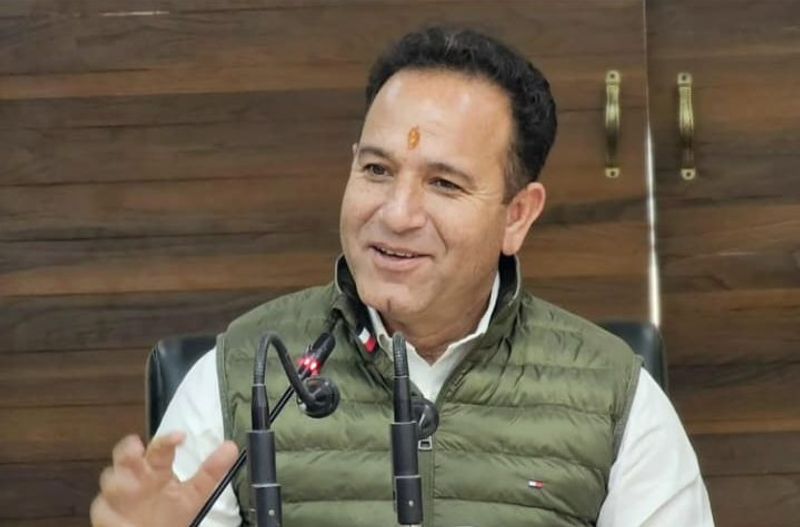
Anil Kumar Sharma
Different societies often carry ideas about one another that have been narrated, projected or repeated over generations. We form impressions through books, media, conversations, political narratives and second-hand accounts. Gradually, we begin to believe that people in another country think differently, feel differently and live by values entirely separate from our own.
But reality is often very different from what we have been told.
It is only when we travel beyond familiar surroundings, meet people personally and witness their lives with our own eyes that many of these assumptions begin to change. Direct experience replaces imagination with understanding. What appears distant from afar may feel remarkably familiar when seen closely. Beneath differences in language, dress, customs and social practices, we often discover the same emotions, concerns, hopes and human values.
My recent visit to the United States for my son’s wedding gave me one such experience. With the blessings of our elders and the grace of the Almighty, we solemnised the wedding of my son, Anmol, with Sarah in the USA. It was a moment of immense happiness and gratitude for our family. At the same time, it made me pause and see life from a broader perspective.
I arrived carrying the familiarity of India—its traditions, relationships, rituals and ways of celebrating important occasions. I grew up in a country where weddings are far more than ceremonies. They bring together families, relatives, friends and sometimes entire communities. They are occasions of ritual, music, laughter, blessings and, often, tears.
In our tradition, marriage is a sacred commitment—not merely for today, but for a lifetime. We often describe it as “janam janam ka bandhan,” a bond of companionship, care and mutual respect through every stage of life.
At the American wedding, I heard the priests express much the same idea.
The language, setting, clothing and rituals were different. Yet the spiritual message centred on familiar values: purity of relationship, love, patience, respect, companionship and the promise to stand by one another through life’s changing seasons.
The couple was reminded that marriage is not only about sharing happiness when life is easy. It is also about holding each other’s hand through hardship, understanding one another’s weaknesses, respecting differences and remaining together through every challenge.
For a moment, I felt that the words were different, but the prayer was the same.
The blessings of the Almighty were given great importance, just as they are in our own traditions. This reminded me that human beings may make promises, but we seek divine grace to give us the wisdom, strength and compassion to honour them throughout life.
As I watched my son begin a new chapter in an unfamiliar setting, I discovered something deeply familiar beneath the visible differences.
A mother watching her child marry carries the same pride and emotion whether she is in Jammu or Wisconsin. A father feels the same quiet happiness when his child takes an important step in life. Families everywhere want the same things for their children: happiness, companionship, security, respect and a fulfilling future.
That is one of humanity’s most beautiful truths.
Our differences are visible, but our similarities are felt.
At the wedding, people from different backgrounds came together with warmth and affection. Some were meeting us for the first time, yet their smiles, conversations and hospitality made us feel at home. Their kindness reminded me of the warmth I have experienced countless times in India.
The expression was different, but the feeling was the same.
I was especially moved by the affection shown by Sarah’s family. The elders from both generations came forward to bless Anmol and Sarah. Their presence reflected the importance of family and the continuity of values across generations. Though their customs were different from ours, their blessings carried the same love, hope and concern that Indian elders express at a wedding.
They also showed genuine curiosity about our culture and traditions. They wanted to understand the meaning behind our customs, the significance of our blessings and the values we associate with marriage. This curiosity was not merely about ceremony; it was a sincere desire to know and respect the family and culture Anmol was bringing into their lives.
That exchange touched me deeply. It showed that cultural differences need not create distance. When approached with openness and respect, they become an opportunity for families to learn from one another and grow closer.
In India, we may touch the feet of elders and seek their blessings. In another culture, respect may be expressed through an embrace, a handshake or a few heartfelt words. The rituals may vary, but the purpose remains unchanged: two people begin a life together, surrounded by those who wish them happiness, strength and lasting companionship.
This made me reflect on how often geography, religion, language, nationality and custom shape our understanding of one another.
Perhaps we should look beyond them.
A wedding reveals humanity in its simplest form. People gather not because they share identical beliefs or lifestyles, but because they share happiness. They laugh together, bless the couple, recall their own journeys and hope that the newlyweds will build a beautiful life.
Love needs no translation. Compassion needs no interpreter. Happiness needs no passport.
Having lived in India for decades and now spending time in America, I could see this more clearly. The two societies have developed different customs and social practices, but their basic human aspirations remain remarkably similar.
Every parent wants a child to flourish. Every family wants to be loved and respected. Every person seeks companionship in happiness and support in difficulty. Every society celebrates birth, marriage, achievement and togetherness in its own way.
The wrapping may differ, but the gift is the same.
This experience also reminded me that globalisation is about more than markets, technology, business and the movement of people. Its deeper promise lies in bringing ordinary human beings closer. Families separated by oceans can gather, cultures can meet and relationships can grow beyond geographical boundaries.
My son’s wedding was therefore more than a personal milestone. For me, it became a small lesson in humanity.
I saw an Indian family and an American family come together. I saw different traditions share one celebration. I saw people raised in different environments rejoice in the happiness of two young people with the same warmth and affection.
Somewhere in that celebration, I realised that the world may not be as divided as we often imagine.
We create boundaries through geography, politics and social identity. Nature does not place such boundaries in the human heart.
The smile of a happy parent looks the same everywhere. A mother’s tears are neither Indian nor American. The joy of a newly married couple belongs to no single culture. A father’s concern for his children requires no nationality.
Humanity is our first identity; everything else comes afterwards.
India has taught me the value of family, hospitality, relationships and compassion. America reminded me that these values belong to no one society. They exist everywhere, expressed through different customs and social practices.
That is worth remembering in an increasingly divided world.
We do not have to become culturally identical to understand one another. Nor must we abandon our traditions to appreciate someone else’s. Diversity becomes meaningful when we respect differences while recognising the common emotions beneath them.
My experience left me with a simple thought: the world may speak many languages, worship in different ways, dress differently and celebrate differently, but love, compassion and human emotion remain universal.
They are the bridges that connect continents, cultures and generations.
As I watched two families come together across borders, I understood that the wedding was more than a ceremony. It was a quiet reminder of something humanity has always known, yet often forgets:
We may celebrate life differently, but we feel it together.
The Takeaway
Let our cultures remain distinct, but let our compassion be shared. Traditions give us roots, and differences give us identity; love is the bridge that carries us beyond every border.
“The Almighty may give us different languages, traditions and ways of life, but He gives every heart the same language of love. When two hearts meet with faith, respect and compassion, cultures become bridges, not boundaries.”
May we preserve our unique traditions while opening our hearts to one another. Beyond every border, the deepest truth remains unchanged:
We are all members of one human family.
(STRAIGHT TALK COMMUNICATIONS EXCLUSIVE. The author is a Columnist | Former Banker | Social Commentator. Email: anil.kumar.sharma9419@gmail.com)