



Two Nations, One Civilisation: Let History Be Our Teacher, Not Prison

India can remain India. Pakistan can remain Pakistan. Bangladesh can remain Bangladesh. Every country can retain its sovereignty, identity and national interests.
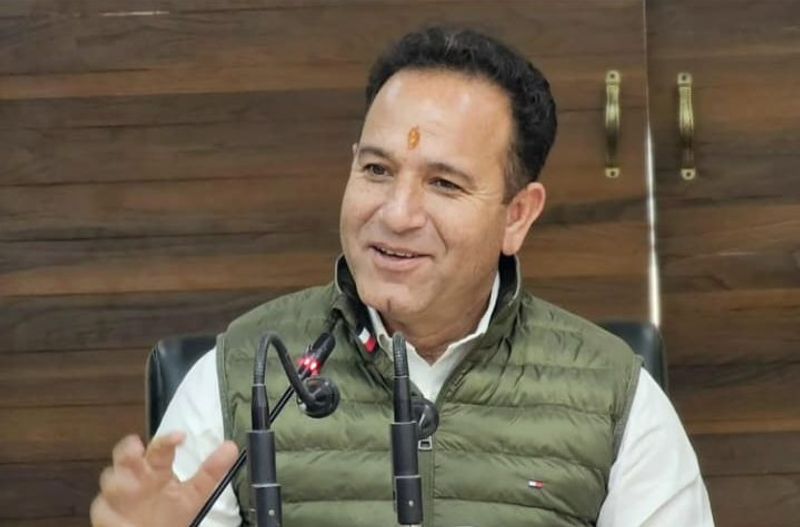
Anil Kumar Sharma
August has a different meaning in the history of the Indian subcontinent. In the middle of August 1947, two nations emerged from the same civilisational soil, carrying two different political visions. One chose to build itself around a constitutional, democratic and plural idea of India. The other emerged from the political conviction that Muslims of the subcontinent required a separate political homeland to safeguard their political future.
Nearly eight decades have passed. Generations have been born after Partition who never saw British India, never experienced the freedom struggle and never witnessed the trains, migrations and human tragedies of Partition. Yet, strangely, we continue to carry the political anxieties and emotional baggage of that generation. Perhaps the time has come to remember 1947 with honesty, but to stop allowing 1947 to dictate our future.
The British came to the Indian subcontinent as an imperial power. They had no commonality with the people of this land in religion, language or culture. They came to rule, and like every imperial power, they pursued their own political and economic interests. Their administrative and legal institutions left a lasting imprint, but their economic policies also extracted enormous resources and weakened several traditional economic structures. Their system of political representation increasingly classified people through community identities, sometimes deepening divisions that already existed in society.
We should neither romanticise colonial rule nor reduce the entire history of Partition to a single British conspiracy. The British pursued their imperial interests; Indian political leaders pursued their competing visions. The tragedy was that these interests, ambitions, fears and political calculations eventually converged into a settlement whose greatest human cost was paid by ordinary people.
The leaders of that period were people of extraordinary political ability. They were lawyers, administrators, intellectuals, mass leaders and statesmen. But they were also politicians, and politicians, like human beings everywhere, have ambitions. Some wanted constitutional safeguards for their communities, some wanted a particular distribution of political power, some were driven by genuine fears about the future, while political opportunities and personal ambitions could not always be separated from public principles.
This is where we need to understand the difference between a lawyer’s argument and a statesman’s responsibility. A brilliant lawyer can construct a compelling case and win an argument. But a statesman must also ask what happens to society when that argument becomes reality.
Muhammad Ali Jinnah was an exceptionally accomplished barrister and political leader. His constitutional arguments were powerful, and his political strategy ultimately succeeded in creating Pakistan. But history should not be judged merely by whether an argument won the case. Winning a political case and creating a harmonious future for generations are two different achievements.
The idea that Hindus and Muslims constituted separate political nations did not emerge overnight. It developed through a complex interaction of colonial policies, communal representation, political competition, constitutional disagreements and growing mistrust between major political organisations. Therefore, it would be too simplistic to say that the British alone created the Two Nation Theory. But it would be equally naïve to ignore how colonial political arrangements institutionalised community identities and provided fertile ground for political mobilisation along communal lines.
The British were leaving. Indian political leadership was negotiating the future. Political arguments gradually transformed differences between communities into competing claims over territory and sovereignty. The tragedy of Partition was not that differences existed. The tragedy was that political differences eventually convinced millions that those differences could no longer coexist within one political home.
There is another question that deserves our attention. If religious difference alone required separate nations, why had the subcontinent not been divided into religious nation-states during the many centuries when Muslim rulers governed large parts of it? The Mughal rulers, for example, governed a deeply diverse society. They did not create the modern proposition that Hindus and Muslims must necessarily live in separate sovereign nations.
This does not mean that the past was free of conflict. It was not. There were wars, persecution, political rivalries and social inequalities. But there was also coexistence, cultural exchange, interdependence and the creation of a shared civilisation. The map of 1947 was a product of twentieth-century political circumstances; it was not a map waiting to be discovered in the ancient history of the subcontinent.
The remarkable thing about the Indian freedom movement was that many of its leading figures imagined a nation larger than any one community. Gandhi spoke of an India where different faiths could live together. Nehru imagined a modern, scientific and democratic India. Sardar Patel worked towards political integration. Dr B. R. Ambedkar gave constitutional strength to liberty, equality and justice. Maulana Abul Kalam Azad represented an Indian nationalism that did not require Muslims to surrender their religious identity.
These leaders were not perfect. They disagreed among themselves. They had political ambitions and made mistakes. But the national idea they helped institutionalise was much larger than any individual leader. India was not conceived as a country where everyone would become the same. It was conceived as a country where different people could remain different and still become equal citizens.
I experienced the strength of this shared identity personally when I travelled outside our part of the world. During my stay in the United States, I noticed something that made me reflect deeply on the subcontinent. People from India, Pakistan, Bangladesh and other parts of South Asia often gather around the same restaurants, grocery stores, cultural events and businesses carrying the broad description of “South Asian”.
The moment we step outside our own geographical and political environment, something changes. The person standing next to us may carry an Indian passport, another a Pakistani passport and someone else a Bangladeshi passport. Yet nobody necessarily begins the conversation by asking which side of the Partition border their family came from. They share food, recognise the music, understand the humour, discuss cricket and celebrate their respective ancestry. At the same time, they often proudly describe themselves as South Asian.
Distance sometimes teaches us what proximity makes us forget: our political borders are real, but so is our shared civilisational identity.
There is an equally fascinating illustration from our own cultural history. In 1904, long before Partition became a political reality, Allama Muhammad Iqbal wrote Tarana-e-Hind, beginning with the immortal words, “Sare Jahan Se Achha Hindustan Hamara.” The poet who later became closely associated with Muslim political thought had, at that time, written a song celebrating Hindustan.
That is not a contradiction to be hidden. It is history to be understood. It reminds us that political identities evolve with circumstances, that political thinking can change and that the same individual can experience different phases of political consciousness.
There is also the interesting historical reference to Jagan Nath Azad, a Hindu poet associated with the early cultural history of Pakistan, who is credited with writing an early unofficial anthem or Tarana for Pakistan around independence. Whatever debates may surround the precise historical details of that episode, its symbolism remains striking.
A Muslim poet wrote an ode to Hindustan before Partition, while a Hindu poet was associated with an early cultural expression of Pakistan. History is rarely as neatly divided as the borders we later draw upon maps.
India and Pakistan subsequently took different political journeys. India chose constitutional democracy and attempted to accommodate enormous religious, linguistic and cultural diversity within one political framework. Pakistan began with the idea of a Muslim homeland but subsequently discovered that religion alone could not resolve questions of language, region, political representation and economic equality.
The emergence of Bangladesh in 1971 was perhaps one of the strongest historical reminders that a shared religion cannot by itself erase differences of language, geography, political rights and economic aspirations. This should not be used to score a political point against Pakistan. It should be treated as a lesson for the entire subcontinent.
A nation is not sustained by identity alone. It survives when its people feel that they have justice, dignity, equality, representation and a stake in its future.
Today, India, Pakistan and Bangladesh have their own identities, flags, governments and political interests. We must accept this reality. There is no wisdom in dreaming about reversing history. There is equally little wisdom in continuously reopening the wounds of Partition to create political divisions in the present.
The dead cannot be brought back. The borders cannot be wished away. History cannot be rewritten. But the future remains unwritten.
Our shared inheritance is not merely religion or language. It is food, music, poetry, architecture, folklore, literature, rivers, mountains, trade routes and memories. It is the poetry of Ghalib and Iqbal, the songs of the subcontinent, the stories of our grandparents, the traditions of village life and the cultural habits that do not stop at political borders.
We may worship differently. We may speak different languages. We may belong to different sects. We may interpret history differently. But we remain connected by a civilisation that existed long before the borders drawn in 1947.
Perhaps this is where our future lies.
We should not glorify every decision taken by the leaders of 1947. Nor should we condemn them from the comfort of 2026 without understanding the circumstances in which they acted. They were human beings living through an extraordinary political crisis. They had their beliefs, fears and ambitions. They made arguments to win political battles. Some succeeded and some failed. But ordinary people carried the greatest burden of their decisions.
Our responsibility today is different because we have the benefit of hindsight. We know the consequences of Partition. We know that religion alone cannot guarantee political stability. We know that linguistic and regional aspirations cannot simply be suppressed. We know that democracy requires institutions, justice and equal citizenship. And we know that no civilisation can progress indefinitely by fighting with itself.
We have inherited the borders; we do not have to inherit the bitterness.
Europe offers an important lesson. Countries with different languages, cultures and national histories fought some of the bloodiest wars in human history. Eventually, they recognised that permanent hostility was destroying the very civilisation they were trying to protect. They did not erase their identities. France remained France. Germany remained Germany. Italy remained Italy. They created institutions for cooperation.
Why should South Asia not learn something from that experience?
India can remain India. Pakistan can remain Pakistan. Bangladesh can remain Bangladesh. Every country can retain its sovereignty, identity and national interests. But the region can still develop a framework for cooperation.
Trade can connect us. Culture can connect us. Education can connect us. Tourism can connect us. Science can connect us. Climate and water management can connect us. The fight against poverty can connect us. And above everything else, our common humanity can connect us.
Different nations do not have to become one nation in order to become one community of shared human interests.
The subcontinent possesses extraordinary human energy, natural resources, intellectual talent and cultural richness. Imagine what could happen if even a fraction of the money, energy and political attention spent on confrontation were redirected towards education, healthcare, employment, science, technology and regional development.
Imagine a South Asia where young people know the history of their neighbours without being taught to hate them. Imagine a region where visiting another South Asian country is an opportunity to discover a shared civilisation rather than an exercise in political suspicion. Imagine our children growing up knowing that patriotism does not require hatred of another country.
Patriotism should teach us to love our own home; it should not teach us to hate our neighbour’s home.
India will complete one hundred years of independence in 2047. That should not merely be an occasion for celebration. It should be an occasion for introspection.
The question should not only be how powerful we have become. The question should be how humane we have become.
The real success of the subcontinent will not be measured only by GDP, missiles, skyscrapers or technological achievements. It will be measured by whether a child can receive a good education, whether a young person can find meaningful employment, whether citizens can live without fear, whether minorities feel secure, whether institutions remain strong and whether nations can coexist without continuously preparing for conflict.
We should accept the historical reality of Partition. We should remember its victims. We should learn from the political mistakes, fears and ambitions that brought it about. But we must not allow the politics of that time to become the destiny of generations yet unborn.
Partition was a historical fact. It does not have to remain a permanent psychological partition of our civilisation.
The subcontinent has survived empires. It has survived invasions. It has survived colonialism. It has survived Partition. Now it must learn to overcome its own prejudices.
Perhaps the greatest vision for the next hundred years is not to recreate the past but to build something the past never achieved: a region where different nations, religions, languages and sects can remain proudly themselves while standing together for the larger cause of humanity.
Let our flags remain different, but let our humanity be common.
Let our languages remain different, but let our aspirations speak the same language.
Let our religions remain different, but let justice become our common faith.
We cannot change what happened in 1947. But we can decide what 2047 will look like.
History gave us borders. Our wisdom must give us bridges. Partition divided a land; it need not divide the humanity that lives upon it.
Let history remain our teacher, not our prison. Let Partition remain a chapter, not our destiny. And let this ancient civilisation rise again—not against one another, but together for humanity.
(STRAIGHT TALK COMMUNICATIONS EXCLUSIVE. The Author is Columnist | Former Banker | Social Commentator)