




WHAT’S UP: Time to Respond Climate Change Meaningfully Without Delay, Distraction and Denial

The kind of environment – be it political, economic, ecological or social – Kashmir owns today has turned this place ugly.
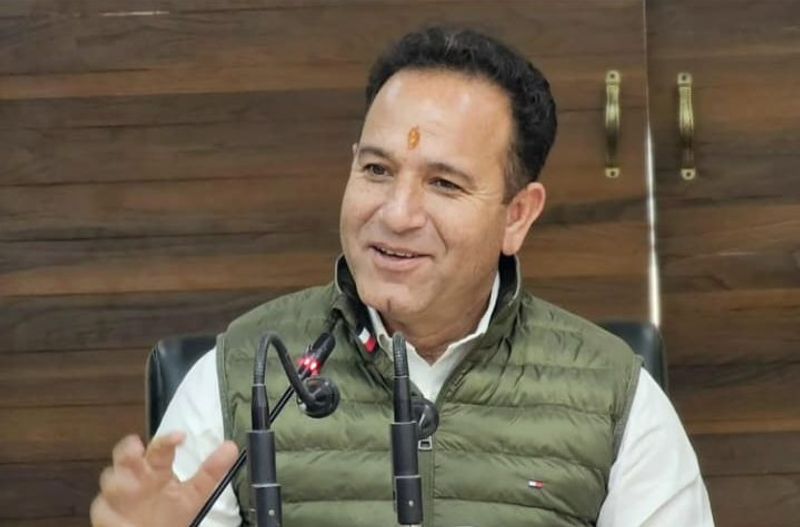
Sajjad Bazaz
World Environment Day is being observed today (June 5) and this year’s theme rightly focuses on climate change. The theme highlights the urgent need to address the climate crisis, and reduce greenhouse gas emissions.
The Earth has been sending us the signals of rising seas, raging wildfires, heatwaves, melting glaciers. Even as we had set a limit of 1.5°C as acceptable level of rising global temperature, we have failed to stop it rising beyond the set limit. Precisely, we are crossing it.
There is no denying the fact that the climate change is a global concern and every global corner is engaged in responding meaningfully to the warnings and targets without being clouded by any more delay, distraction and denial.
In the given situation, the World Environment Day is an opportunity to deliberate upon our region’s (J&K) scenario which is loaded with serious environmental issues and the risks associated with it.
The kind of environment – be it political, economic, ecological or social – Kashmir owns today has turned this place ugly. Amid decades of complexity of political tensions gripping the region, planners and those at the helm of affairs during the course have lost focus on vital issues – deteriorating environment, falling of social & cultural values and slipping of economic potential, leaving the people in turmoil. However, lack of focus on these burning issues may be because of the political tensions which have enveloped the region dominantly during the past decades.
Speaking in the context of deteriorating environment at our place (J&K), among many things, one of the major challenges which we are going to confront in the near future is impact of climate change. The catastrophic floods in September 2014 and a series of devastating cloudbursts in the past few years remains as a constant reminder of the dangers ahead that could be devastating to our human habitation in the region.
I have come across some reports of geo-hydrologists who have warned losing of the Kashmir valley’s only year-round source of water – Kolahoi glacier to global warming. This is shrinking through melting at an alarming rate.
Notably, the glacier feeds the Jhelum river, which drains into the Dal lake, and is main source of making the valley so fertile, besides being source to lagoons in the valley. In normal course, the melting snow in summer keeps the valley water-rich. Since the glaciers like the Kolahoi are fast succumbing to the climate change due to government neglect, we are fast confronting “water stress” situation.
This water-stress has shattered the pristine glory of lagoons like Brari Nambal in heritage city of Srinagar. Today this lagoon, which plays an important role of regulating hydrology of Dal Lake by releasing its surplus waters into river Jhelum, is on the verge of extinction. Encroachments and pollution have almost engulfed it. For almost two decades now, this gateway to downtown Srinagar – Shaher-e-Khaas – is craving for government attention. Even as the issue of restoring the glory of this important lagoon was discussed several times, the lack of will of successive governments aggravated deterioration in its fragile eco-system.
There are scores of similar situations across the state, particularly in the Kashmir valley, where we are losing precious resources to neglect. The current political dispensation several times ‘vowed’ to restore glory of the lagoon only to negate the oath. The government in 2013 had ordered short term conservation measures including immediate cleaning, dredging, expansion and beautification of the lagoon. However, it was paucity of funds which failed the plan. A project of Rs 65 crore for acquiring land and Rs 90 crore for cleaning Brari Nambal was submitted by the Lakes & Water Ways Development Authority (LAWDA) to the then Government. But it never saw light of the day.
A listed corporate had submitted a separate restoration plan of Brari Nambal to the concerned authorities. The expenditure was to be made by the corporate under its corporate social responsibility (CSR) initiative. The amount was to be incurred over a period of 2-3 years depending upon the scope of work. Besides conservation of the lagoon, the corporate had proposed to construct Rose Garden, English Garden, Bogon Velia Garden, Topeyari Garden, French Garden and Lilly Garden in it. It had also proposed a children’s play area, water body with fountains, amphi theatre, walking and jogging tracks, boating and adventure zone court.
But surprisingly, the government authorities dumped the proposal even though they were not going to spend even a penny on the project.
The situation described above should be an eye opener for the authorities discussing plans to preserve the heritage value of the Srinagar city. They don’t need special skill to propose and discuss such heritage projects. What they need is a skill to arrange and manage funds for implementation of the projects. Otherwise it’s always an exercise in futile.
Arranging funds for such projects within the official resources is not possible. Here, let me reiterate, the J&K government should catch hold of corporate Inc. to seek funding of such projects. Our region, despite being badly hurt by conflict, has turned out a most profitable avenue for the corporate world. Now CSR law is in place to make the corporate Inc to repay out of its profits to Kashmiri society.
Our past vis-a-vis Indian Inc reveals that the corporates have always displayed caution whenever they were asked for a support in terms of their investment in the region, particularly in Kashmir. Of course, the kind of security environment we have inherited during the past several decades of the conflict has loaded businesses with huge risk. But mandating CSR has opened a convenient room for their role in the development of communities in this geographically remote location.
Under their CSR banner, the corporate world can be humbly tamed to take up projects like restoration of lagoons abd other water resources, developing infrastructure to negotiate climate change and helping communities to remain water-rich and also seeking their financial support to explore potential of local economy. There are huge gaps in our health, education and power sectors, which are longing for financial support.
Here, the government needs to tailor and launch strategically designed awareness campaigns across the India Inc and global corporates to motivate them to make J&K among their preferred sustainable CSR investment destinations with assured enhanced brand value. To make this programme successful and later sustainable, the government has to set politics aside.
(The author is veteran journalist. He is editor-in-Chief at Straight Talk Communications and Times Link News Magazine)