



When Narratives Divide, Humanity Suffers

Be a human, not a beast; let that remain our truest identity.
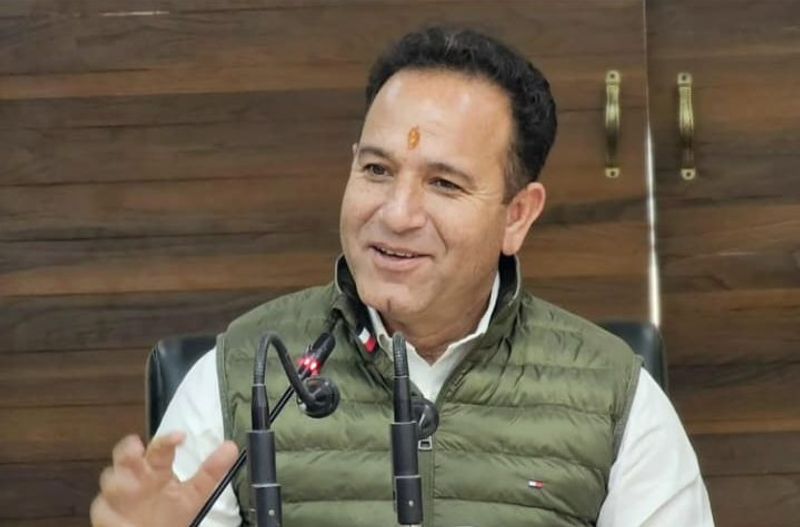
Anil Kumar Sharma
History has seldom spoken in a single voice. Every conflict, every war, every uprising and every revolution has produced more than one narrative. One man’s martyr becomes another man’s extremist. One nation’s freedom fighter becomes another nation’s terrorist. A military operation celebrated as a triumph by one side is remembered as a tragedy by those who buried their loved ones. Truth, therefore, often finds itself trapped between competing versions of the same event.
Perhaps the greatest casualty of every conflict is not merely life or property. It is humanity itself.
In recent days, a film that has generated considerable discussion has once again reminded us how differently the same period of history can be narrated. One perspective highlights allegations of police excesses, illegal detentions and staged encounters, where innocent people were allegedly picked up, branded guilty without due process and eliminated in the name of maintaining order. For those families, justice remains an unanswered question even decades later.
Yet the same period witnessed innocent civilians, public servants, security personnel and ordinary citizens being brutally killed and terrorised by armed groups claiming to fight for a religious or ideological cause. Families lost their sons, daughters, parents and breadwinners for no fault of theirs except being at the wrong place or belonging to the wrong identity.
Can one injustice justify another?
Certainly not.
A democratic State derives its strength not merely from power but from justice and adherence to the rule of law. If the protector abandons the very principles it seeks to defend, the moral distinction between justice and revenge begins to blur. Equally, no movement, however noble its declared objective may appear, can claim legitimacy when innocent blood is shed in its pursuit. No religion blesses violence against innocents. No ideology acquires moral strength through fear. No political objective becomes sacred when human life becomes expendable.
The tears of a grieving mother carry no political colour. A child who loses a father does not ask whether he died wearing a uniform or carrying a weapon. A widow does not measure her sorrow through ideological debates. Pain speaks only one language. Humanity recognises only one loss.
The same contradiction is visible across the world today. Every nation involved in conflict claims to be defending peace. Military strikes are described as acts of self-defence. Opponents are portrayed as aggressors while one’s own actions are presented as unavoidable necessities. Every government justifies its decisions in the name of national security, sovereignty and the larger interest of its people. At the same time, those resisting often describe their struggle as one for dignity, identity, freedom or survival.
The ordinary citizen, however, continues to pay the highest price.
The battlefield may change from one continent to another, the flags may differ and the slogans may be spoken in different languages, but the consequences remain remarkably similar. Homes are destroyed, children become orphans, parents bury their young, and generations inherit memories of fear rather than hope.
History itself teaches us that public perception is rarely permanent. Leaders celebrated during their own lifetime have later been questioned by history, while others once condemned have been viewed differently by subsequent generations. Yet there are also moments when history delivers a near-universal verdict because the scale of human suffering leaves little room for justification.
The example of Adolf Hitler remains one such reminder. During his rise, many admired him for restoring Germany’s confidence after economic hardship and national humiliation. But history ultimately judged his regime not by political achievements but by the unimaginable human suffering, genocide and destruction it unleashed. Time demonstrated that no national ambition, however passionately defended, could justify crimes against humanity.
This is perhaps the most enduring lesson of civilisation. History may debate victories and defeats, but humanity remembers the victims.
Narratives are powerful because they shape collective memory. They influence textbooks, documentaries, speeches and cinema. They determine who is remembered as a patriot, who is called a rebel and who is labelled a terrorist. Often these labels depend upon where one stands, which flag one salutes or which version of history one inherits. Perspective influences judgment, but suffering remains beyond interpretation.
In the age of instant communication, competing narratives travel faster than verified facts. Social media has amplified this tendency. Every event quickly produces two opposing camps, each convinced that it alone possesses the truth. Facts are increasingly filtered through emotion, political belief and personal identity. Dialogue gives way to accusation, and understanding is replaced by outrage.
Perhaps before asking who was right, we should first ask who suffered.
The answer is almost always the same.
Ordinary people.
The farmer who wished only to harvest his crop. The student who dreamed of a better future. The soldier who left home believing he was protecting his country. The police officer performing his duty. The innocent commuter caught in an explosion. The child waiting for a parent who would never return. None of them authored history, yet all of them became its victims.
Nations undoubtedly need security. Governments have an unquestionable responsibility to protect their citizens and preserve peace. Societies cannot survive if terrorism, violence and lawlessness are allowed to flourish. Equally, governments strengthen their legitimacy when they uphold justice, fairness and constitutional values even under the most difficult circumstances. The true strength of a democracy lies not merely in defeating violence but in refusing to imitate it.
Likewise, those who claim to fight for identity or justice lose the moral force of their cause the moment they choose violence against innocent lives. No grievance, however genuine, becomes greater than the value of human life itself.
The Almighty created mankind not to perfect the art of conflict but to perfect the practice of compassion. Nations, religions, political ideologies and borders undoubtedly have their place in organising societies, yet they should never become larger than the human beings they are meant to serve. We are born as human beings; every other identity is gradually assigned by society, politics, geography or history. If humanity is sacrificed in protecting those identities, then the purpose of those identities itself stands defeated.
Perhaps the day we begin seeing every victim before choosing every narrative, humanity itself will emerge as the true victor.
“Insan ban, haiwan nahīn; bas itni si pehchan rahe. Mazhab, mulk aur har pehchan, insan ne banai; Insāniyat Khuda ki sabse baṛi den rahe.”
Be a human, not a beast; let that remain our truest identity. Religion, nation and every other label are creations of man; humanity alone is the Almighty’s greatest gift.
(STRAIGHT TALK COMMUNICATIONS EXCLUSIVE. The author is columnist, former banker, social commentator. He can be reached at anil.kumar.sharma9419@gmail.com)
Nicely written