
BY THE WAY: The Hidden Cost of Every Puff in Kashmir’s Tobacco Economy
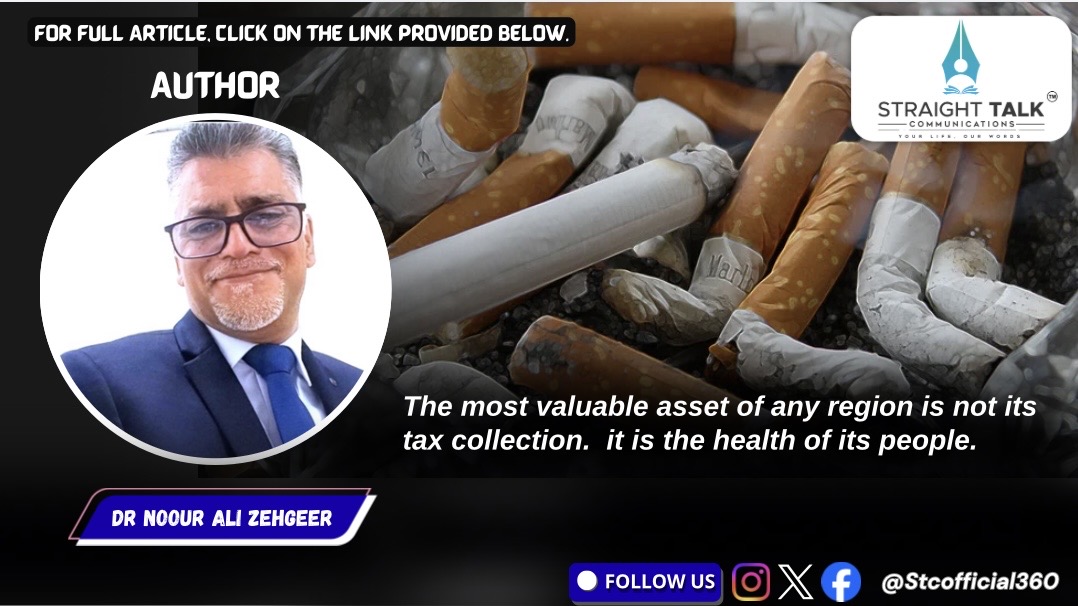
The most valuable asset of any region is not its tax collection. it is the health of its people.
Dr Noour Ali Zehgeer
Be it winter or summer, NOON Chai and Cigarette go hand to hand in the Kashmir province. Kashmiri people fight the cold winters with cigarette in the middle finger and attempt to take long drags and discuss the politics, be it a lounge or a corner in a residential locality. Like mutton, cigarettes are integral part of grosser list and kids are paid service charges who can run us to a daily shop and buy cigarettes for his dad. The excitement on child’s face is lovely but at the same time there is word of caution on his face he is going to smoke in future as he sees his best mentor smoking.
Every year, hundreds of crores of rupees are spent on cigarettes and other tobacco products across Kashmir. Estimates suggest that the cigarette market alone in the Valley may be worth several hundred crores annually, generating substantial tax revenue for the government. On the surface, this appears to be a thriving economic activity. Yet behind these numbers lies a far more troubling reality, one that is not measured in revenue, but in the lives lost, families devastated, and healthcare systems overwhelmed.
Tobacco is not just a product; it is an addiction that erodes health, drains family resources, and undermines the dignity of communities. While stricter regulation remains essential, the solution cannot stop there. What is required is a comprehensive approach that tackles tobacco use from every angle.
Public awareness campaigns must be intensified to expose the dangers of smoking and second-hand smoke. These campaigns should be sustained, creative, and culturally relevant, ensuring that the message resonates across generations.
The school-based education is critical. Children must be taught early about the risks of tobacco and empowered to resist peer pressure. Prevention at the school level is the most effective way to protect future generations.
The cessation support services must be expanded. Smokers who want to quit should have access to counselling, medical support, and community programs that help them break free from addiction.
Force enforcement of smoke-free public spaces must be strict. Families deserve to enjoy parks, schools, and workplaces without exposure to harmful smoke.
The restrictions on tobacco advertising are non-negotiable. Tobacco companies must not be allowed to glamorize addiction or target vulnerable youth with manipulative marketing.
Finally, community-led initiatives can create social stigma around smoking, making it less acceptable and less attractive, especially among young people.
The government’s role is pivotal. Sales regulation must ensure tobacco is available only at minimal points of sale. Easy access fuels addiction; limited availability creates deterrence. The argument that tobacco should be widely available in tourist areas is misguided. Tourism cannot be allowed to override the health and culture of the common man. Tobacco control is not just about policy—it is about protecting lives. Every cigarette avoided is a life extended, a family preserved, and a culture strengthened.
The time has come for decisive action. Let us build a society where finding tobacco is difficult, but finding support to quit is easy. The health of our people, the dignity of our culture, and the strength of our nation depend on it.
Over the past several years, Kashmir has witnessed a steady rise in cancer cases. Thousands of new patients are diagnosed annually, with lung cancer continuing to rank among the most common and deadly forms of the disease. Medical studies conducted in the region have repeatedly established a strong association between tobacco use and cancer, particularly cancers of the lungs, oral cavity, throat, and digestive tract.
The irony is stark. While tobacco products contribute crores to the economy, the cost of treating tobacco related illnesses far exceeds the revenue they generate. Cancer treatment often requires prolonged hospitalization, surgery, chemotherapy, radiotherapy, expensive medicines, and continuous follow up care. Beyond direct medical expenses lie the invisible costs: loss of productivity, reduced household income, emotional trauma, and premature deaths.
“Revenue Today, Regret Tomorrow”
For many families, a cancer diagnosis does not merely threaten health, it threatens financial survival. Savings accumulated over decades can disappear within months. Children may be forced to discontinue their education, and breadwinners may become dependent on others for support. These are costs that never appear in revenue statements or tax records.
Kashmir faces an additional challenge. The region already carries one of the highest burdens of gastrointestinal cancers in the country, with factors such as dietary habits, infections, and environmental influences contributing to the problem. Tobacco use further compounds these risks, creating a public health crisis that demands urgent attention.
The true measure of economic progress is not the amount of revenue collected from harmful products, but the health and wellbeing of the people. A society cannot prosper when its hospitals are filled with preventable illnesses. Every cigarette sold may add a few rupees to government coffers, but it also increases the risk of adding another patient to an oncology ward.
The Jammu and Kashmir government may attempt to ban Liquor and cigarettes but can they provide other facilities to the people who voted them power. The government cannot survive after the ban as the tax collections will drop drastically and cash ridden state cannot survive; Government needs to find a balance where health is given priority but government exchequer is not affected much
Kashmir must therefore ask itself a difficult but necessary question: Are we willing to exchange short term revenue for long term suffering?
The answer should be clear. The most valuable asset of any region is not its tax collection. it is the health of its people. Reducing tobacco consumption is not merely a public health objective. It is an investment in Kashmir’s future.
(STRAIGHT TALK COMMUNICATIONS EXCLUSIVE)