


STC EXCLUSIVE: Diabetes and Prediabetes in Kashmir
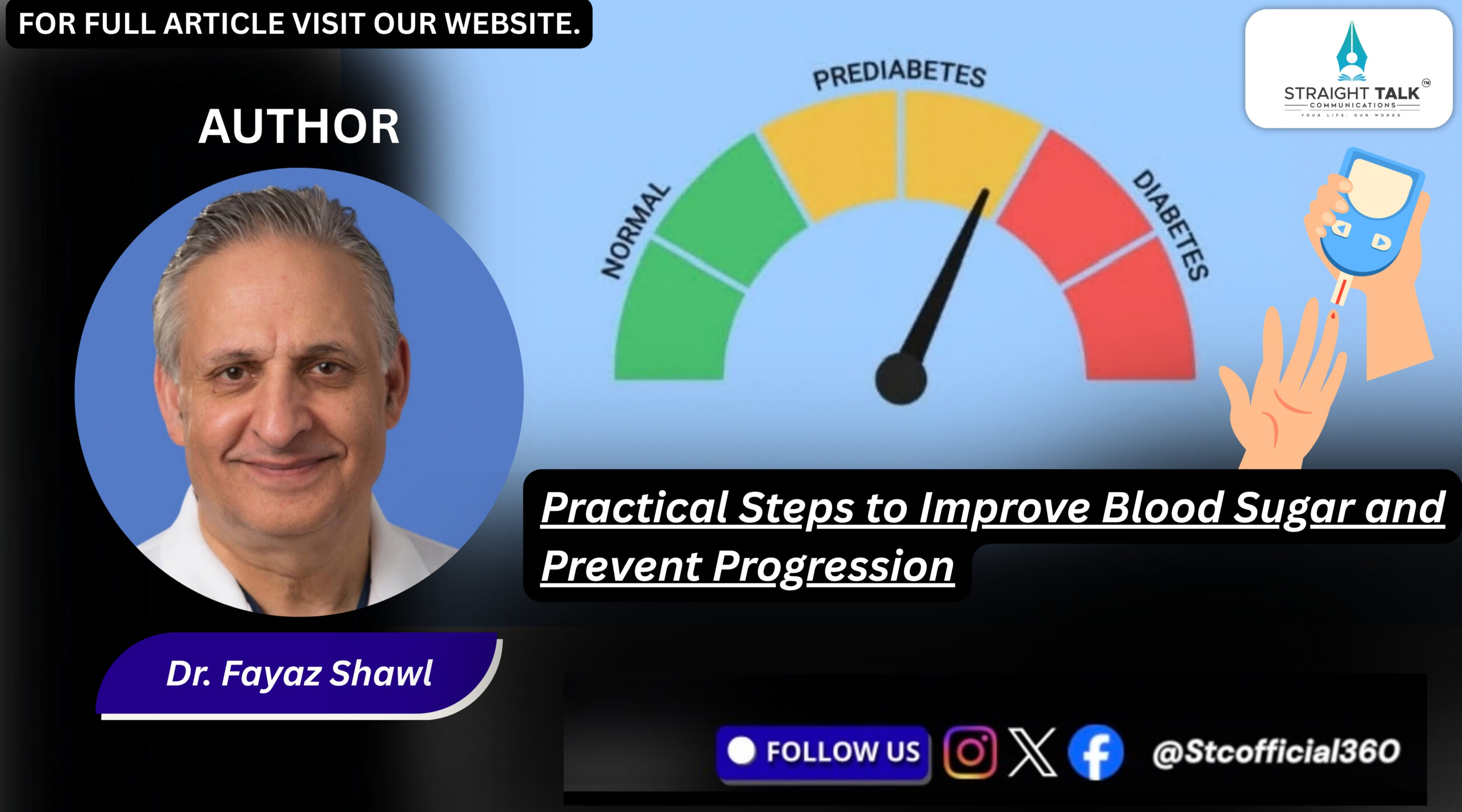
Practical Steps to Improve Blood Sugar and Prevent Progression
Dr. Fayaz Shawl
(Founder, The Fayaz Shawl Philanthropic Foundation)
PART A
Improving Glucose Control Through Food Choices and Post-Meal Activity
The magnitude of diabetes in Kashmir, India and Asia
Diabetes is one of the largest chronic-disease challenges of our time. The World Health Organization reports that approximately 830 million people worldwide are living with diabetes, most in low- and middle-income countries. Asia carries a major share: the ICMR-INDIAB study estimated that India alone had approximately 101 million people with diabetes in 2021. Each number represents a person at risk of heart attack, stroke, kidney disease, visual loss, neuropathy and premature death. [8,9]
Kashmir is not protected. Precise valley-wide totals remain uncertain because studies use different populations and diagnostic methods. A study of 6,808 tribal adults from the Gujjar and Bakerwal communities across five districts of Kashmir found diabetes in 1.26 percent but prediabetes in 11.64 percent, about nine times as common. The authors warned that this pattern points to a rise in diabetes in the years ahead. These findings cannot be extrapolated to every Kashmiri, but they demonstrate a meaningful local burden and explain why the Fayaz Shawl Philanthropic Foundation is developing this education series: to promote earlier testing and practical guidance on food, portions, meal sequence, medication safety and activity alongside medical care. [10]
A family experience
When someone close to us develops poorly controlled diabetes, prompt action matters, and so does accuracy. A close member of my family in Kashmir had an HbA1c of 8.9 percent, well above the usual treatment target. Her seven-day continuous glucose monitor (CGM) report for September 6–12, 2026 showed an average glucose of 181 mg/dL, with evening averages reaching 205 and 220 mg/dL.
Alongside her medical care, we made structured changes to meal composition, portion size, food order and post-meal activity, with close supervision and continuous glucose monitoring. Her next seven-day report, for September 14–20, 2026, showed an average glucose of 133 mg/dL, a fall of 48 mg/dL, with three-hour averages between 115 and 147 mg/dL. As her glucose improved, I reduced her glucose-lowering medication, including insulin, under close supervision.
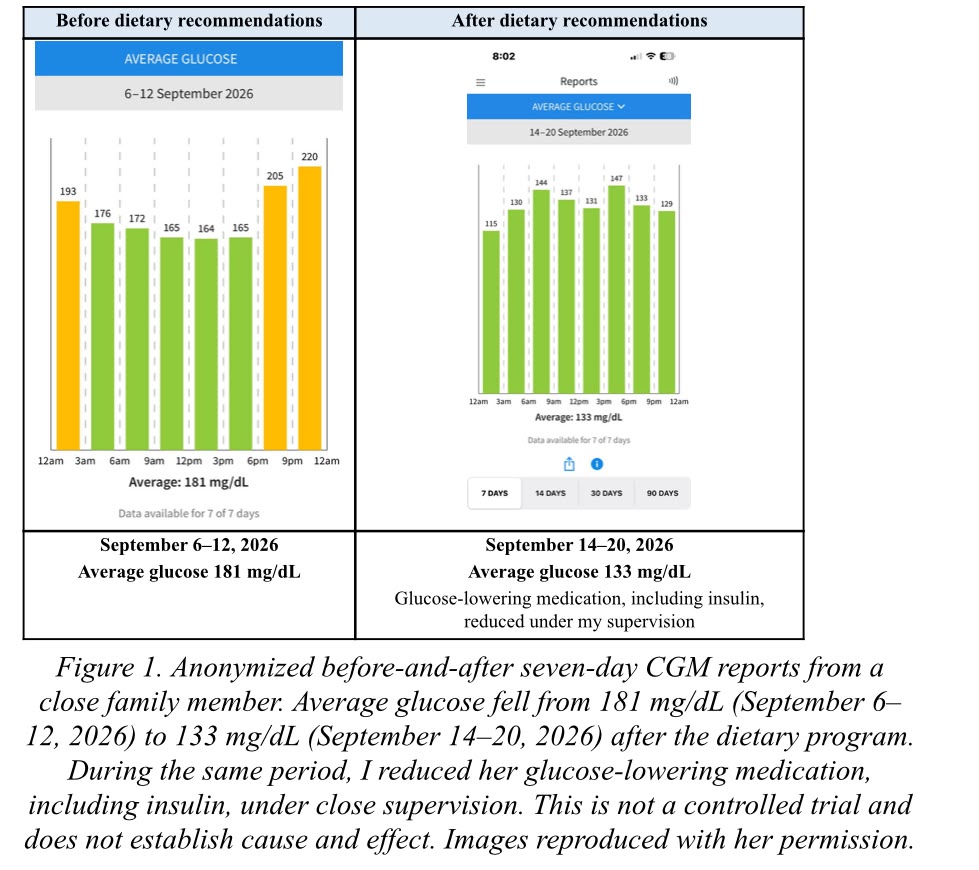
The response is encouraging, but medication, activity, adherence, sleep, illness and other factors also affect glucose. It is not proof that diabetes has been cured or reversed. HbA1c reflects glucose exposure over about three months, so a repeat laboratory HbA1c is essential. International consensus defines type 2 diabetes remission as an HbA1c below 6.5 percent for at least three months without glucose-lowering medication, and even then, continued monitoring is necessary because high blood sugar can return. [1]
A CGM is useful for recognizing patterns and testing how an individual responds to meals. It does not by itself diagnose remission, and a single low or normal reading should never be treated as proof that diabetes has disappeared.
My purpose in sharing this experience is practical: relatively simple habits can improve daily glucose patterns, but they must complement appropriate medical treatment rather than replace it.
A practical evidence-based regimen
1. Begin with a medical assessment. Confirm the type of diabetes and review HbA1c, fasting glucose, kidney function, urine albumin, blood pressure, lipids, weight and current medication. An HbA1c of 7 percent or higher deserves active treatment and follow-up. Lifestyle measures may improve control, but medication may still be necessary to protect the heart, kidneys, eyes and nerves.
2. Use nuts as a measured food. Walnuts and almonds provide unsaturated fat, fiber, magnesium and protein. A small serving taken 20 to 30 minutes before a meal may reduce the post-meal glucose rise in some people, particularly when it replaces biscuits, sweets or bakery bread. A randomized trial in Asian Indians with prediabetes found benefit from 20 grams of almonds taken 30 minutes before meals. [2] hours Take the nuts with a glass of water and chew them well. Water supports hydration and may help you feel full sooner, but it has not been shown to lower glucose further. People who have been told to restrict their fluids should follow the advice in step 7. Nuts are calorie-dense and should be counted within the daily food plan. People with a nut allergy should avoid them.
3. Eat vegetables and protein before starch. Small crossover studies show that eating non-starchy vegetables and protein before carbohydrate can reduce the immediate rise in glucose and insulin after a meal. [3] Fiber, protein and fat slow digestion, so glucose enters the blood more gradually. A practical sequence is salad or haakh first, alone or mixed with a modest serving of plain unsweetened Kashmiri curd (dahi or zamutdud); then protein; and a limited amount of rice or bread last.
4. Choose plain yogurt when it fits the meal. Plain unsweetened yogurt or zamutdud supplies protein and generally causes only a small rise in blood sugar. [12] In my clinical observation with CGMs, mixing a modest serving of plain curd with haakh or other non-starchy vegetables at the start of the meal was associated with a smaller post-meal glucose rise. This combination has not been tested in a controlled trial, so it is a practical observation rather than a proven treatment. Choose curd without sugar, honey or sweetened fruit. Portion size and total calories still matter. People with lactose intolerance or dairy allergy need an alternative.
5. Reduce rapidly digested carbohydrate without unnecessary prohibitions. White rice, maida breads, sweetened bakery products and sheermal can cause large glucose rises, especially in generous portions. The most important step is to reduce quantity and frequency. A small measured serving of rice or whole-wheat roti may fit an individual plan when eaten after vegetables and protein. Sheermal and other sweetened breads should be occasional foods, not daily staples.
6. Walk after meals. A 10- to 15-minute walk soon after a meal can lower post-meal glucose. Working muscles draw sugar out of the blood, partly without needing insulin. This helps, but it does not replace diabetes treatment. A randomized crossover study found that short walks after each main meal improved post-meal glucose more than a single daily walk. [4]
7. Stay appropriately hydrated. Water is preferable to sweetened drinks, and dehydration can worsen illness when blood sugar is very high. Fluid intake must be individualized in people with heart failure, kidney disease, liver disease or a tendency toward low sodium.
8. Measure the result over time. Review CGM patterns over at least 10 to 14 days when available, confirm unexpected readings with a finger-stick meter, and repeat HbA1c after about three months. Follow weight, waist circumference, blood pressure, kidney health and medication needs as well as glucose.
Medication safety
Do not reduce or stop prescribed medication or insulin on your own. Better food choices and more activity can lower glucose quickly, especially in people taking insulin or sulfonylureas such as glimepiride or gliclazide, and these medicines may need supervised adjustment to prevent hypoglycemia. In my family member’s case, I made those adjustments myself as her physician, with continuous monitoring. Other medicines may remain important because they protect the heart and kidneys even when glucose improves.
The main lesson
The family experience shows how quickly daily glucose patterns can respond to a disciplined routine. It does not establish a cure. The clinically meaningful questions are whether the improvement is sustained, whether HbA1c falls over the next three months, whether medication can be adjusted safely and whether cardiovascular and kidney risk factors also improve.
PART B
Prediabetes Is a Warning and an Opportunity for Prevention
The magnitude of prediabetes
The population at risk is even larger than the number already diagnosed with diabetes. The ICMR-INDIAB study estimated that approximately 136 million people in India had prediabetes in 2021, more than the estimated 101 million who already had diabetes. Across Asia, millions of people are living in this intermediate stage, often without symptoms and frequently without knowing that their glucose is abnormal. [9]
Using HbA1c, prediabetes generally means a laboratory value from 5.7 to 6.4 percent. A value of 5.7 percent is the lower boundary, not a medical emergency, while 6.5 percent or higher may meet a diagnostic criterion for diabetes when confirmed. In a person without symptoms, an abnormal result should generally be confirmed with a repeat HbA1c or another laboratory glucose test. Anemia, kidney disease and some hemoglobin variants can affect HbA1c accuracy. [5]
Prediabetes should not be described as harmless, but neither is progression to diabetes inevitable. It is a warning and, more importantly, an opportunity for prevention.
The International Diabetes Federation estimated that in 2024 approximately 635 million adults worldwide had impaired glucose tolerance and 488 million had impaired fasting glucose. These categories overlap, and they are not identical to HbA1c-defined prediabetes, so the two figures must not be added together. They nevertheless show the enormous global pool of people at increased risk of type 2 diabetes. [11]
This is precisely the population I would like to educate. People with an HbA1c between 5.7 and 6.4 percent may feel completely well while insulin resistance is progressing. Timely education about culturally familiar food choices, sensible carbohydrate portions, regular activity, weight management when needed and appropriate medical follow-up can help many of them delay or prevent type 2 diabetes.
During more than four decades as an interventional cardiologist, I have seen the consequences of diabetes in the arteries of the heart, brain, kidneys and legs. Prediabetes deserves attention because it identifies people at increased risk of type 2 diabetes and cardiovascular disease. It is also a stage at which prevention can be highly effective.
Current medical care does not recommend waiting passively for diabetes to develop. It recommends weight management when needed, healthier food choices, regular physical activity and periodic testing. Metformin may also be considered for selected people at particularly high risk.
Prevention is effective, but cure is not the right term
Prediabetes can return to the normal glucose range, and progression to type 2 diabetes can often be delayed or prevented. The word cure is misleading because insulin resistance and future risk may remain. The landmark Diabetes Prevention Program found that an intensive lifestyle program reduced the development of type 2 diabetes by 58 percent over approximately three years. Participants aimed for 7 percent weight loss and at least 150 minutes of physical activity each week. [6]
Why I am sharing this message
Prediabetes is a common precursor to type 2 diabetes, although progression is not inevitable. Early action offers a real opportunity to interrupt that progression. In my clinical experience, many patients who closely followed structured dietary recommendations and regular exercise saw their HbA1c return to the normal range, below 5.7 percent, within approximately six to nine months. This should be confirmed by repeat laboratory testing and does not mean that future diabetes risk has disappeared.
A few of my close friends had an HbA1c of 5.7 percent. With their permission, I reviewed their CGM patterns. After reducing cereal portions and combining carbohydrate with nuts, berries and unsweetened Greek yogurt, they saw smaller peaks after breakfast and average glucose levels near 100 mg/dL. At a Kashmiri breakfast, the same principle means a smaller piece of bread taken with walnuts, an egg or plain zamutdud.
These observations are encouraging, but they are not a controlled trial and cannot predict every person’s result. A single CGM value cannot diagnose or exclude prediabetes. Follow-up should include repeat laboratory HbA1c and assessment of weight, waist circumference, blood pressure, lipids and overall cardiovascular risk.
A prevention’s plan for Kashmir
1. Know the baseline. Check laboratory HbA1c or fasting glucose and confirm an abnormal result when appropriate. Measure blood pressure, weight, waist circumference and lipids. Earlier testing is reasonable for South Asian adults with abdominal obesity, a family history, previous diabetes in pregnancy, fatty liver, high blood pressure or abnormal lipids.
2. Change portions before abandoning traditional food. Traditional Kashmiri food can remain part of a healthy plan. Use haakh and other non-starchy vegetables generously. Keep rice, roti and bakery products to small, measured portions. Reduce sheermal, sweetened tea, biscuits, desserts and sugar-sweetened drinks. Wazwan dishes such as rista and gushtaba should be eaten in moderate portions because they may contain substantial saturated fat and salt.
3. Use food order as an additional tool. Start with vegetables, alone or mixed with a modest serving of plain unsweetened Kashmiri curd; follow with protein or dal; and take rice or bread last. This may blunt the post-meal rise, but it does not make an unlimited carbohydrate portion safe.
4. Choose snacks that replace refined carbohydrate. A measured portion of unsalted walnuts or almonds can replace bakery products at tea time. Unsweetened dahi or yogurt can also be useful. Noon chai contains little carbohydrate when unsweetened, but its salt content matters for people with high blood pressure or heart failure. Evidence does not support relying on cinnamon or green tea as diabetes treatment. [7]
5. Move after meals and throughout the week. Walk for 10 to 15 minutes after meals when safe. Aim for at least 150 minutes of moderate activity each week and include muscle-strengthening exercise two or three times weekly. People with heart symptoms, severe neuropathy, foot ulcers or major mobility limitations should get individual exercise advice.
6. Address the major drivers of risk. If excess weight or abdominal fat is present, even modest weight loss can improve insulin sensitivity. Preserve muscle with adequate protein and strength exercise. Sleep regularly, avoid tobacco and treat high blood pressure and abnormal cholesterol.
7. Repeat laboratory testing. Recheck HbA1c about three months after a major lifestyle change. People with confirmed prediabetes should usually be tested at least yearly, with the interval set by their doctor.
A message for the public
Prediabetes is neither a reason for panic nor a reason for inaction. It is an opportunity to intervene early. Sustainable food choices, weight management when needed, regular activity and appropriate medical follow-up can substantially reduce risk. Medication is sometimes appropriate and should never be seen as failure. The goal is lasting metabolic and cardiovascular health, not a perfect single sensor reading.
PART C
How the Program Works: The Science Behind Each Step
The steps in this program are not arbitrary. Each one acts on how quickly food leaves the stomach, how quickly starch is digested and absorbed, or how the body clears sugar from the blood after a meal. The explanations below describe what research has shown and, where the evidence is still developing, how these steps are thought to work.
1. Nuts before the meal: a natural brake. When the fat and protein in walnuts and almonds reach the upper small intestine, they trigger gut hormones, including cholecystokinin (CCK) and glucagon-like peptide-1 (GLP-1). These hormones signal through the nerves of the gut to slow the emptying of the stomach, a feedback system known as the duodenal brake. When the main meal follows, it passes into the intestine more gradually, so its sugar reaches the blood more slowly. Chew the nuts thoroughly, because breaking their cell walls happens in the mouth, not the stomach. Take them with a glass of water, which supports hydration and may help you feel full sooner, although it has not been shown to lower glucose further. A small serving of about 20 grams is enough; the trial in Asian Indians with prediabetes used this amount, taken 30 minutes before meals. [2]
2. Vegetables first: thickening the meal. Haakh, gogji, monji and salad vegetables supply fiber. Soluble fiber, such as pectin, absorbs water and makes the stomach contents thicker. Thicker contents empty more slowly and mix less readily with digestive enzymes, so sugar from starch eaten later in the meal is absorbed more gradually. Insoluble fiber adds bulk and fullness. Much of the benefit also comes from the order itself: the starch simply arrives later, after the body’s early hormonal response is under way. [3,13]
3. Plain curds: an early protein signal. Plain curd and zamutdud provide milk proteins, casein and whey. Eaten at the start of a meal, these proteins stimulate an early release of insulin and GLP-1, so the body is already prepared when the starch arrives. In a clinical trial in type 2 diabetes, a whey protein drink taken before breakfast reduced the rise in glucose after the meal. [14] Casein also forms soft curds in the stomach that empty slowly. As noted earlier, combining curd with haakh reflects my clinical observation and has not been tested in a controlled trial. [12]
4. Protein or dal: Fullness and slower digestion. Protein from fish, chicken, eggs or dal slows stomach emptying further and stimulates gut hormones such as peptide YY (PYY), which act on appetite centers in the brain to increase fullness. [15] Feeling satisfied sooner makes it easier to keep the rice or bread portion small. Dal also contains carbohydrate, so its portion counts toward the total for the meal.
5. Rice or bread last: a lower, slower rise. By the time rice or roti is eaten, the stomach is emptying more slowly and the meal is thicker and richer in fiber, protein and fat. The starch is still digested and absorbed, but more gradually. In studies, eating vegetables and protein before carbohydrate lowered the post-meal glucose peak by roughly a third and reduced the insulin response. [3] Large, repeated swings in glucose after meals are associated with oxidative stress, which can injure blood vessels, so smoothing them may help protect the heart and arteries as well as improving glucose control. [16]
6. A note on cooled rice. When cooked rice is refrigerated, part of its starch changes into resistant starch, which is digested more slowly. In one study, white rice cooled for 24 hours and then reheated produced a smaller glucose rise than freshly cooked rice. [17] Food safety matters: cooked rice left at room temperature can grow bacteria whose toxin survives reheating. Put cooked rice into shallow containers and refrigerate it within two hours, keeping the refrigerator at 4°C or below. After about 24 hours, reheat only the portion you need until it is steaming hot throughout (74°C), eat it promptly, and do not reheat it a second time. Portion size remains more important than cooling.
1. Walking after meals: Muscles as a sugar sink. In type 2 diabetes and prediabetes, the body responds poorly to insulin, mainly because the insulin signal inside the cell is impaired. Working muscle has a second route. During walking, signals within the muscle move glucose transporters called GLUT4 to the cell surface without needing insulin, letting sugar pass from the blood into the muscle to be used as fuel. [18] This is why a short walk after meals lowers post-meal glucose and reduces how much insulin the pancreas must produce. [4] Even two to five minutes of light walking helps, [19] and in winter, walking indoors or climbing stairs works as well.
What these mechanisms do and do not mean
Together, these steps make the rise in blood sugar after a meal smaller and slower. They do not stop sugar from entering the blood, and they do not make large portions safe. They work best alongside sensible portions, regular activity, weight management when needed and appropriate medical treatment. People taking insulin or sulfonylureas should discuss these changes with their doctor, because lower post-meal glucose may require medication adjustment.
Selected references
1. Riddle MC et al. Consensus report: definition and interpretation of remission in type 2 diabetes. Diabetes Care, 2021.
2. Gulati S et al. Premeal almond load and glucose profile in Asian Indians with prediabetes. European Journal of Clinical Nutrition, 2023.
3. Shukla AP et al. Food order and postprandial glucose and insulin levels in type 2 diabetes. Diabetes Care, 2015.
4. Reynolds AN et al. Advice to walk after meals and postprandial glycaemia in type 2 diabetes. Diabetology, 2016.
5. National Institute of Diabetes and Digestive and Kidney Diseases (NIDDK). The A1C test and diabetes.
6. Diabetes Prevention Program Research Group. Lifestyle intervention reduced progression to type 2 diabetes by 58 percent. New England Journal of Medicine, 2002.
7. National Center for Complementary and Integrative Health (NCCIH). Cinnamon: usefulness and safety.
8. World Health Organization. Diabetes fact sheet.
9. Anjana RM et al. Metabolic non-communicable disease health report of India: the ICMR-INDIAB national cross-sectional study. The Lancet Diabetes & Endocrinology, 2023.
10. Ganie MA, Sahar T, Rashid A, et al. Prevalence of diabetes and prediabetes in tribal population of Kashmir: lessons for the future. Diabetes Research and Clinical Practice, 2020.
11. International Diabetes Federation. IDF Diabetes Atlas, 11th edition, 2025.
12. Wolever TMS. Yogurt is a low-glycemic index food. Journal of Nutrition, 2017;147(7):1462S–1467S.
13. Kubota S, Liu Y, Iizuka K, et al. A review of recent findings on meal sequence: an attractive dietary approach to prevention and management of type 2 diabetes. Nutrients, 2020.
14. Jakubowicz D, Froy O, Ahrén B, et al. Incretin, insulinotropic and glucose-lowering effects of whey protein pre-load in type 2 diabetes: a randomised clinical trial. Diabetologia, 2014.
15. Batterham RL et al. Critical role for peptide YY in protein-mediated satiation and body-weight regulation. Cell Metabolism, 2006.
16. Monnier L et al. Activation of oxidative stress by acute glucose fluctuations compared with sustained chronic hyperglycemia in patients with type 2 diabetes. JAMA, 2006.
17. Sonia S, Witjaksono F, Ridwan R. Effect of cooling of cooked white rice on resistant starch content and glycemic response. Asia Pacific Journal of Clinical Nutrition, 2015.
18. Richter EA, Hargreaves M. Exercise, GLUT4, and skeletal muscle glucose uptake. Physiological Reviews, 2013.
19. Buffey AJ et al. The acute effects of interrupting prolonged sitting time in adults with standing and light-intensity walking on biomarkers of cardiometabolic health: a systematic review and meta-analysis. Sports Medicine, 2022.
(Disclaimer: My observations come from patients using continuous glucose monitors, sensor patches worn on the arm that send readings to a mobile phone. Glucose may fall substantially after these dietary changes; individual responses vary, and this is not a controlled trial. Patients taking insulin or medicines that can cause hypoglycemia must coordinate with their treating physician about dose adjustment. During the early dietary change, monitor glucose frequently and do additional finger-stick tests, especially at bedtime, when the sensor shows a low or rapidly falling value, or when symptoms do not match the sensor reading. Do not change medication without guidance from your treating doctor.)