




SAFEGUARDING ENVIRONMENT: No Vote-Bank Politics at the Cost of Dal and Nigeen Lakes

People may change governments. A destroyed wetland may never return.
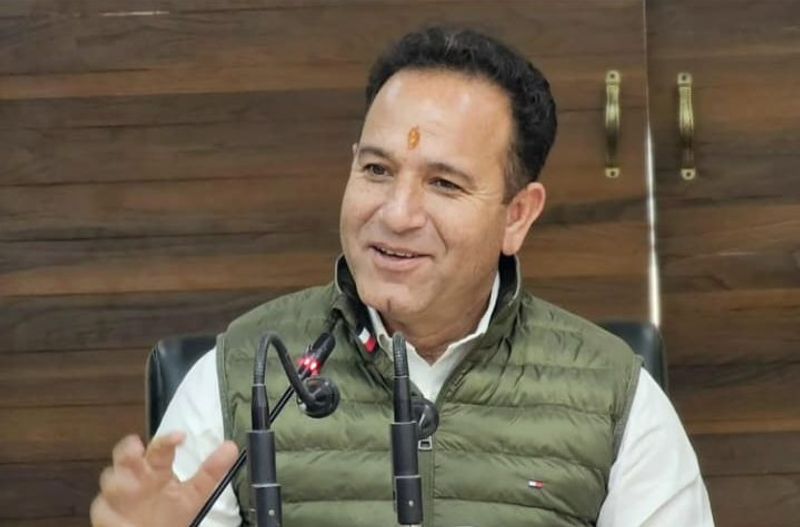
Dr. Touseef Ahmad Bhatt
There are some places that belong not merely to a city, a government or a generation, but to history itself. Dal Lake and Nigeen Lake are among them.
They are Kashmir’s ecological inheritance, cultural identity and economic lifeline. Their waters sustain biodiversity, support traditional livelihoods, attract visitors from across the world and form an inseparable part of Srinagar’s character.
Yet today, the question before us is not simply how to protect a lake. It is whether we have the political courage to protect an ecosystem when conservation decisions may become inconvenient.
The debate over the future of Dal Lake dwellers has entered a new phase. In February 2026, the J&K Government informed the Legislative Assembly that it had moved away from the earlier relocation-based approach and proposed an in-situ conservation model, including the development of 58 existing hamlets as “eco-hamlets.” The government has also proposed a ₹212.38-crore integrated programme involving sewerage, sewage treatment, treatment of inflows and dredging.
There is an important distinction here. Providing dignified living conditions to genuine, long-settled lake communities is a humanitarian responsibility. But granting or regularising rights must never become a pathway for expanding habitation, filling water bodies or legitimising future encroachments.
That is where the real test lies.
Rights of People and Rights of the Lake
The people living around and within Dal and Nigeen cannot simply be reduced to the word “encroachers.” Many families have historical, cultural and economic connections with these waters. The State itself has recognised the importance of these communities, while thousands of families have already undergone rehabilitation efforts. Government figures reported in February 2026 indicated that 1,808 families had been rehabilitated at Rakh-i-Arth with land and compensation.
But compassion for people cannot mean abandonment of the lake.
A wetland has no political vote. It cannot approach a politician, organise a delegation or demand a press conference. Yet it performs services for society every day—absorbing water, supporting biodiversity, regulating ecological processes and sustaining livelihoods.
The lake therefore needs a voice in every policy decision made in its name.
The Warning Signs Are Already Visible
We do not need to wait for another generation to discover whether uncontrolled development is dangerous.
The Comptroller and Auditor General’s audit of Dal Lake documented a decline in open-water area from 15.40 sq km in 2007 to 12.91 sq km in 2020, alongside increasing built-up areas, floating vegetation and other land-use changes. The audit also pointed to shortcomings in conservation, sewage management and monitoring.
The official Srinagar Master Plan has similarly identified unplanned urbanisation, encroachment, untreated sewage, solid waste, changes in catchment land use and obstruction of water channels among the factors contributing to Dal Lake’s degradation.
These are not political slogans. They are warnings from planning documents and public audits.
And that is precisely why any new policy must be subjected to the highest ecological scrutiny.
Housing Rights Must Not Become Construction Rights
This distinction must be made absolutely clear. If the State decides that genuine existing residents require secure tenure, basic services and dignified housing, that policy should be transparent, legally defined and scientifically designed.
But a right to remain cannot automatically become a right to expand.
It cannot mean:
- filling additional lake area for housing;
- extending existing plots into water bodies;
- constructing new structures without ecological assessment;
- converting residential structures into commercial establishments without regulation;
- allowing new families to settle inside protected areas;
- or treating future encroachment as an eventual claim to legal recognition.
The danger is not necessarily in providing rights to existing communities. The danger lies in creating an incentive structure in which tomorrow’s encroachment becomes tomorrow’s entitlement.
That would be disastrous.
The 200-Metre Question Cannot Be Ignored
The legal history surrounding construction around Dal Lake is equally important. The J&K High Court has previously dealt with restrictions on construction within the 200-metre prohibited area. In December 2024, the Court distinguished between structures that existed legitimately before the ban and constructions that came up subsequently, while also noting concerns about changes in use and the additional pressure created when residential premises are converted into tourist accommodation.
The Government subsequently constituted a committee in May 2025 to frame a policy concerning repair, renovation and reconstruction of buildings legitimately constructed before the 2002 ban, with conditions relating to eligibility, permissions and scientific waste disposal.
This provides an important policy principle:
Existing legitimate rights can be addressed without opening the door to unlimited future construction.
That principle should remain non-negotiable.
Dal and Nigeen Cannot Become an Electoral Calculation
Every political party has a responsibility to citizens. Providing housing security, protecting livelihoods and addressing historical grievances are legitimate responsibilities of government.
But public policy becomes dangerous when the short-term political arithmetic of a constituency begins to outweigh the long-term ecological interests of an entire region.
A lake does not disappear in one day.
It disappears gradually.
One filling becomes another.
One illegal structure becomes a cluster.
One channel gets blocked.
One drain remains untreated.
One exception becomes a precedent.
And eventually, what was once called an “exception” becomes the new normal.
By then, governments may change several times—but the ecological damage may be irreversible.
The Way Forward Is Not Eviction Without Alternatives
Conservation cannot simply mean removing vulnerable communities without providing humane alternatives. Nor can it mean allowing unregulated settlement in the name of rehabilitation.
We need a third path—people-centred conservation with strict ecological limits.
Any in-situ model should therefore include:
- A scientifically verified baseline:
Every existing structure and habitation must be mapped using GIS and high-resolution satellite imagery.
A legally frozen footprint:
Whatever area is recognised today should not become a platform for future expansion.
Zero tolerance for fresh reclamation:
No new filling of lake area, wetlands, channels or marshy zones should be permitted.
Mandatory sewage treatment:
Every habitation must be connected to scientifically designed sewage-management systems before any regularisation or upgrading.
No commercialisation by stealth:
Residential rights should not automatically become hotel, guest-house or commercial development rights.
Independent ecological monitoring:
Dal and Nigeen require continuous water-quality, biodiversity, land-use and encroachment monitoring.
Transparent beneficiary identification:
Any housing or tenure benefit must be based on a publicly verifiable cut-off date and documented eligibility criteria.
Strong enforcement against future encroachment:
The message must be clear: no new encroachment will ever be converted into a future political entitlement.
Nigeen Must Not Become the Forgotten Lake
The conversation often revolves around Dal, while Nigeen receives comparatively less public attention.
That is a mistake.
Dal and Nigeen are interconnected ecological systems. The conservation of one cannot be separated from the health of the other.
Any policy dealing with lake dwellers, construction, sewerage, tourism or land use must therefore adopt a Dal–Nigeen ecosystem approach, rather than treating individual settlements as isolated administrative units.
The Real Test of Leadership
Political leadership is not measured only by the number of people who applaud a decision today.
Sometimes leadership means taking a decision whose benefits will be visible only twenty or fifty years later.
Our generation inherited Dal Lake and Nigeen Lake from those who came before us. We have no moral right to leave behind a smaller, shallower, more polluted and more encroached ecosystem for our children.
The people living around these lakes deserve dignity.
Their traditional livelihoods deserve protection.
Their genuine historical claims deserve a fair and transparent hearing.
But the lakes themselves also have a claim—the right to survive.
That claim must not be sacrificed at the altar of short-term politics.
Because governments are temporary.
Political promises are temporary.
Electoral cycles are temporary.
But ecological destruction can be permanent.
The question before Jammu & Kashmir is therefore not whether we stand with people or with the lake.
We must stand with both—but within clearly defined ecological limits.
Let us provide housing without encouraging reclamation.
Let us protect livelihoods without permitting uncontrolled construction.
Let us recognise genuine rights without creating incentives for future encroachment.
And above all, let us ensure that no political party, government or generation becomes the one remembered for delivering the final blow to Dal and Nigeen.
People may change governments. But once a wetland is destroyed, no government can bring it back.
(STRAIGHT TALK COMMUNICATIONS EXCLUSIVE)
(Disclaimer: The views are of the author and not of the Straight Talk Communications)