



J&K High Court rejects sitting MLA’s plea over encroachment of Kahcharaie land
STC NEWS DESK
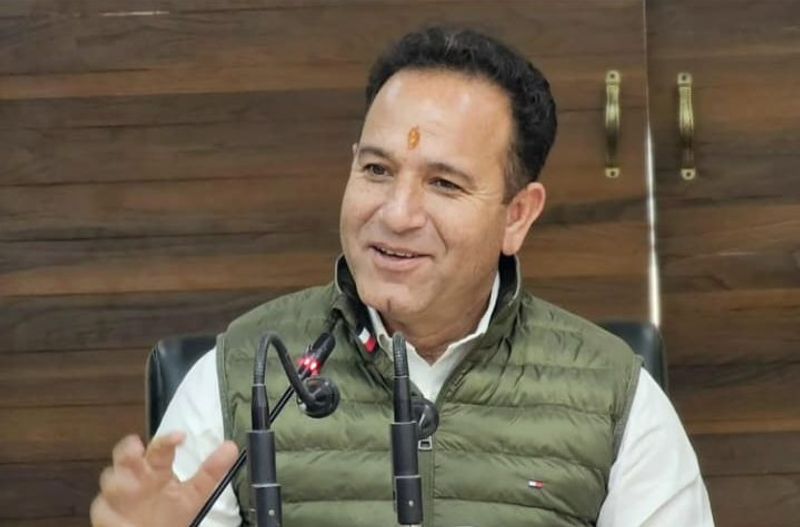
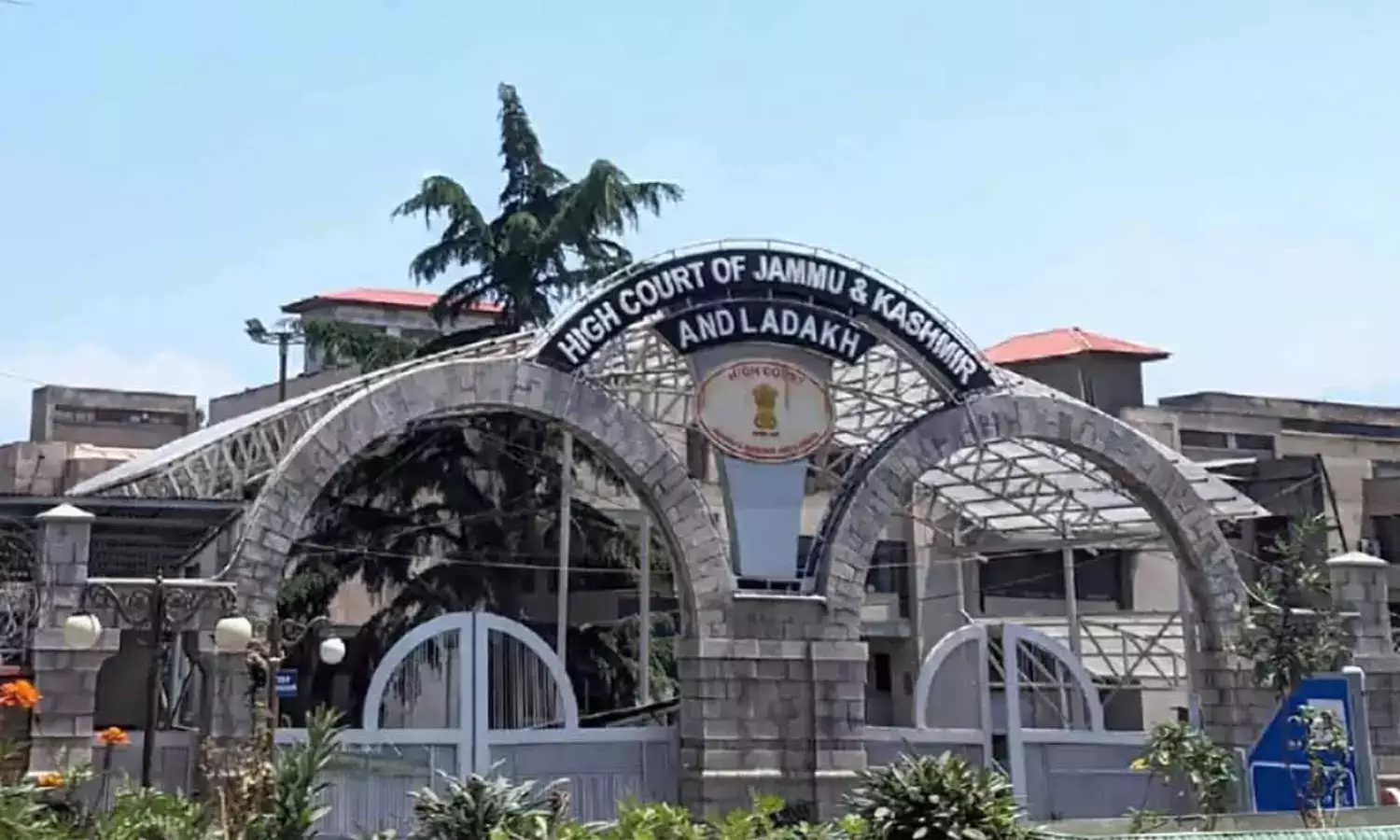
SRINAGAR, JUNE 09 (STC): Meticulously scrutinising the statutory changes governing land management in the Union Territory, the High Court of Jammu & Kashmir and Ladakh has turned down a plea filed by sitting Congress MLA Peerzada Mohammad Syed, who sought to prevent the local administration from dismantling structures erected on state-owned grazing (Kahcharaie) land adjoining his residential plot in Budgam.
The court observed that following recent statutory amendments, there exists no legal mechanism or framework under which common public utility land can be exchanged for private proprietary land.
A single-judge bench of Justice M.A. Chowdhary, clarified that a writ of mandamus cannot be issued to compel the state to entertain an exchange proposal that lacks statutory sanction. The court, however, partly allowed the petition by directing that the lawmaker cannot be evicted from the disputed site without the administration following the due course of law.
The petitioner, a Member of the Legislative Assembly representing the Anantnag constituency and a former chief of the state unit of the Youth Congress and All India Congress Committee, had approached the court challenging the actions of the local revenue authorities.
He had contended that given the volatile security climate in Jammu & Kashmir and his history of being targeted by militants, the J&K Cooperative Housing Corporation Limited had originally allotted him a residential plot under the High Income Group (HIG) category at Friends Enclave in Humhama, Budgam, where he subsequently raised a residential house.
According to the legislator, a strip of vacant land measuring nearly 10 Marlas located adjacent to his residence was occupied by him to construct a perimeter boundary wall, a lavatory block, and a shed to accommodate his security personnel.
Syed asserted that he had moved an application before the housing corporation and the District Collector for the formal allotment and regularisation of this adjacent strip in lieu of his proprietary land, which remained unaddressed by the revenue department while local officials proceeded to demolish the boundary wall and security shed without affording him an opportunity of a hearing.
Contrasting the petitioner’s assertions, the revenue authorities representing the Union Territory administration stated that a formal demarcation exercise on the ground revealed that the lawmaker had encroached upon 17 Marlas of land under Survey No. 1076/2, which is explicitly recorded as Kahcharaie (grazing) land belonging to Village Humhama.
The government advocate argued that the petitioner had taken the law into his own hands by raising unauthorized structures on common public land, prompting the Deputy Commissioner of Budgam to issue an order under which the illegal encroachments were cleared.
The state further pointed out that the legislator’s representation for land exchange was conceptually flawed and vague, as it failed to provide specific details or locations of the proprietary land he intended to surrender to the government, leading to its outright rejection by the District Collector in June 2016.
The High Court meticulously scrutinized the statutory changes governing land management in the region to evaluate the maintainability of the legislator’s claim. Justice M.A Chowdhary said that the initial claim for exchanging proprietary land for encroached grazing land rested upon Section 133(2) of the Land Revenue Act as it existed prior to 2020. However, this provision was completely substituted via an amendment notified through S.O. 3808(E) on October 26, 2020, which entirely struck out the clause allowing such regularizations or land swaps.
The court observed that the newly substituted provision actively prevents any encroachment, construction, fencing, or walling on public paths, water courses, and common village lands, emphasizing that the right of user permitted to citizens does not confer any right to establish permanent possession.
“In view of the amendment of Section 133(2) of the Land Revenue Act, as on date, there is no such provision to exchange Kahcharaie land against the proprietary land,” the Court observed in the judgment, adding “The exchange of proprietary land for encroached Kahcharaie land is not permissible now and the Deputy Commissioner concerned has no power to accept any such offer. That being so, in absence of any legal basis or statutory framework for considering the offer of the Petitioner, it would not be open to this Court to issue a ‘Writ of Mandamus’ against the Respondents.”
The court noted that even prior to the 2020 legislative amendment, the petitioner’s request had been turned down by the District Collector of Budgam because the lawmaker had failed to propose a specific piece of private land to be given to the state in return.
A specialized committee of revenue officials, headed by the Tehsildar of Budgam, had conclusively established the public nature of the encroached site. Concluding that the petitioner remains in unauthorized possession of public property, the bench ruled that the administration retains the legal liberty to seek eviction or remove the encroachment.
(Straight Talk Communications I Inputs KDC)