


NARRATIVE: I Am Jammu & Kashmir

The Voice of a Land That Refuses to Be Broken
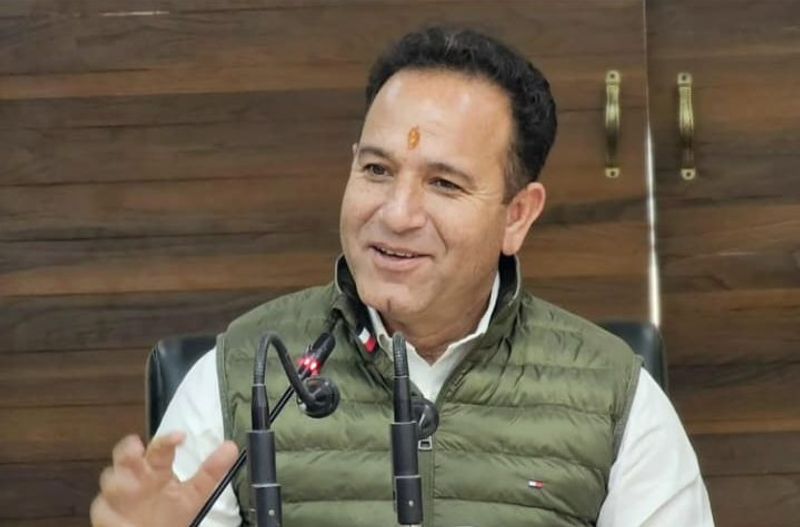
Khurshid Ahmad Akhoon
I am Jammu and Kashmir.
My breath begins at Lakhanpur.
I am Jammu—the City of Temples.
I am the snow-clad Pir Panjal.
I am the echo of the Chenab Valley.
I am the tranquil waters of Dal Lake, where the sky quietly finds its reflection.
Today, many know me through headlines of conflict, politics and uncertainty. Meri pehchan in siyasi lakeeron se kahin purani hai.
I rose from the legendary waters of Satisar. I witnessed Ashoka spread the message of Buddhism, and I watched Kalhana preserve my memories forever in the Rajatarangini. Through the centuries I welcomed saints and scholars, emperors and artisans, temples and mosques. Kingdoms changed, dynasties came and went, but I remained one living civilisation.
Phir meri wadiyon mein mohabbat ki khushboo bikhri. The Sufis brought a message of compassion, tolerance and coexistence. Mir Sayyid Ali Hamadani enriched my spiritual and cultural life, while Sultan Zain-ul-Abidin, remembered as Budshah, nurtured justice, learning and craftsmanship. Under the Mughals, my gardens became symbols of beauty admired across the world.
The Afghan period brought hardship and suffering to many of my people. Sikh rule ended Afghan domination, yet heavy taxation imposed fresh economic burdens upon ordinary lives.
Then came a defining turning point—one that would shape my destiny for generations.
In 1846, following the Treaty of Amritsar, Maharaja Gulab Singh acquired Jammu and Kashmir from the British East India Company for 7.5 million Nanakshahi rupees. Contemporary estimates suggest that my population was then approximately seven to eight lakh. History records it as the transfer of a territory, yet generations have reflected upon the profound irony that an entire people appeared to have changed hands along with the land they called home.
The Dogra rulers consolidated my frontiers and strengthened administrative institutions. Maharaja Hari Singh introduced significant reforms, abolishing forced labour, expanding education and modernising the judicial system. Though progressive reforms were underway, political consciousness among my people had begun to awaken.
That awakening became impossible to ignore in 1931.
Sheikh Mohammad Abdullah emerged as the leading voice of democratic aspirations. He challenged autocratic rule and inspired ordinary people to demand dignity, representation and social justice.
A landmark moment followed in 1950 when sweeping land reforms based on the principle of “Land to the Tiller” transformed rural society. Feudal ownership was dismantled, cultivators became landowners, and one of the most far-reaching agrarian reforms in South Asia reshaped my social landscape.
Ironically, it is in the modern age—when the world speaks of unity—that I find myself divided again and again.
The year 1947 changed my destiny forever. History prepared one of its deepest wounds.
Partition divided not only the Indian subcontinent.
It divided me.
One part came under Pakistan’s administration, another eventually came under Chinese control. Decades later, in 2019, Ladakh was constituted as a separate Union Territory.
With every political turning point, the land that had endured centuries as one historical entity found itself further fragmented.
Phir meri fiza badal gayi.
Mere pahadon par zakhmon ki lakeeren ubhar aayin.
Conflict, militancy, counter-insurgency and prolonged unrest claimed thousands of lives.
Generations grew up amid uncertainty, fear and loss.
Books gave way to bullets.
Dialogue gave way to confrontation.
Families across every region and every community paid the price.
Magar umeed ka chiragh kabhi bujha nahin.
Gradually, classrooms reopened. Young minds increasingly chose education over violence, enterprise over extremism and dialogue over conflict. A new generation began searching not merely for peace, but for opportunity and dignity.
Another turning point arrived on 5 August 2019.
The constitutional changes enacted by the Government of India led to the abrogation of Article 370 and the reorganisation of the former State of Jammu and Kashmir into two Union Territories. For some, the decision represented greater national integration and administrative efficiency. For others, it marked the loss of a distinct constitutional identity and political autonomy. Whatever one’s perspective, it undeniably altered my constitutional and political landscape.
Aur aaj… fir Meree yeah pukaar hai…
My historical territory remains divided.
One part lies under Pakistan’s administration.
Another is under Chinese control.
Ladakh now stands as a separate Union Territory.
And now, some voices speak of dividing what remains of me still further—proposing separate political arrangements within the present Union Territory.
Meri ek guzarish hai… meri baat suno.
I existed long before these boundaries.
I was never created by maps.
Maps were created to describe me.
Main sirf naqshay ki ek lakeer nahin hoon.
Main Jammu hoon—the City of Temples.
Main Pir Panjal ki buland faseel hoon.
Main Chenab ki goonj hoon.
Main Dal Lake ki khamoshi hoon.
Main lakhon nahin, croreon dilon ki mushtarka virasat hoon.
For many of my people, the restoration of statehood represents not merely an administrative change but the restoration of a constitutional identity and democratic voice. Equally important is preserving the historical unity that has defined Jammu and Kashmir for centuries.
My rivers carry history.
My mountains teach patience.
My valleys preserve memories.
My people continue to nurture hope.
History has divided my geography often enough; let wisdom ensure that the future does not divide my soul.
Let the future unite my people rather than divide my land.
Do not remember me only through disputes.
Remember me through my civilisation.
Mujhe naqshon par mat baanto…
Mujhe dilon mein jodne do.
For I am Jammu & Kashmir.
(STRAIGHT TALK COMMUNICATIONS EXCLUSIVE)