



The Road Ahead for J&K: Exploring a Credible Political Alternative
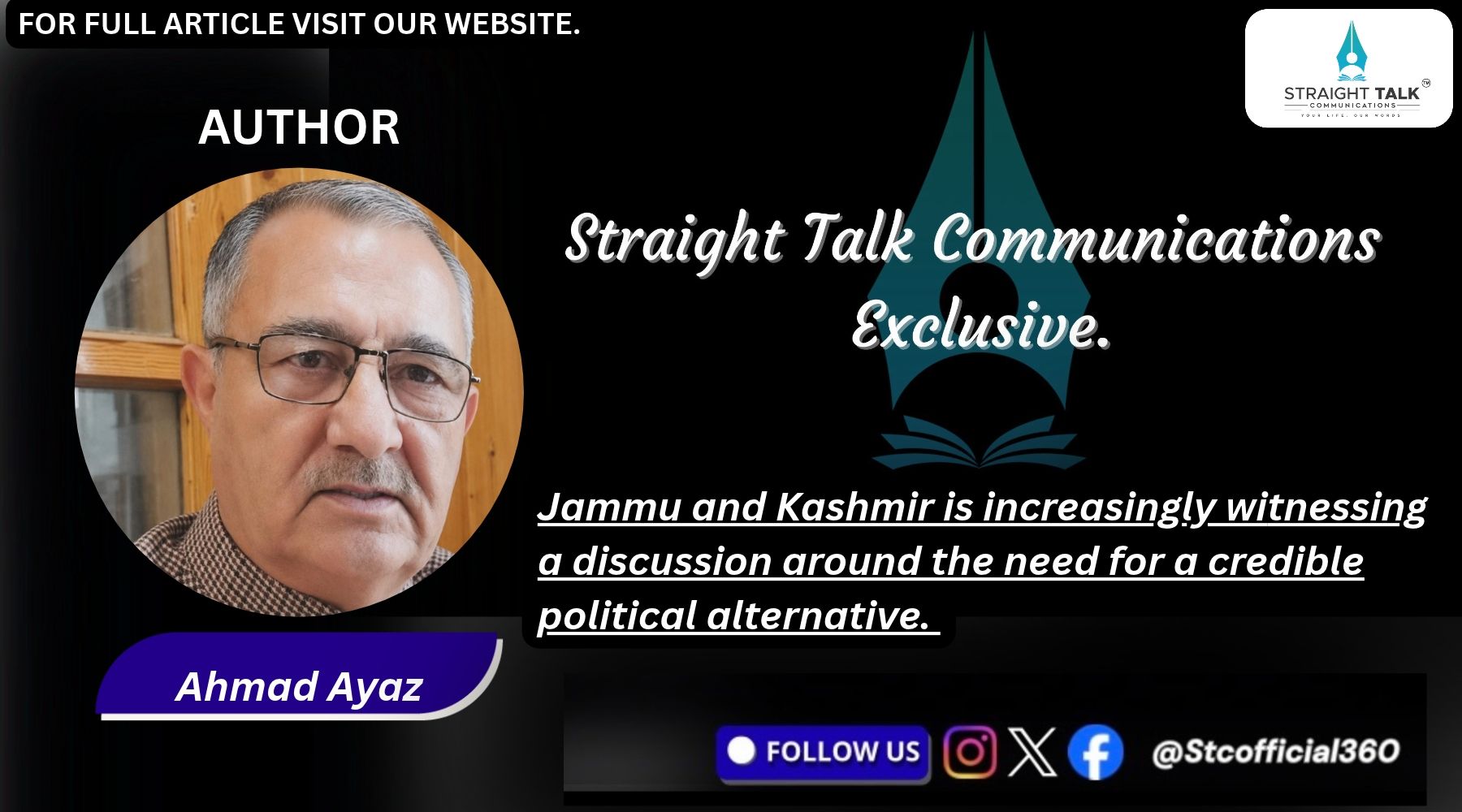
By Ahmad Ayaz
Jammu and Kashmir is increasingly witnessing a discussion around the need for a credible political alternative. Growing public dissatisfaction with traditional political parties, particularly following the performance of the Jammu and Kashmir National Conference (JKNC) government over the past two years, has created an atmosphere in which people are beginning to question whether the existing political establishment can adequately represent their aspirations and address their concerns.
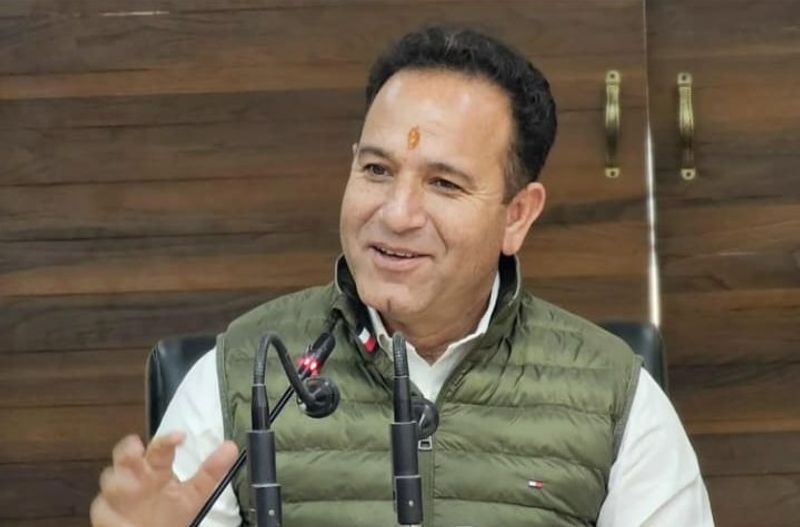
Aga Syed Ruhullah Mehdi’s departure from the JKNC and his resignation from the Lok Sabha have given fresh impetus to this debate. His decision has exposed widening differences within the National Conference and raised expectations among sections of the public looking for a political platform based on principles, conviction, credibility and accountability.
The question, however, is not simply whether Ruhullah can emerge as an alternative political force. The larger question is whether Jammu and Kashmir is ready for a new political beginning—one that moves beyond traditional political loyalties, personalities and inherited political establishments.
The Political Vacuum and Growing Public Dissatisfaction
For decades, Jammu and Kashmir’s political landscape has largely revolved around established political parties, particularly the National Conference and the Peoples Democratic Party. Both have enjoyed periods of public support and electoral success, but both have also faced criticism over governance, political commitments and their ability to deliver on public expectations.
The 2024 Assembly elections provided the National Conference with a significant opportunity to regain public confidence. People voted with considerable expectations, hoping that an elected government would pursue restoration of statehood, protect political and constitutional interests, address unemployment and improve essential public services.
However, the experience of the subsequent two years has generated disappointment among sections of the electorate.
Unemployment, delays in recruitment, uncertainty surrounding the regularisation of contractual employees, electricity and water supply, administrative inefficiency and the absence of tangible progress on several election commitments continue to affect ordinary citizens.
Promises relating to 200 units of free electricity, LPG cylinders, employment opportunities, political prisoners, restoration of statehood and other public issues created expectations that remain inadequately addressed.
It is important to recognise that the elected government operates within the limitations of the Union Territory framework and does not enjoy the powers of a full-fledged state government. Nevertheless, these limitations were known before the elections. They cannot indefinitely serve as an explanation for every shortcoming or delay.
People expect their elected representatives to demonstrate political determination, administrative efficiency and accountability, even within existing limitations.
This dissatisfaction has created space for an alternative, but public discontent alone cannot produce a credible political movement.
Ruhullah’s Departure: An Opportunity, Not an Achievement
Aga Syed Ruhullah Mehdi’s departure from the National Conference marks an important development in contemporary J&K politics. His differences with the party leadership, particularly over political commitments, Article 370 and what he considers a departure from promises made to the electorate, have given his decision wider political significance.
He was not an outsider criticising the National Conference. He was an established party member, a three-time legislator from Budgam and an elected Member of Parliament from Srinagar.
His departure therefore carries significance beyond an ordinary party resignation.
Ruhullah has consistently emphasised political principles, personal conviction and the need for a change in the character of politics. His public statements indicate an interest in bringing together people who share similar convictions and have relatively little political baggage.
This is an interesting proposition. However, it would be premature to assume that his personal popularity, public gatherings or dissatisfaction with the NC leadership will automatically translate into a successful political alternative.
There is a considerable difference between being a popular political voice and building an organised political movement.
Converting public sympathy into a sustainable political organisation will require patience, planning, collective leadership and a clearly defined political programme. His resignation may mark the beginning of a new political chapter, but the real test lies ahead.
The Challenge of Ideology and Political Clarity
One of the most important questions confronting any proposed alternative is its ideological foundation.
Jammu and Kashmir has a distinct political history, constitutional experience and set of aspirations. Any new political platform must understand and articulate these realities with clarity.
It cannot survive merely by opposing the National Conference, criticising the PDP or expressing dissatisfaction with the BJP. Opposition to existing political parties is not, by itself, an ideology.
A credible alternative must explain what it stands for, what it seeks to achieve and how it intends to pursue its objectives.
Restoration of statehood, constitutional rights, political dignity, democratic freedoms, employment, economic development, social justice and administrative accountability must form part of a coherent political agenda.
The proposed platform must also remain realistic about the constitutional and political circumstances in which Jammu and Kashmir currently functions. It should neither create unrealistic expectations nor abandon legitimate political aspirations.
Principles are essential, but politics also requires negotiation, dialogue, strategic thinking and the ability to build wider democratic support. A movement that cannot accommodate differing opinions may find it difficult to expand beyond its initial support base.
Building an Organisation Is More Difficult Than Launching a Party
Perhaps the biggest challenge before Ruhullah and other like-minded individuals will be the creation of a credible organisational structure.
Jammu and Kashmir has witnessed the emergence of several political formations over the years. Some initially generated public enthusiasm but failed to develop a sustainable organisational presence. Others remained dependent on individual personalities rather than collective leadership.
A political organisation cannot be built around one individual, however popular or influential that individual may be.
It requires committed workers, capable district and constituency-level leadership, a transparent internal structure and mechanisms for collective decision-making. It also requires individuals prepared to work consistently among people rather than appearing only during elections or political crises.
The proposed initiative must identify credible individuals from different regions, communities and professional backgrounds. Educated youth, social activists, intellectuals, retired administrators, professionals and people with grassroots experience should find space in such an initiative.
Selection must be based on integrity, public credibility, competence and commitment rather than personal loyalty to a particular leader. Individuals whose past political conduct could undermine the credibility of the proposed platform must be carefully evaluated.
If the objective is to introduce a different political culture, the organisation must demonstrate that difference through its own functioning. Internal democracy, financial transparency, collective decision-making and accountability must become established organisational practices rather than mere election slogans.
Leadership, Inclusiveness and Collective Responsibility
Ruhullah’s political journey will also depend on his ability to develop a team of individuals who can collectively lead the proposed initiative.
A single leader may provide direction and inspire public confidence, but a sustainable political movement requires several credible faces who can communicate its objectives across different regions.
Jammu must not be treated as an extension of Kashmir’s political calculations. Similarly, the aspirations of people in the Chenab Valley, Pir Panjal and other parts of the Union Territory must be understood and respected.
Any alternative confined to a particular region, community or political constituency will struggle to establish itself as a wider political force.
Its leadership must also be prepared to accept criticism, including criticism from within its own organisation. The culture of unquestioned leadership, personal loyalty and political intolerance has contributed to public disappointment with established parties. A new initiative cannot afford to reproduce the same practices under a different name.
A Broader Political Understanding: An Alternative Worth Exploring
Launching a new political party in Jammu and Kashmir is certainly not impossible, but it would be a particularly difficult undertaking for Aga Syed Ruhullah Mehdi, especially given his stated commitment to clean, principled and honest politics.
Building an organisation while adhering to these standards, identifying individuals with credible public records and resisting the pressures and compromises associated with electoral politics would require considerable effort, patience and time.
It is therefore worth exploring whether a broader political understanding among like-minded leaders could offer a more practical and viable alternative in the prevailing circumstances.
The possibility of leaders such as Ghulam Nabi Azad, Engineer Rashid and Aga Syed Ruhullah Mehdi, along with other individuals who have demonstrated concern for public issues, governance, development and political accountability, coming together on a common platform cannot be ruled out.
Their political backgrounds, ideologies and approaches may differ considerably. Bringing them together would undoubtedly be challenging and would require mutual understanding, political accommodation and a willingness to look beyond individual ambitions.
However, differences need not necessarily prevent cooperation on issues of common public interest.
A broader understanding, based on shared concerns rather than merely opposition to existing political parties, could potentially bring together different constituencies and sections of society. It may also provide a wider political base and collective leadership than a new party built around a single individual.
Such an arrangement would not require every leader to abandon his political convictions. What would be important is agreement on a common minimum programme addressing restoration of statehood, constitutional and democratic rights, employment, development, good governance and accountability.
The objective should not simply be to bring together leaders dissatisfied with existing political establishments. It should be to create credible collective leadership capable of offering Jammu and Kashmir a meaningful political and developmental alternative.
Whether such an understanding is politically achievable remains to be seen, but it is certainly an avenue worth exploring.
Avoiding Personality-Driven Politics
Another important consideration is the tendency in Jammu and Kashmir politics to build political narratives around individual personalities, family legacies and emotional appeals.
Public sentiment matters, and political movements often emerge from dissatisfaction and the desire for change. However, emotions alone cannot sustain a political organisation.
Ruhullah must ensure that his political initiative does not become merely a platform for expressing anger against the NC leadership. His differences with the party may have provided the immediate context for his departure, but any proposed alternative must have a much wider purpose.
The public will eventually ask practical questions: What will this organisation do differently? How will it address unemployment? What is its position on statehood? How will it improve governance and ensure accountability in public institutions?
Unless these questions are answered convincingly, the initiative may struggle to move beyond its initial political momentum.
Electoral Arithmetic and the Wider Political Environment
The electoral environment in Jammu and Kashmir presents another challenge.
The National Conference continues to possess an established organisational network and a substantial political base. The PDP, despite its reduced electoral strength, retains a political identity and support among sections of the electorate. The BJP has its own organisational structure and considerable influence in Jammu. The Congress and other political formations also remain relevant.
A new political platform will therefore have to compete in an already crowded political landscape.
There is also the question of whether another political formation would fragment the existing opposition vote and indirectly benefit the BJP. This concern cannot simply be dismissed. However, political consolidation should not become an argument for protecting existing political establishments from criticism.
Consolidation has value only when it serves a meaningful political purpose. Electoral unity without accountability can eventually produce another cycle of disappointment.
The objective should not be political division for its own sake, nor consolidation merely to defeat a particular party. It should be the creation of a credible political force capable of earning public confidence through its principles, performance and conduct.
The Responsibility of Society and the Electorate
While political leaders carry significant responsibility, the success of any alternative will also depend on the response of society.
The electorate must move beyond personality-driven politics, emotional slogans and temporary political excitement. Citizens should evaluate political representatives on their integrity, competence, accessibility, performance and commitment to public service.
Educated and capable individuals must be encouraged to participate in public life rather than treating politics as an occupation reserved for established political families or influential groups.
Civil society, professional associations, intellectuals, youth organisations and social activists can contribute to developing a healthier political culture.
Public support, however, should never be unconditional. A new political formation must be questioned, scrutinised and held accountable from the very beginning. People should not surrender their democratic responsibility to another leader or political organisation.
A credible alternative must earn public trust; it cannot demand it merely in the name of change.
The Road Ahead
In my assessment, Aga Syed Ruhullah Mehdi has an opportunity to contribute to a new political initiative in Jammu and Kashmir. His departure from the National Conference has created a political moment that should not be underestimated.
However, the road ahead is undoubtedly difficult.
He must establish whether he can bring together a sufficiently large group of credible and like-minded individuals who share a common political understanding. He must develop an organisational structure, articulate a realistic political agenda and demonstrate that the proposed initiative represents a genuine departure from established political practices.
There should be no unnecessary haste in announcing a new political party merely to capitalise on the immediate public attention surrounding his resignation.
It may be more prudent to invest time in consultations, identifying suitable individuals, developing a common programme and exploring the possibility of a broader political understanding before deciding the final shape of the initiative.
A political platform built on strong foundations will have a better chance of surviving electoral setbacks and political pressure than one launched in haste.
Ultimately, Jammu and Kashmir does not merely need another political party. It needs a different political culture—one in which public office is treated as a responsibility rather than a privilege, political commitments are honoured, elected representatives remain answerable to the electorate and governance takes precedence over political survival.
The people have already experienced the limitations of established political formations. They are entitled to expect something better.
Whether Aga Syed Ruhullah Mehdi can translate the present political opportunity into a credible and sustainable alternative, either independently or through a broader understanding with other like-minded leaders, remains to be seen.
For now, the development deserves serious attention, but not premature celebration.
The real challenge is not to replace one political establishment with another. It is to create a political alternative that deserves the confidence of the people and remains accountable to them.
(STRAIGHT TALK COMMUNICATIONS EXCLUSIVE. The author is a Columnist. He can be reached at ahmadayaz08@gmail.com.)