



FRIDAY SERMON; True Respect and Honour in Islam
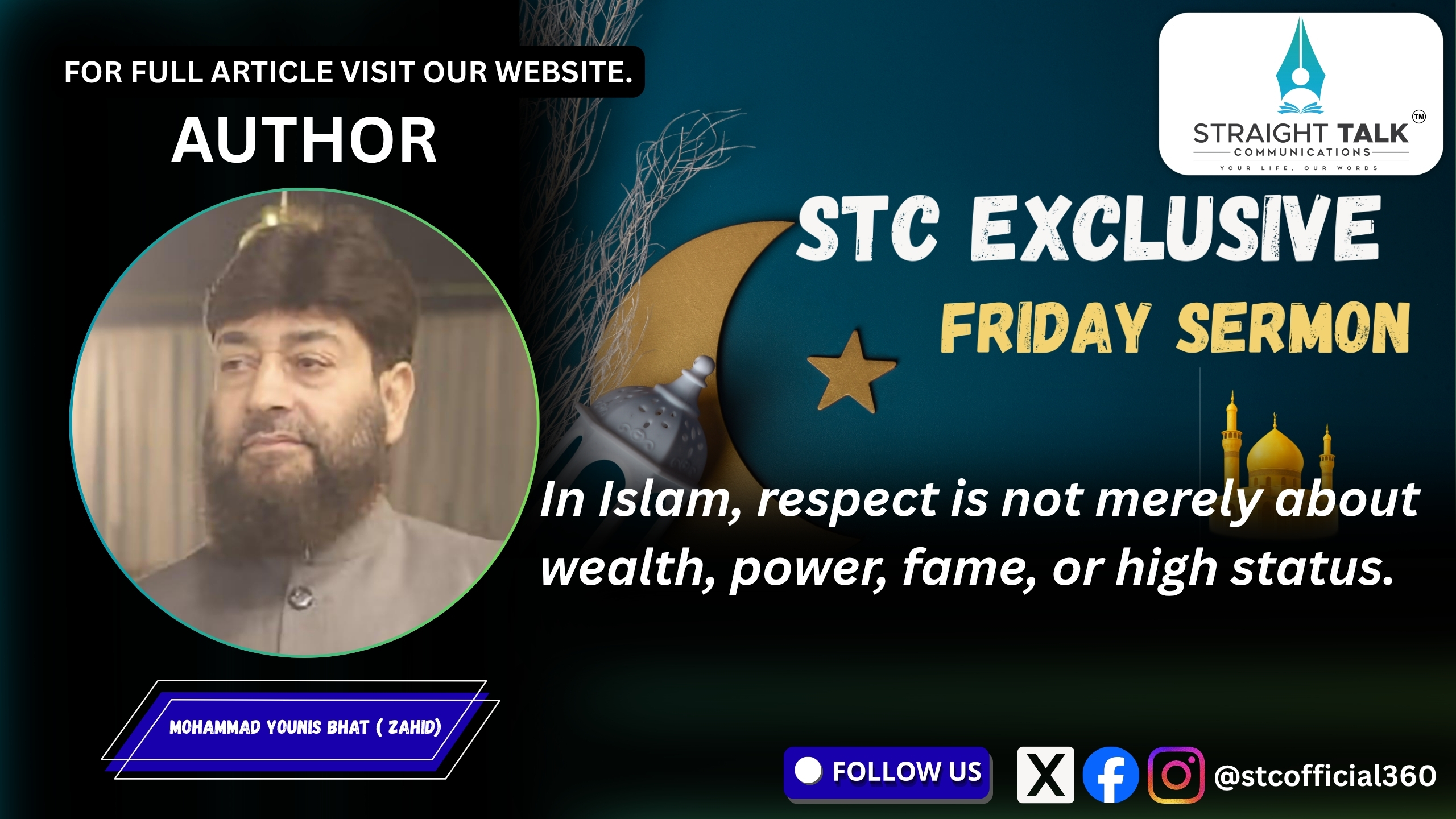
Mohammad Younis Bhat ( Zahid)
In Islam, respect is not merely about wealth, power, fame, or high status. True respect comes from character, good manners, responsibility, forgiveness, confidence, and kind behavior toward others. Some forms of respect in this world are temporary, while others remain permanent because they are built upon strong morals and righteous actions.
In Quran, Allah says:
“Indeed, the most honorable of you in the sight of Allah is the most righteous of you.”
— Surah Al-Hujurat 49:13
This verse clearly shows that true honor lies in righteousness, character, and deeds, not in outward appearance or worldly status.
- Temporary Respect
Some people gain respect because of wealth, authority, fame, or position. However, such respect does not last long. When money, power, or status disappears, people’s behavior often changes as well.
Temporary respect may give a person social recognition, but it cannot truly win hearts.
- Permanent Respect
Permanent respect is earned through good character, honesty, justice, humility, and service to humanity. Such people are remembered with honor even in their absence.
Prophet Muhammad ( peace be upon him) said:
“The best among you are those who have the best manners and character.”
— Sahih al-Bukhari
Good character keeps a person alive in the hearts of people forever.
Being Accountable for One’s Actions
Every human being is answerable for his or her actions. A person who accepts mistakes and takes responsibility for their deeds earns greater trust and respect from others.
Islam teaches self-accountability and responsibility. Instead of blaming others, a person should focus on self-correction and improvement.
Confidence in One’s Actions
A respectful person has confidence in their rightful decisions and good actions. Such a person does not constantly seek approval from others.
Confidence does not mean arrogance; rather, it means standing firm upon truth and righteousness.
Maintaining Credibility
Trust and credibility are among a person’s greatest assets. If someone lies, breaks promises, or behaves hypocritically, their respect eventually disappears.
Honesty, trustworthiness, and consistency strengthen a person’s credibility.
Words Should Be Like Currency
A person’s words should carry value. Speaking unnecessarily or using harsh language reduces a person’s importance and dignity.
Words should heal hearts, spread respect, and reflect wisdom.
Allah says in Quran:
“And speak kindly to people.”
— Surah Al-Baqarah 2:83
Do Not Always Be a “Yes Man”
Always saying “yes” merely to please others weakens a person’s personality and self-respect.
A wise person distinguishes between right and wrong. Sometimes it is necessary to say “no” politely and respectfully.
Do Not Be Opportunistic
Being close to people only when there is personal benefit, and abandoning them afterward, is not a sign of good character.
Islam teaches sincerity, loyalty, and consistency. True respect comes from genuine relationships, not selfish interests.
Be Prepared for Disagreement
Not everyone will always agree with you. A strong personality is one that can tolerate differences of opinion with patience and wisdom.
Sometimes it is necessary to say “no,” make difficult decisions, and stand firmly for what is right, even if others dislike it.
Such qualities make a person a true decision-maker.
Do Not Overuse the Word “Sorry”
Apologizing is a good quality, but constantly saying “sorry” for every small matter can weaken a person’s confidence and credibility.
A person should apologize sincerely when truly at fault, but should not unnecessarily present themselves as weak or guilty.
The Habit of Forgiveness
Forgiveness is not weakness; rather, it is a sign of strength, maturity, and a noble heart. A person who forgives others frees the heart from hatred, anger, and revenge.
Allah says in Quran:
“And to forgive and overlook is closer to righteousness.”
— Surah Al-Baqarah 2:237
The life of Prophet Muhammad was the greatest example of mercy, patience, and forgiveness. He forgave even those who caused him pain and suffering.
True honor lies not in revenge, but in forgiveness and generosity of character.
Maintain Your Appearance and Energy
Islam encourages cleanliness, good appearance, and self-care.
A confident and energetic person leaves a positive impression on others, while laziness, carelessness, and untidiness weaken one’s personality.
Maintain Good Behavior and Attitude
A great personality remains balanced in all situations.
People remember a person more for their attitude and behavior than for their words. Respect, patience, humility, and positivity make a person truly admirable.
Avoid Negative Traits
A person should always avoid:
Negative thinking
Narrow-mindedness
Extreme anger
Ego and arrogance
Constant suspicion
Thinking badly of others
Evil thoughts
These qualities destroy personality, relationships, and respect.
Prophet Muhammad ( peace be upon him) said:
“The strong person is not the one who overpowers others, but the one who controls himself when angry.”
— Sahih al-Bukhari
Conclusion
True respect is not gained by demanding it; rather, it is earned by giving respect to others.
A person who respects others, adopts good manners, accepts responsibility, maintains positivity, forgives people, and strengthens personal character is honored in the hearts of others by Allah.
Islam teaches us that true honor does not come from wealth or power, but from character, humility, patience, forgiveness, righteousness, and humanity.
And Allah knows best
(STRAIGHT TALK COMMUNICATIONS EXCLUSIVE. Makahmadina11@gmail.com)
It is fully agreed that the Negativity destroys the personality of a person & automatically effects the relationships