


Pen refuses silence, heartbeat does not pause
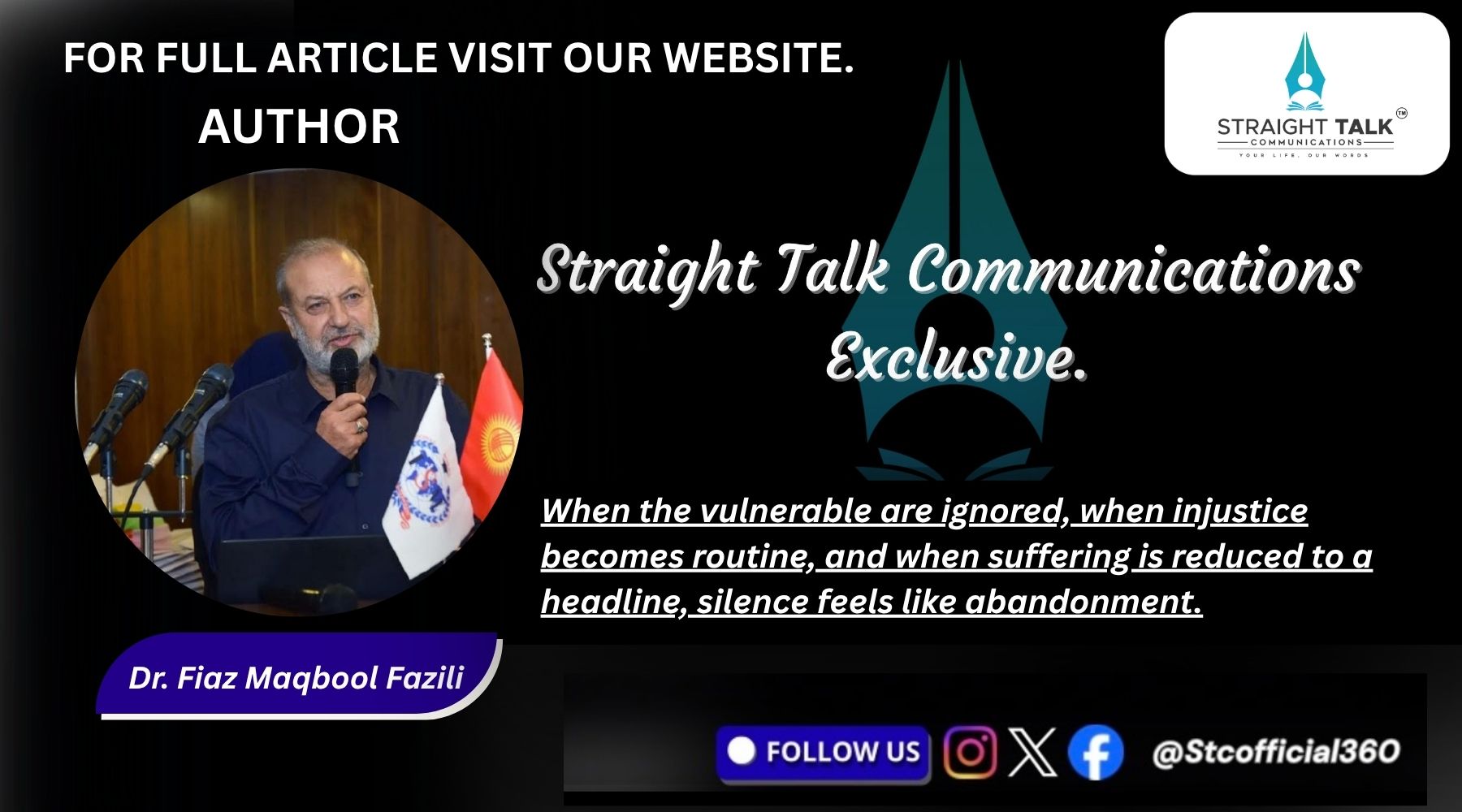
When the vulnerable are ignored, when injustice becomes routine, and when suffering is reduced to a headline, silence feels like abandonment.
Dr. Fiaz Maqbool Fazili
One question follows me: “Why don’t you stop writing?”
I could turn away, accept silence, and tell myself this is how things are. But conscience refuses. When the vulnerable are ignored, when injustice becomes routine, and when suffering is reduced to a headline, silence feels like abandonment.
I do not write for titles, recognition, or applause. I write because education, experience, and whatever credibility one has must serve those who cannot easily be heard.
I cannot claim that words alone will change society. I simply refuse to stay silent when silence becomes another form of abandonment. The voice of the unheard, is at the heart of my writing is one simple purpose: to give space to those whose voices are too often overlooked. The unheard rarely become headlines. Their struggles may appear ordinary, but they are not insignificant: roti, kapda, makaan, saaf paani, bijli, safety, livelihood, dignity, justice—and the simple right to be seen and heard.
These are not abstract issues. They are the substance of ordinary human life.
Why refuse comfortable silence? Because some truths must be spoken—not for applause, but because conscience demands standing for truth. From Budgam to Bandipora to Kishtwar to the latest Hassi bhat brutality, every tragedy leaves behind the same uncomfortable question: Who will care before it becomes a tragedy? Every violated child, every silenced girl, every woman, every betrayed family and every ignored victim challenges the conscience of the entire community. We cannot remain occupied with labels while children remain unsafe. We cannot celebrate shallow victories while trust collapses in our homes, schools, clinics, streets and neighbourhoods. And we cannot call silence “peace” when silence allows suffering to continue. This is not activism for applause. It is not outrage performed for an audience. For me, it is simply the refusal to become emotionally numb, not moral policing. Sensitivity need not always be loud. It can be disciplined compassion: staying awake, asking difficult questions, standing with the unheard, and disturbing comfort so truth can enter. It does not require perfection—only presence.
I can do so without claiming to speak for everyone, without seeking personal advantage, and without any conflict of interest.But,one thought continues to haunt me: Before every public tragedy—crime, murder, rape, drowning—there is often a private moment the world never sees: a plea. A fear, a desperate hope that someone will notice, protect, believe, or intervene,” “Ek aah bhari hogi, jaate-jaate awaaz toh di hogi—humne na suni hogi.”
The questions are simple, but hard to escape: Did someone hope help would come? Did someone call out? Did someone stay silent because they feared no one would listen?
And did we fail because we were too busy scrolling, arguing, protecting reputations, preserving appearances, or postponing courage?
This is where silence becomes a moral choice. Wrongdoing does not survive only because of those who commit it; it also survives when witnesses look away, neighbours whisper but do not intervene, professionals know but remain quiet, and communities protect prestige at the expense of the vulnerable.The unheard do not always need another speech. Sometimes, they need someone willing to stand beside them.
A small candle against darkness, my pen is not a sword; it is only a small candle. But when darkness becomes deliberate, even a small candle becomes an act of resistance. If this writing helps even in small ways—if one parent becomes more alert, one institution pauses for introspection, one unjust practice is questioned, one patient is spared needless harm, one silent person feels heard, or one child is protected—then the effort has meaning. That is enough. Before the final curtain drops, ultimately, writing is also preparation for a question larger than publication, recognition, or reputation: You saw. You knew. You felt. What did you do with what you were given?
Can One Pen Make a Difference? This is a question I am often asked. One pen may not stop every crime, heal every wound, or reform society on its own. It may not suddenly make people more civil or fulfill the dream of a truly just society. But it can still matter. It can: refuse numbness; bear witness; ask difficult questions; place forgotten concerns before the public conscience; and keep compassion alive when silence becomes easier. Not everyone will agree. Some may ignore it; others may mock it. Yet disagreement does not decide whether something deserves to be written.
What I can offer is my share of candlelight: to write with passion and sensitivity, keep difficult questions alive, and stand against silence when silence deepens suffering. Hum to apne hisse ki shama jalate aaye hain, aage bhi jalate rahenge.We have been lighting the candle entrusted to our share, and we will continue to do so.A short column cannot solve every struggle. Its worth lies in whether it speaks responsibly, sensitively, and with purpose—for the unheard.
Until unheard voices are acknowledged and listened to, my pen cannot rest. It is not driven by controversy, importance, or personal gain. It is a small act of witness for those too often ignored. I write without personal agenda and without any claim to stand above society. I write because I am part of it. If words, sensitivity, education, experience, or even a modest platform have been given to me, the question is not why I write. The deeper question is what I would answer for if I had the ability to speak and chose silence instead. This is not a claim to represent every unheard person. It is a commitment to: listen; witness; question; contribute; recommend, advocate, apologise and help turn awareness into accountability, and accountability into meaningful action.
Let this article be a question, a conversation, a counterpunch, and a beginning. If not now, when?
If not me, who? The pen refuses silence. The heartbeat does not pause.
(STRAIGHT TALK COMMUNICATIONS EXCLUSIVE. The author is a lifelong observer of Kashmir’s social change, civic life, and intergenerational challenges.)